Norwood Scale Malaysia — Identify Your Hair Loss Stage & Best Treatment
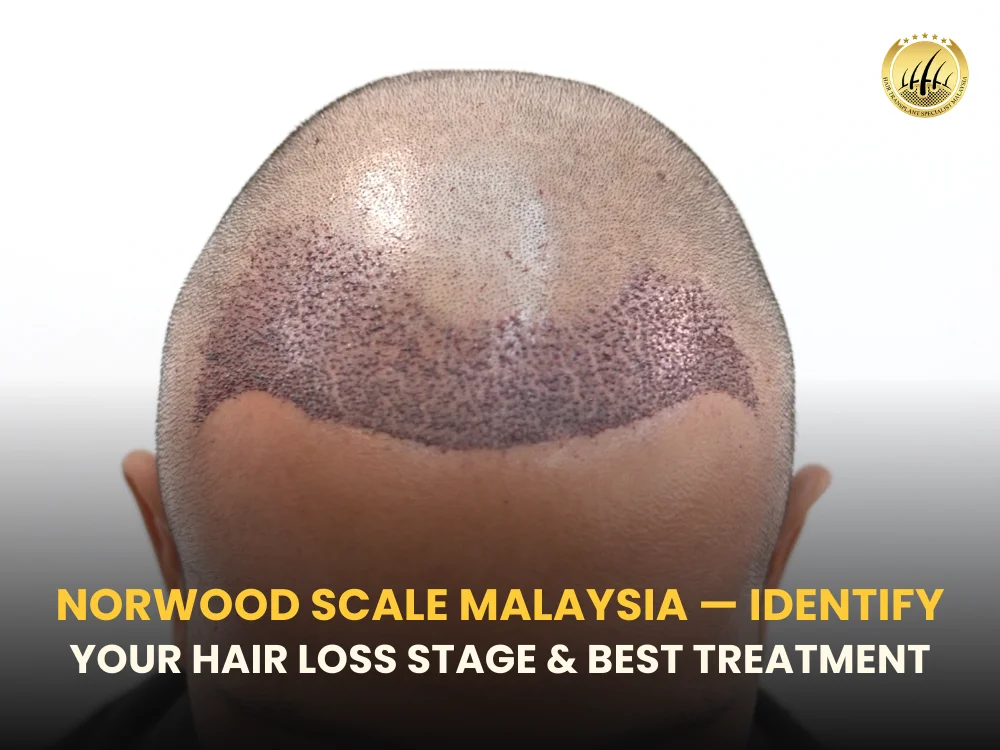
Self-Assessment Tool Interactive Norwood Scale Selector The Norwood Scale is the universal medical blueprint used by hair transplant surgeons in Malaysia to measure male pattern baldness. Select a stage below to identify your thinning pattern and explore your ideal medical or surgical correction pathway. Stage II Stage III Stage IV Stage V Stage VI+ Classification: Early Thinning Norwood Stage II: Mature / Receding Hairline Mild Profile Anatomical Presentation Minor symmetrical recession at the temple corners, often forming a shallow ‘M’ shape. The front-center hair remains dense and unaffected, representing the transition from a juvenile to a mature adult hairline. 🛡️ Preventive & Non-Surgical Medical DHT Blockers to secure the central core Low-Level Laser Therapy (LLLT) to boost cellular energy Platelet-Rich Plasma (PRP) treatments to strengthen thinning temples 🌱 Surgical & Permanent Fixes FUE Micro-grafting to clean up temple corners Estimated Grafts: 1,000 to 1,400 units Designed to build a sharp, youthful facial frame Unsure if you are matching a Stage III or Stage IV progression? Send a photo of your hairline for a direct medical mapping check. 📲 Verify My Norwood Stage & Check Graft Viability via WhatsApp ➔ The Norwood Scale is a comprehensive classification system used by clinicians to measure the progression and severity of male pattern baldness. This seven-stage diagnostic framework maps hair loss patterns—typically starting with a receding hairline, advancing to vertex thinning, and culminating in significant alopecia—to guide personalized hair restoration treatments and transplant planning. Dealing with thinning hair in KL or JB? You aren’t alone. Understanding your hair loss journey starts with the Norwood Scale, the gold standard for classifying male pattern baldness. This guide explores how Malaysians can identify their stage and find effective local treatments. What Is the Norwood Scale? The Norwood Scale hair loss is a visual classification system used by dermatologists to measure the extent of androgenetic alopecia. It provides a universal language for doctors and patients to discuss hair density loss and plan effective restoration strategies. Definition of the Norwood-Hamilton Scale Originally developed by James Hamilton in the 1950s and later revised by O’Tar Norwood, this scale categorizes male pattern baldness stages into seven distinct levels. It tracks the progression from a full head of hair to significant scalp visibility. Why the Norwood Scale Matters for Male Pattern Baldness Using this scale allows for “intent-based” treatment. Since hair loss is progressive, identifying your stage early helps in “freezing” the hairline. It’s the primary tool used by Malaysian clinics to determine if you are a candidate for surgery. Norwood Scale vs Ludwig Scale (Male vs Female Hair Loss) While men follow the Norwood pattern, women typically use the Ludwig Scale. Men usually see a receding hairline or crown thinning, whereas women experience diffuse thinning across the top of the scalp while maintaining their frontal hairline. Norwood Scale Stages Explained (1 to 7) Norwood Scale Stage 1 – No Significant Hair Loss Stage 1 represents a “control” phase. There is no visible recession or hairline restoration needed. At this point, most men have a full, adolescent hairline with no signs of hair follicle miniaturization. Norwood Scale Stage 2 – Mature Hairline Often called a “mature hairline,” Stage 2 shows slight recession at the temples. It’s a common transition as men age. While not always a sign of impending baldness, it’s the best time to monitor for further thinning hair. Norwood Scale Stage 3 – Early Receding Hairline This is the “clinically bald” threshold. Deep symmetrical recessions at the temples form “M,” “U,” or “V” shapes. This stage is highly responsive to preventing hair loss progression through FDA-approved medications. Norwood Scale Stage 3 Vertex – Crown Hair Loss In this variation, the frontal hairline might stay at Stage 2, but there is significant vertex baldness (thinning at the crown). It is a distinct signal that androgenetic alopecia is active and requires intervention. Norwood Scale Stage 4 – Frontal and Crown Thinning The recession at the temples is deeper than Stage 3. There is also a noticeable bald spot at the crown, though a band of moderately dense hair still separates the two balding areas. Norwood Scale Stage 5 – Advanced Hair Loss Progression At Stage 5, the bridge of hair between the hairline and the crown becomes very thin. The “horseshoe” pattern of hair on the sides and back begins to take shape more prominently. Norwood Scale Stage 6 – Extensive Baldness The bridge of hair separating the front and crown is now gone. The remaining hair on the sides of the head sparse, and the bald areas merge into one large expanse of exposed scalp. Norwood Scale Stage 7 – Severe Hair Loss Pattern This is the most advanced stage. Only a thin band of hair remains in a “horseshoe” shape around the back and sides. This hair is often fine and less dense than before. Norwood Scale Chart and Visual Hair Loss Patterns How to Read the Norwood Scale Chart A Norwood scale chart illustrates two main areas: the hairline and the vertex (crown). To read it, compare your profile and top-down view to the illustrations to find the closest match for your current balding patterns. Identifying Your Hair Loss Stage at Home Use two mirrors to check your crown and temples under bright light. Look for “miniaturized” hairs—shorter, thinner strands that indicate your follicles are shrinking. Early detection is key for effective hair regrowth options. Common Hairline and Crown Patterns in Men Most Malaysian men experience the “Type A” variant, where the hairline recedes back uniformly. Others may experience diffuse thinning, where the hair loses density across the entire top of the scalp simultaneously. Causes of Hair Loss Based on Norwood Scale Role of DHT in Androgenetic Alopecia DHT (Dihydrotestosterone) is the primary culprit. It binds to hair follicles, causing them to shrink. Over time, the growth phase (anagen) shortens until the follicle stops producing hair entirely. Genetic Factors in Male Pattern Baldness If your father or grandfather experienced Stage 6 or 7, you are genetically predisposed. Multi-genic
FUE Hair Transplant in Malaysia: Cost, Procedure, Recovery & Results
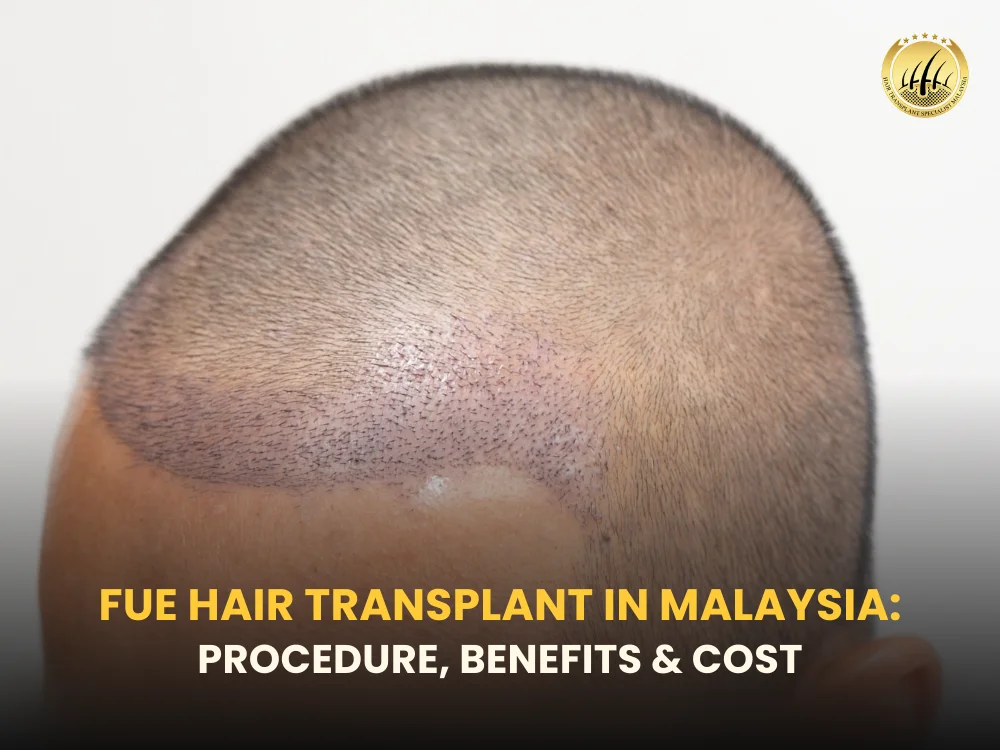
Follicular Unit Extraction (FUE) is a minimally invasive hair restoration technique where individual hair follicles are harvested directly from a donor area using specialized micro-punch tools. These grafts are then meticulously implanted into thinning or bald regions. This advanced procedure avoids linear scarring, ensures natural-looking results, and offers a significantly faster recovery period. What Is FUE Hair Transplant? FUE (Follicular Unit Extraction) is a minimally invasive hair restoration technique where individual hair follicles are extracted from a donor area—usually the back of the head—and transplanted into thinning or bald areas. It offers a permanent solution for hair loss with no linear scarring and natural-looking results. How FUE Hair Transplant Works FUE works by harvesting healthy follicles that are genetically resistant to balding. Using a specialized micro-punch tool, doctors extract these units one by one. Once harvested, the follicles are kept in a nutrient-rich solution before being carefully implanted into the recipient sites. This precision ensures high survival rates for the grafts. Difference Between FUE and FUT Hair Transplant The primary difference lies in the extraction method. FUT (Follicular Unit Transplantation) involves removing a strip of skin, which leaves a visible linear scar. FUE extracts individual follicles, leaving only tiny dot-like marks that are virtually invisible. This makes FUE the preferred choice for those who prefer shorter hairstyles. Who Is Suitable for FUE Hair Transplant Ideal candidates are those with androgenetic alopecia who have sufficient donor hair density. It is also suitable for those looking to restore receding hairlines or fill in thinning crowns. Doctors also assess scalp laxity and the cause of hair loss. Patients should be in good health and have realistic expectations about the final density. Benefits of FUE Hair Transplant Minimal Scarring Because there are no scalpels or stitches involved, there is no “strip” scar. The micro-punctures heal into tiny white dots that are hidden by existing hair. Natural Looking Hairline Expert surgeons use FUE to mimic the natural growth direction and angle of your hair. This creates a seamless transition between transplanted and existing strands. Faster Recovery Time Most patients return to their daily routines within a few days. The lack of major incisions means less post-operative discomfort compared to traditional methods. Permanent Hair Growth Results Transplanted follicles are taken from “permanent” zones. Once they take root in the new area, they continue to grow for a lifetime, just like your original hair. FUE Hair Transplant Procedure Step by Step Consultation and Hair Analysis The journey begins with a digital scalp analysis to measure graft density. Doctors determine the total number of grafts needed to achieve the patient’s desired look. Hairline Design Artistry meets science here. The surgeon draws a hairline that complements your facial proportions and age, ensuring the result doesn’t look “artificial.” Donor Hair Extraction Under local anesthesia, the surgeon uses a motorized punch tool (typically 0.7mm to 0.9mm) to extract follicles. This stage requires immense precision to avoid damaging surrounding hair. Graft Preparation Technicians sort the extracted grafts by the number of hairs they contain (single, double, or triple). This ensures the correct graft placement for maximum naturalness. Hair Follicle Implantation The surgeon creates tiny channels in the balding area. The prepared follicles are then placed into these channels at specific angles to ensure healthy growth. Post Procedure Care You will receive a specialized cleaning kit and instructions. This usually includes a gentle washing technique and a course of antibiotics to prevent infection. Types of FUE Hair Transplant Techniques in Malaysia Technique Description Key Advantage Sapphire FUE Uses blades made from sapphire gemstone. Smaller incisions, faster healing. DHI (Direct Hair Implantation) Uses a “Choi Pen” to extract and plant simultaneously. No pre-made channels needed; higher density. Manual FUE The doctor extracts follicles using a hand-held tool. Maximum control and reduced graft damage. FUE Hair Transplant Recovery Timeline Recovery After 1 Week Tiny scabs form around the grafts and usually fall off by day 7. Some mild swelling around the forehead is common but fades quickly. Recovery After 1 Month Patients often experience “shock loss,” where the transplanted hair sheds. Do not panic—this is a normal part of the follicle’s growth cycle. Hair Growth After 3 to 6 Months New, fine hairs begin to emerge from the scalp. By month 6, you will see noticeable coverage, though the hair may still be thin. Full Results After 12 Months The hair thickens and matures. By the one-year mark, you can see the final density and length of your hair restoration journey. FUE Hair Transplant Before and After Results Expected Hair Growth Timeline Most patients see 80-90% of their final results by the 9th month. Results are permanent, though you may still lose non-transplanted hair due to natural aging. Factors Affecting Results Success depends on graft quality, the surgeon’s skill, and the patient’s adherence to aftercare. Smoking and poor nutrition can negatively impact follicle survival. How to Maintain Hair Transplant Results While the new hair is permanent, doctors often recommend FDA-approved treatments like Minoxidil or Finasteride to protect the remaining original hair. Clinical Experience Insight: In clinical practice, we observe that patients who strictly follow the “no-touch” rule for the first 72 hours have significantly higher graft retention rates. Using a saline spray to keep the area hydrated is a small step that makes a massive difference in final density. FUE Hair Transplant Side Effects and Risks Swelling and Redness Temporary redness in the donor and recipient areas is expected. This usually subsides within a few days to two weeks depending on skin sensitivity. Shock Loss After Hair Transplant Temporary shedding of existing hair near the transplant site can occur. This is the body’s reaction to the “trauma” of surgery and is almost always temporary. Infection and Scarring Risks While rare in licensed clinics, infection can occur if aftercare is neglected. Always ensure your clinic follows MOH Malaysia standards. How to Reduce Complications Avoid strenuous exercise for two weeks and keep the scalp out of direct sunlight. Using a clean pillowcase and avoiding hats initially
Hair Transplant Cost in Malaysia: 2026 Price Guide
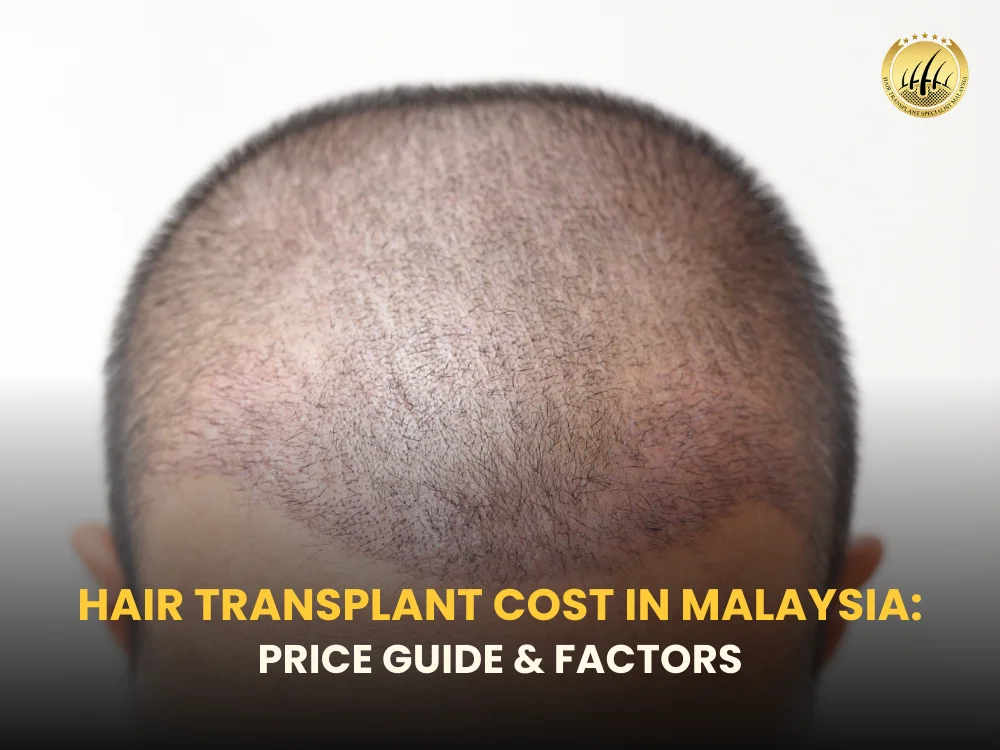
👦 Zone 1: Hairline Only 👑 Zone 2: Crown / Vertex 🧔 Zone 3: Combined / Full Top Frontal Frame Mid-Scalp Bridge Crown Circle Mild to Moderate Recession Hairline & Temporal Correction Targets receding corners at the temples, reconstructing a crisp, symmetrical framing hairline to restore youthfulness to the facial profile. Average Graft Range 1,200 – 1,800 Grafts Typical Clinical Duration 3 to 4 Hours Average Hair Count Provided ~ 3,200 – 4,500 Hairs Donor Resource Impact Minimal Preservation Needed Hair transplant cost refers to the total price of restoring hair using procedures that move healthy hair follicles from donor areas to thinning or bald areas. In Malaysia, hair transplant costs typically range from RM4,000 to RM30,000+, depending on the number of grafts, technique used, surgeon expertise, clinic location, and aftercare services included. Hair loss affects millions of men and women worldwide. For many patients, a hair transplant offers a permanent and natural-looking solution. One of the most common questions people ask is: “How much does a hair transplant cost in Malaysia?” Malaysia has become a leading destination for hair restoration due to its affordable pricing, experienced medical professionals, and modern treatment facilities. Understanding the factors that influence pricing helps patients make informed decisions and avoid unexpected costs. According to the International Society of Hair Restoration Surgery (ISHRS), hair transplantation remains one of the most effective long-term treatments for androgenetic alopecia and pattern baldness. How Much Does a Hair Transplant Cost in Malaysia? Hair transplant costs in Malaysia vary significantly depending on the procedure, clinic, surgeon, and number of grafts required. Most patients can expect prices between RM4,000 and RM30,000. Average Hair Transplant Cost in Malaysia The average hair transplant procedure in Malaysia typically costs: Procedure Size Estimated Cost Small Session RM4,000 – RM8,000 Medium Session RM8,000 – RM15,000 Large Session RM15,000 – RM30,000+ The majority of patients undergoing treatment for male pattern baldness require between 1,500 and 3,000 grafts. Hair Transplant Cost Per Graft in Malaysia Many clinics calculate pricing based on graft count. Typical cost per graft: RM4 to RM12 per graft Premium clinics may charge RM10 to RM15 per graft Larger graft sessions often reduce the cost per graft The total cost depends on the complexity of extraction and implantation. Minimum and Maximum Hair Transplant Prices The lowest-priced procedures generally start around RM4,000 for small hairline restoration treatments. Extensive procedures involving 4,000–5,000 grafts, advanced techniques, and multiple sessions may exceed RM30,000. Hair Transplant Cost by Procedure Type Different hair transplant methods have different pricing structures. FUE Hair Transplant Cost in Malaysia Follicular Unit Extraction (FUE) is currently the most popular technique. Estimated cost: RM6,000 – RM25,000+ Benefits include: Minimal scarring Faster recovery Natural-looking results Suitable for most patients The American Academy of Dermatology recognizes FUE as a widely used modern hair restoration method. FUT Hair Transplant Cost in Malaysia Follicular Unit Transplantation (FUT) usually costs: RM5,000 – RM18,000 FUT can be more affordable because graft harvesting is performed through a donor strip rather than individual extraction. DHI Hair Transplant Cost in Malaysia Direct Hair Implantation (DHI) generally costs: RM10,000 – RM30,000+ DHI uses specialized implantation pens and often requires more procedural time. Sapphire FUE Hair Transplant Cost in Malaysia Sapphire FUE typically ranges from: RM8,000 – RM28,000+ This technique uses sapphire blades that may allow more precise channel creation and potentially faster healing. Hair Transplant Cost by Number of Grafts The number of grafts required is usually the biggest cost factor. 1,000 Grafts Hair Transplant Cost Estimated cost: RM4,000 – RM8,000 Suitable for: Minor hairline correction Early-stage hair loss 1,500 Grafts Hair Transplant Cost Estimated cost: RM6,000 – RM12,000 Suitable for: Hairline restoration Mild temple recession 2,000 Grafts Hair Transplant Cost Estimated cost: RM8,000 – RM16,000 Suitable for: Mild to moderate thinning Front scalp restoration 3,000 Grafts Hair Transplant Cost Estimated cost: RM12,000 – RM22,000 Suitable for: Moderate hair loss Crown and frontal restoration 4,000 Grafts Hair Transplant Cost Estimated cost: RM18,000 – RM28,000 Suitable for: Extensive thinning Large treatment areas 5,000 Grafts Hair Transplant Cost Estimated cost: RM25,000 – RM35,000+ Suitable for: Advanced baldness Norwood Stage V–VII hair loss Factors That Affect Hair Transplant Cost in Malaysia Several factors influence the final treatment cost. Number of Grafts Required More grafts require more surgical time, personnel, and resources, increasing the overall cost. Hair Loss Severity Patients with advanced baldness typically require larger sessions and more extensive planning. Hair Transplant Technique Used DHI and Sapphire FUE often cost more than standard FUT procedures due to equipment and procedural complexity. Surgeon’s Experience Highly experienced hair restoration surgeons may charge higher fees because of their expertise and track record. Clinic Location Clinics located in major urban areas often have higher operational costs that influence pricing. Additional Treatments and Medications Some patients choose complementary treatments such as: PRP therapy Hair growth medications Laser therapy Specialized aftercare packages These services can increase the total investment. Hair Transplant Cost by Hair Loss Stage The extent of hair loss directly affects treatment planning. Hairline Restoration Cost Estimated cost: RM4,000 – RM10,000 Typically requires: 800–1,500 grafts Mild Hair Loss Cost Estimated cost: RM6,000 – RM12,000 Usually requires: 1,200–2,000 grafts Moderate Hair Loss Cost Estimated cost: RM10,000 – RM22,000 Usually requires: 2,000–3,500 grafts Advanced Hair Loss Cost Estimated cost: RM18,000 – RM35,000+ Usually requires: 4,000–5,000+ grafts Hair loss severity is commonly assessed using the Norwood Classification System. What Is Included in Hair Transplant Cost? Not all clinics include the same services in their pricing. Consultation Fees Many clinics provide free consultations, while others charge RM50–RM500 depending on the specialist assessment. Hair Transplant Procedure The procedure fee generally includes: Hair follicle extraction Recipient site creation Graft implantation Local anesthesia Surgical team support Medications Some clinics include: Antibiotics Pain medication Anti-inflammatory medication Shampoo and aftercare products Aftercare and Follow-Up Visits Follow-up appointments are essential for monitoring graft survival and healing. Patients should confirm how many visits are included before treatment. Additional Costs to Consider Patients should account for possible additional expenses. Blood Tests Pre-procedure blood tests typically
Hair Transplant Candidate in Malaysia: Complete Eligibility Guide
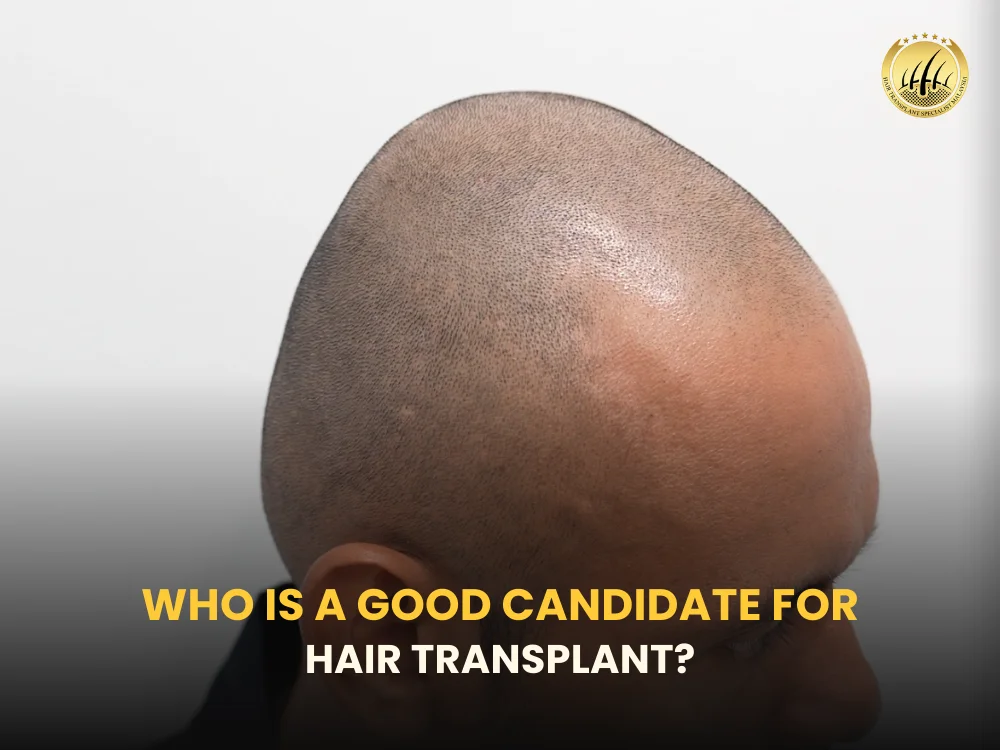
Check Your Hair Transplant Eligibility Instantly Answer 3 quick questions to see if you are a ideal candidate for a procedure in Malaysia. 1. What best describes your current hair loss? Stable / Receding hairline or thinning crown Rapid, sudden hair loss all over the scalp 2. How is the hair density at the back and sides of your head (donor area)? Good / Thick enough to cover bald spots Very thin / Minimal hair available 3. What is your primary goal for the procedure? To restore density and framing with realistic expectations To achieve 100% thick, teenage hair density overnight Calculate My Eligibility Want a professional medical assessment? Send your scalp photos to our clinic experts via WhatsApp: Chat with a Specialist on WhatsApp Thinking about restoring your locks? You’re not alone. In Malaysia, the hair restoration industry is booming as more people seek permanent solutions for thinning. However, not everyone is a hair transplant candidate. Success depends on your biology, health, and having enough “supply” to meet the “demand.” What Is a Hair Transplant Candidate? A candidate is someone with enough healthy hair follicles to move to balding areas. It’s about being a “good match” for the procedure. Doctors look for localized hair loss rather than thinning everywhere, ensuring the relocated hair will actually thrive in its new home. How Hair Transplants Work Modern surgery involves moving follicles from a “donor site” (usually the back of the head) to “recipient sites.” Whether using Follicular Unit Extraction (FUE) or FUT, the goal is to redistribute your existing hair to create the illusion of a full head. Why Candidate Assessment Matters Before Surgery Rushing into surgery is a recipe for regret. A proper assessment prevents “over-harvesting” the donor area and ensures you aren’t fighting a losing battle against active, aggressive hair loss. In Malaysia, reputable clinics prioritize long-term aesthetics over quick, temporary fixes. Difference Between Temporary and Permanent Hair Loss Transplants only fix permanent issues like Androgenetic Alopecia. If your hair is falling out due to stress (Telogen Effluvium) or nutritional deficiencies, a transplant won’t help. Temporary loss usually regrows once the underlying cause is managed, making surgery unnecessary and potentially damaging. Who Is the Ideal Hair Transplant Candidate? The “perfect” patient has dark, thick hair and a stable loss pattern. In Malaysia, where many patients have Asian hair characteristics, surgeons look for high donor density to ensure the transplanted grafts look naturally thick and provide excellent scalp coverage. Male Pattern Baldness Candidates Men with Androgenetic Alopecia who have reached a stable stage—typically Norwood Scale 3 or higher—are prime candidates. This stability ensures the surgeon can design a hairline that won’t look “isolated” if surrounding natural hair continues to fall out later. Female Hair Loss Candidates Women are candidates if they have distinct thinning on the top or a naturally high hairline. Unlike men, women often experience diffuse thinning. Therefore, those with stable donor hair at the back are the best fit for surgical intervention. Candidates With Receding Hairlines If your forehead is growing but your crown is fine, you’re likely a great candidate. Reframing the face with a new hairline is the most common request in Kuala Lumpur clinics, requiring precision and an artistic eye for graft placement. Candidates With Crown Balding Crown (vertex) restoration is tricky because hair grows in a swirl. Ideal candidates need high-quality donor hair, as the crown often requires more grafts than the hairline to achieve a look of “fullness” due to the angles of the scalp. Candidates With Hair Loss From Scars or Injuries Burn victims or those with surgical scars are often excellent candidates. Since the hair loss is localized and non-progressive, transplanted follicles usually take well to the scar tissue, provided there is adequate blood supply in the area. Signs You Are a Good Candidate for Hair Transplant Surgery Criteria Ideal Status Loss Pattern Stable / Defined Donor Density High (>80 grafts/cm²) Scalp Laxity Flexible (for FUT) Health No active infections Stable Hair Loss Pattern You shouldn’t be losing hair rapidly when you go under the knife. Surgeons prefer candidates whose hair loss has “plateaued.” If you’re still in the “active shedding” phase, the transplant might look patchy within a few years as more original hair disappears. Sufficient Donor Hair Availability You can’t grow hair out of thin air! You must have a “fringe” of healthy, DHT-resistant hair. If your donor area is too thin, the surgeon won’t have enough “seeds” to plant in the balding “garden,” leading to poor results. Healthy Scalp Condition Your scalp needs to be a healthy environment for new grafts. Conditions like psoriasis or fungal infections must be cleared first. A healthy, supple scalp ensures better blood flow, which is the “fuel” your new follicles need to survive. Realistic Expectations A transplant provides “improvement,” not “perfection.” A good candidate understands they might not get their teenage mane back. They realize the goal is to look better and feel more confident, rather than achieving impossible density. Good General Health Before Surgery Since this is a surgical procedure, your body needs to be able to heal. Candidates should be free of major cardiovascular issues and have a strong immune system to minimize the risk of post-op complications or slow recovery. Who Is Not a Suitable Hair Transplant Candidate? Not everyone gets the “green light.” Some factors make surgery a waste of time and money, or even a health risk. Honesty during your consultation is vital to avoid a “failed” transplant look. Candidates With Diffuse Hair Loss If you are thinning everywhere (DUPA), you aren’t a candidate. This means your donor hair is also weak. If you move “sick” follicles to the top, they will eventually fall out there too, leaving you with scars and no hair. Patients With Active Scalp Diseases Inflammatory conditions like Lichen Planopilaris can kill transplanted follicles. If your scalp is currently red, itchy, or scarring due to disease, surgery is strictly off-limits until the condition has been in remission for several years. Very
Hair Transplant for Woman in Malaysia: Is It Suitable?
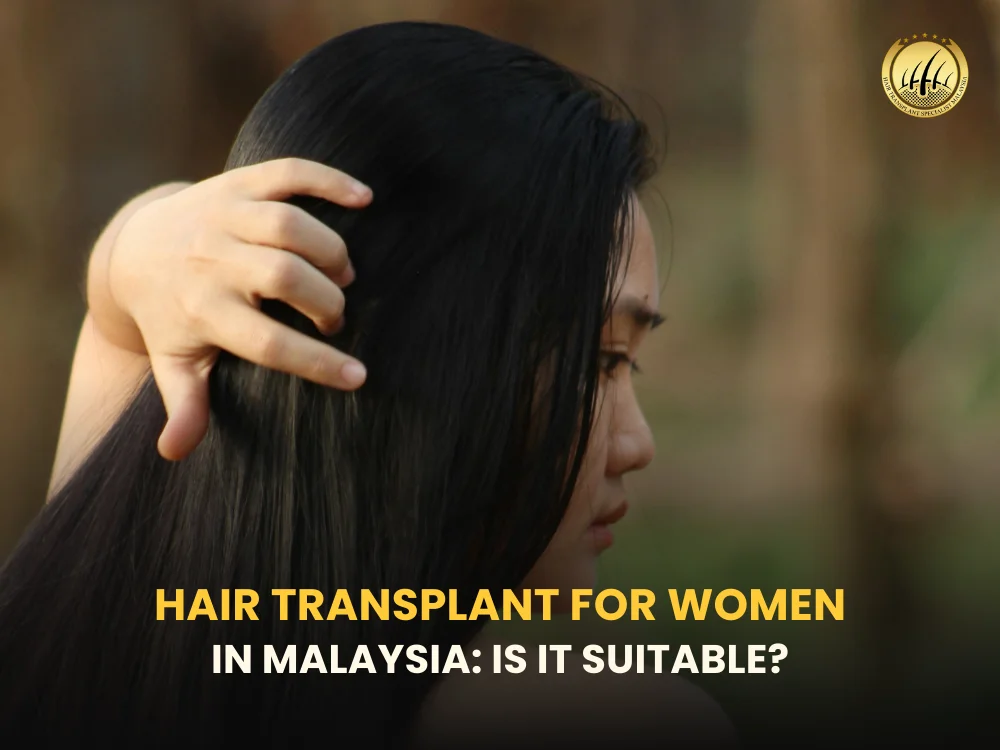
Are You a Candidate for Female Hair Transplant? Select the option that best matches your hair thinning pattern to check your suitability. 🧑🦱 Diffuse Thinning Thinning all over the entire scalp, including the back and sides. 💇♀️ Widening Part Line Thinning concentrated on the top/crown, but the back remains thick. 👱♀️ Receding Hairline / Traction Thinning caused by tight hairstyles, or naturally high forehead/temples. Get a personalized medical diagnosis. Send a photo of your hair parting to our medical team via WhatsApp: Get Free Photo Assessment on WhatsApp Hair loss in women is more common than many realize. While male baldness often gets attention, female hair thinning can be just as emotionally challenging. In Malaysia, more women are now exploring permanent solutions beyond shampoos and supplements. One of the most discussed options is Hair Transplant for Woman — but is it truly suitable for everyone? This guide explains everything you need to know, from causes and candidacy to procedures, recovery, and costs in Malaysia. Understanding Hair Transplant for Woman Hair Transplant for Woman is a medical procedure that redistributes healthy hair follicles from a donor area (usually the back of the scalp) to thinning or bald regions. Unlike temporary treatments, this approach offers long-term results when performed correctly. Female hair loss patterns differ from male baldness. Women often experience diffuse thinning rather than a receding hairline. That’s why proper diagnosis by a qualified doctor is essential before deciding on surgery. Common Causes of Female Hair Loss in Malaysia Before considering surgical treatment, identifying the cause is critical. Some common triggers include: Female pattern hair loss (androgenetic alopecia) Hormonal imbalance (post-pregnancy, menopause) Thyroid disorders Iron deficiency anemia Stress-related shedding (telogen effluvium) Autoimmune conditions Tight hairstyles (traction alopecia) According to medical references like the American Academy of Dermatology, female pattern hair loss is the most common cause of chronic thinning in women. In Malaysia’s humid climate, scalp conditions may also contribute to hair fragility, making professional scalp analysis important before treatment planning. Good Candidates: Hair Transplant for Woman? Not all women with thinning hair qualify for surgery. Ideal candidates usually: Have stable hair loss Possess strong donor density at the back of the scalp Have localized thinning (not complete diffuse loss) Are in good overall health Have realistic expectations Women with widespread thinning across the entire scalp may not benefit from transplantation because the donor area may also be weak. A consultation with a dermatologist or hair restoration surgeon is essential before proceeding. Techniques Used in Hair Transplant for Woman Modern hair restoration has evolved significantly. The two most common techniques used in Malaysia are: 1. FUE (Follicular Unit Extraction) Follicular Unit Extraction involves extracting individual hair follicles and implanting them into thinning areas. Benefits: No linear scar Faster healing Minimal downtime 2. FUT (Follicular Unit Transplantation) Follicular Unit Transplantation removes a strip of scalp from the donor area and separates follicles under a microscope. Benefits: May yield more grafts in one session Suitable for higher density needs For women, FUE is often preferred because it allows shorter hairstyles without visible scarring. How Is Female Hair Loss Different from Male Hair Loss? Men typically develop receding hairlines and crown baldness. Women, however, often maintain their frontal hairline but experience thinning at the center parting. This pattern difference impacts surgical planning. Doctors must carefully design density distribution to maintain a natural appearance. Overharvesting donor hair can lead to visible thinning at the back, which is especially concerning for women who wear their hair long. The Consultation Process in Malaysia During your consultation, a specialist will: Examine scalp condition Evaluate donor density Review medical history Identify underlying causes Estimate graft numbers Discuss expectations Clinics in major cities like Kuala Lumpur and Petaling Jaya often use digital scalp imaging to assess hair miniaturization. Blood tests may also be recommended to rule out thyroid or iron deficiencies before surgery. What Results Can Hair Transplant for Woman Expect? Understanding the recovery and growth timeline helps set realistic expectations. Hair Transplant for Woman results do not appear overnight — they develop gradually as the transplanted follicles cycle into their natural growth phase. Hair Growth Timeline Weeks 1–2: Healing PhaseMild redness, tenderness, and small scabs around the implanted grafts are normal. These typically resolve within 7–14 days. Most women can return to work within a few days, depending on comfort and visibility. Weeks 2–8: Temporary Shedding (Shock Loss)This stage can be emotionally challenging. The transplanted hairs often shed — this is called “shock loss.”Importantly, only the hair shafts fall out, not the follicles. The roots remain intact beneath the scalp and will begin producing new hair in the coming months. Month 3–4: Early Regrowth BeginsFine, soft hairs start emerging. Growth may appear uneven or thin at first — this is completely normal as follicles activate at different times. Month 6: Visible ImprovementHair becomes thicker and more noticeable. Density improves, and styling becomes easier. At this stage, many women begin feeling confident about their progress. Month 9–12: Fuller, Natural ResultsBy the one-year mark, most patients see their final results. The transplanted hair blends naturally with existing hair, improving volume and coverage in thinning areas. In some cases, continued maturation and thickening can occur up to 15–18 months. Cost of Hair Transplant for Woman in Malaysia The cost of a hair transplant for woman in Malaysia varies depending on several medical and technical factors. Unlike men, women often experience diffuse thinning rather than clearly defined bald patches, which can influence graft pricing and overall planning. Key Factors That Affect the Cost 1. Number of Grafts RequiredHair transplant pricing in Malaysia is typically calculated per graft. Women with mild thinning may require 800–1,500 grafts, while more advanced cases may need 2,000–3,000 grafts or more. The higher the graft count, the higher the overall cost. 2. Technique Used (FUE vs FUT) FUE (Follicular Unit Extraction) involves harvesting individual follicles. It is minimally invasive, leaves tiny dot scars, and is commonly preferred for women who wear their hair long. FUT (Follicular Unit Transplantation) involves