
Hair transplant scar repair is a specialized corrective procedure designed to conceal, minimize, or eliminate visible scarring resulting from strip harvesting (FUT) or follicular unit extraction (FUE). Utilizing advanced techniques like scalp micro-pigmentation, laser resurfacing, scar excision, or grafting follicles directly into cicatricial tissue, it effectively restores a natural, seamless appearance.
Hair transplant procedures can restore hair and confidence, but older techniques sometimes left visible scars on the scalp. Fortunately, modern solutions now allow doctors to improve the appearance of these scars. One increasingly popular option is hair transplant scar repair, which uses advanced hair restoration techniques to camouflage or reduce visible scarring.
For patients in Malaysia who previously underwent older transplant procedures or experienced surgical scarring, scar repair treatments can help restore a more natural-looking hairline and scalp.
Understanding Hair Transplant Scar Repair
Hair transplant scar repair refers to medical procedures designed to reduce the visibility of scars left behind by previous hair restoration surgeries. These scars may result from older methods like Follicular Unit Transplantation (FUT) or early plug-style hair transplants.
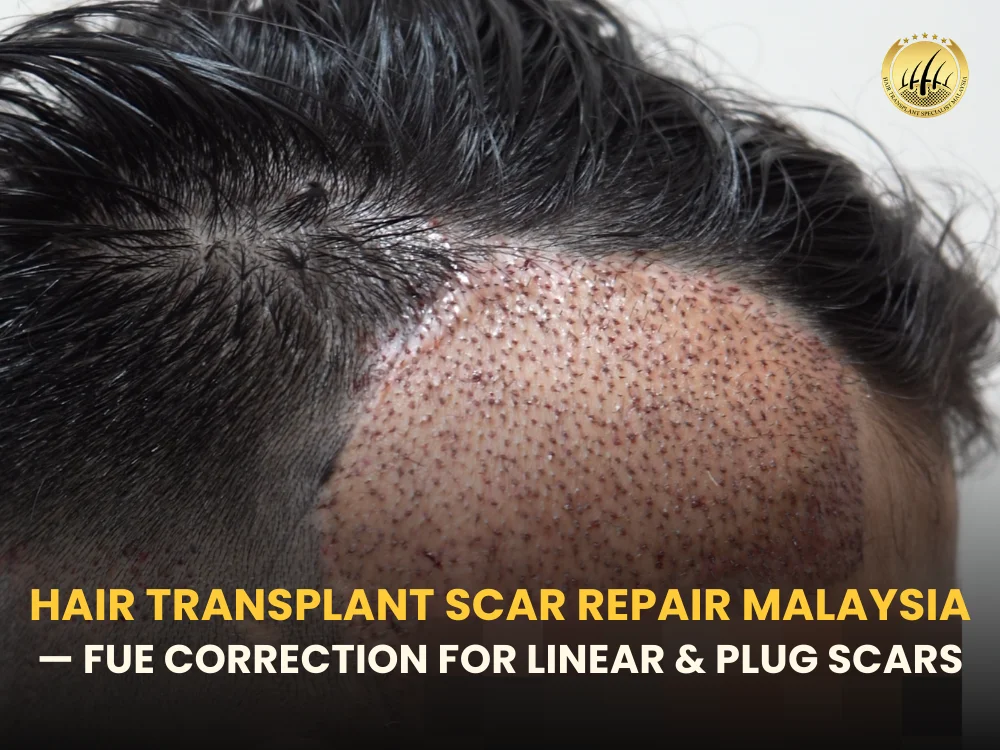
Modern clinics in Malaysia often use Follicular Unit Extraction (FUE) to correct or camouflage these scars by implanting healthy hair follicles directly into the scar tissue.
The goal is not necessarily to completely remove the scar, but to blend it with surrounding hair so it becomes much less noticeable.
Why Do Hair Transplant Scars Occur?
Hair transplant scars usually develop after surgical procedures that involve removing a strip of scalp or placing large grafts.
Linear Scars
Linear scars typically appear after Follicular Unit Transplantation procedures, where a strip of scalp is removed from the donor area.
Although surgeons close the incision carefully, some patients may still develop visible scars at the back of the head.
Plug Scars
Plug scars are small circular scars caused by older hair transplant methods used decades ago.
These procedures often used large grafts that created unnatural-looking clusters of hair.
Many patients today seek correction using modern techniques like Follicular Unit Extraction.
Poor Healing or Scar Tissue
Some individuals naturally form thicker scars due to genetics or healing responses.
Factors that may increase scar visibility include:
- Tight scalp closure during surgery
- Infection or wound complications
- Genetic tendency to develop thicker scars
How FUE Can Repair Hair Transplant Scars
One of the most effective treatments today for scar correction is Follicular Unit Extraction.
Instead of removing a strip of scalp, FUE extracts individual hair follicles from the donor area and implants them into the scar tissue.
How It Works
The process involves:
- Extracting healthy follicles individually
- Carefully placing them into the scar area
- Allowing new hair to grow through the scar tissue
As the transplanted hair grows, it helps camouflage the scar and restore natural hair coverage.
Types of Scars That Can Be Treated
Hair transplant scar repair can address several types of scarring.
FUT Linear Scar Repair
The most common repair procedure involves filling in a long scar caused by previous strip surgery.
Doctors implant follicles along the scar line to reduce its visibility.
Plug Hair Transplant Correction
Older “plug” transplants often created unnatural hair patterns.
Repair may involve:
- Removing old grafts
- Redistributing follicles
- Performing FUE to restore natural density
Trauma or Surgical Scalp Scars
Hair transplant techniques may also help camouflage scars from injuries or previous scalp surgeries.
However, the success rate depends on the condition of the scar tissue.
Is Hair Transplant Scar Repair Effective?
Hair transplant scar repair can be an effective solution for improving the appearance of visible scars on the scalp. Many patients who have undergone previous hair transplant procedures—particularly older strip techniques—may develop noticeable linear scars or patchy areas where hair no longer grows. Scar repair treatments aim to restore hair coverage and blend the scar with the surrounding scalp.
The effectiveness of scar repair largely depends on several individual factors. These include:
Size and thickness of the scar: Larger or thicker scars may require more grafts or multiple sessions to achieve optimal coverage.
Blood supply in the scar tissue: Scar tissue sometimes has reduced blood circulation, which can affect how well transplanted grafts survive.
Hair density in the donor area: Adequate donor hair is essential to provide enough grafts for natural-looking coverage.
Skill and experience of the surgeon: Precise graft placement and careful handling of scar tissue are crucial for achieving good results.
Although scar repair cannot completely erase a scar, a well-performed procedure can make it much less visible. By strategically implanting hair grafts into the scarred area, surgeons can help the hair grow through the scar tissue, allowing it to blend more naturally with surrounding hair.
In many cases, patients notice a significant cosmetic improvement, making the scar far less noticeable—even with shorter hairstyles. Some individuals may benefit from combining hair transplantation with other treatments, such as scalp micropigmentation (SMP) or laser therapy, to further enhance the final appearance.
What Happens During the Procedure?
A hair transplant scar repair procedure usually follows a process similar to a standard hair transplant.
Step 1: Consultation
The doctor evaluates the scar type, scalp condition, and donor hair availability.
Step 2: Donor Hair Extraction
Using Follicular Unit Extraction, individual follicles are removed from the donor area.
Step 3: Graft Implantation
Hair follicles are implanted into the scar tissue using precise angles and spacing.
Step 4: Recovery
The treated area heals within a few days, while hair growth begins gradually over several months.
Hair Growth Timeline After Scar Repair
Hair growth after scar repair follows a similar pattern to regular hair transplantation.
Typical timeline:
First 2–4 weeks
Some transplanted hairs may shed as part of the natural growth cycle.
3–4 months
New hair growth begins to appear.
6–12 months
Hair becomes thicker and blends with surrounding hair.
Full results are usually visible within a year.
Other Treatments That May Improve Scar Appearance
In addition to hair transplantation, some clinics may recommend combining other treatments to further improve the appearance of hair transplant scars. These complementary procedures can enhance the cosmetic outcome by addressing different aspects of scar tissue, such as texture, color, and overall visibility.
Some commonly used options include:
Scalp Micropigmentation (SMP)
Scalp Micropigmentation is a non-surgical treatment that uses specialized pigments to create the appearance of tiny hair follicles on the scalp. When applied around or within scar tissue, SMP can help camouflage visible scars and make them blend more naturally with the surrounding hair. It is particularly helpful for patients who prefer shorter hairstyles where scars may otherwise be noticeable.
Laser Skin Resurfacing
Laser treatments may help improve the texture and appearance of scar tissue by stimulating skin remodeling. This process can soften raised scars, smooth uneven surfaces, and improve skin tone in the affected area. While it does not restore hair growth on its own, laser resurfacing can make the scar less prominent.
Microneedling
Microneedling involves the use of tiny needles to create controlled micro-injuries in the skin. These micro-injuries stimulate the body’s natural healing response and encourage collagen production. Over time, this may help improve the texture and flexibility of scar tissue, making it more receptive to treatments such as hair transplantation.
Combining multiple approaches may provide better cosmetic results than relying on a single treatment alone. A qualified medical professional can evaluate the scar, scalp condition, and donor hair availability to determine the most appropriate treatment plan for each individual.
Choosing a Hair Transplant Scar Repair Clinic in Malaysia
Selecting the right clinic is critical for achieving good results.
Patients should look for:
- Experienced hair transplant surgeons
- Clinics specializing in corrective procedures
- Proven experience with Follicular Unit Extraction
- Before-and-after patient results
Hair transplant repair requires advanced skill, especially when working with scar tissue.
Frequently Asked Questions (FAQs)
1. What is hair transplant scar repair?
Hair transplant scar repair refers to procedures that reduce the visibility of scars left from previous hair transplant surgeries.
2. Can hair grow on scar tissue?
Yes, hair follicles transplanted into scar tissue can grow if the area has sufficient blood supply.
3. What is the best method for repairing hair transplant scars?
Many specialists use Follicular Unit Extraction because it allows precise placement of hair follicles into scar tissue.
4. Can FUT scars be completely removed?
Complete removal is unlikely, but the scar can often be significantly camouflaged with hair grafts.
5. How many grafts are needed for scar repair?
The number of grafts depends on the size and density of the scar area.
6. Is hair transplant scar repair painful?
Most procedures are performed under local anesthesia, so discomfort is usually minimal.
7. How long does recovery take?
Most patients recover within a few days, though hair growth takes several months.
8. Are the results permanent?
Yes. Transplanted hair follicles usually continue growing permanently.
9. Can old plug hair transplants be corrected?
Yes. Many surgeons correct older plug-style transplants using modern techniques like Follicular Unit Extraction.
10. Is hair transplant scar repair available in Malaysia?
Yes. Many advanced hair restoration clinics in Malaysia offer corrective procedures for transplant scars.
Conclusion
Older hair transplant techniques sometimes left visible scars, but modern procedures now offer effective solutions. Hair transplant scar repair can significantly improve the appearance of linear and plug scars by restoring natural hair growth in affected areas.
Using advanced techniques like Follicular Unit Extraction, experienced surgeons can camouflage scars and help patients achieve a more natural-looking scalp.
For individuals in Malaysia seeking correction after previous hair transplant procedures, consulting a qualified hair restoration specialist is the best first step toward restoring confidence and improving overall results.