Hair Regrowth Treatment for Thinning & Hair Loss in Malaysia
If you’ve started noticing more hair in the shower drain than on your head, don’t panic just yet. Before jumping straight to surgery, many Malaysians are discovering that a non-surgical hair regrowth treatment can effectively hit the “reset” button on thinning locks. With the tropical humidity often making scalp health a challenge, Malaysia has become a hub for advanced, clinically-proven therapies that help you keep what you have and grow back what you’ve lost. Hair Transplant Malaysia Centre offers advanced hair regrowth treatments that reactivate dormant follicles, reduce hair loss, and restore thicker, healthier hair for lasting, natural-looking results. What Is Hair Regrowth Treatment? How Hair Regrowth Treatments Stimulate Hair Follicles Unlike a wig that hides the problem, these treatments aim to revitalize the “dormant” follicles. By improving blood circulation or injecting concentrated nutrients, we can extend the anagen (growth) phase of the hair cycle. This process reverses miniaturization, where thick hairs gradually turn into fine, invisible fuzz. Difference Between Hair Regrowth and Hair Transplant Think of a transplant as “planting new seeds” in a barren field. In contrast, a hair regrowth treatment is like “fertilizing the existing grass” to make it lush again. Transplants are for bald spots; regrowth treatments are for thinning areas where follicles are still alive but struggling. Who Is a Suitable Candidate for Hair Regrowth Treatment? You are an ideal candidate if: Your hair loss is in the early to moderate stages. You have diffuse thinning rather than complete baldness. You prefer non-invasive options over surgery. Your scalp is healthy without active scarring. Common Causes of Hair Loss in Malaysia Male and Female Pattern Hair Loss (Androgenetic Alopecia) This is the most common genetic culprit. It’s driven by a sensitivity to DHT (dihydrotestosterone). Research on androgenetic alopecia explains how this hormone shrinks follicles until they stop producing hair entirely. Hormonal Imbalance and Thyroid Disorders The thyroid gland regulates our metabolism and hair growth. When it’s out of whack, hair can become brittle or fall out in clumps. Stress-Related Hair Loss (Telogen Effluvium) The fast-paced life in cities like KL can push your body into a “survival mode,” causing hair to enter the shedding phase prematurely. Postpartum and Menopause Hair Thinning Fluctuating estrogen levels are a major trigger. According to the American Academy of Dermatology, female pattern hair loss often becomes more noticeable after menopause when protective hormones decline. Nutritional Deficiencies and Lifestyle Factors A diet lacking in iron, zinc, or biotin—common in restrictive diets—can starve your hair. Smoking and high sugar intake (looking at you, teh tarik) can also cause scalp inflammation. Types of Hair Regrowth Treatment Available in Malaysia PRP (Platelet-Rich Plasma) Therapy Often called the “vampire” hair treatment, it uses your own blood to stimulate growth. It’s highly popular in Malaysia for its natural approach. Growth Factor and Scalp Injections These involve “cocktails” of vitamins, minerals, and biomimetic peptides injected directly into the mesoderm (middle layer) of the scalp. Low-Level Laser Therapy (LLLT) This “cold laser” technology uses specific wavelengths of light to boost ATP (energy) production in cells. Clinical studies on low-level laser therapy show it can significantly increase hair density without side effects. Hair Growth Medications (Minoxidil & Finasteride) Minoxidil is the only FDA-approved topical liquid for both men and women. Finasteride is usually reserved for men to block DHT. Stem Cell and Exosome-Based Treatments The cutting edge of hair science. Exosomes are tiny vesicles that carry signaling proteins to “wake up” inactive follicles more effectively than PRP. PRP Hair Regrowth Treatment Explained How PRP Is Prepared and Injected A small amount of your blood is drawn and spun in a centrifuge to isolate the platelets. These platelets contain “growth factors” that act as a healing signal for your scalp. Number of Sessions Required Typically, an initial “loading dose” of 3 to 4 sessions (spaced a month apart) is needed, followed by maintenance every 6 months. Expected Results Timeline Most patients notice a reduction in hair fall within 2 months, with new “baby hairs” appearing by month 4 to 6. Combination Hair Regrowth Treatments for Better Results PRP + Medication Therapy Using Minoxidil while undergoing PRP is like giving your hair both a daily vitamin and a monthly “superfood” boost. Laser Therapy + Topical Treatments Laser light helps the scalp absorb topical serums better by increasing blood flow and opening up pores. When to Consider Hair Transplant Instead If the scalp is “shiny” and smooth, the follicles are likely dead. At this stage, no amount of fertilizer will help; you need a hair transplant to move new follicles to the area. Hair Regrowth Treatment Procedure Step by Step Consultation and Scalp Analysis In Malaysia, LCP-certified doctors use a digital trichoscope to zoom in 200x on your scalp to check follicle health. Diagnostic Tests and Hair Density Evaluation A “pull test” or blood test may be done to check for iron or hormonal deficiencies before starting the therapy. Treatment Session Duration and Frequency Most clinic sessions take 30 to 60 minutes. There’s zero downtime, so you can head back to the office immediately. Cost of Hair Regrowth Treatment in Malaysia Average Price Per Session PRP: RM600 – RM1,200 Mesotherapy: RM400 – RM800 LLLT: RM150 – RM300 Factors Affecting Treatment Cost The technology used (standard PRP vs. High-Concentration kits) and the reputation of the specialist in areas like Bangsar or Mont Kiara will influence the price. Is Hair Regrowth Treatment Worth It? If caught early, it is significantly cheaper and less invasive than surgery, making it a very high-value investment for your confidence. Results and Success Rate of Hair Regrowth Treatment Visible Improvement Timeline (1–6 Months) Patience is key. Hair grows about 1cm per month, so you won’t see a “forest” overnight. Before and After Expectations Success is usually defined as stopped hair loss and a 15–30% increase in hair diameter and density. Maintenance and Long-Term Results Because genetic hair loss is progressive, you must continue maintenance treatments or topical lotions to keep the results. Risks and Side Effects of Hair Regrowth
Facial Hair Transplant for Beard & Moustache Growth in Malaysia
Let’s be real: not everyone is blessed with the “lumberjack” genes. For many men in Malaysia, growing a full, connected beard or a sharp pair of eyebrows is a struggle involving patchy spots and stubborn “naked” patches. Thankfully, a facial hair transplant has evolved into a high-tech art form, allowing you to sculpt the masculine look you’ve always wanted without relying on messy oils or empty promises. Hair Transplant Malaysia Centre provides facial hair transplant treatments to restore beard and moustache growth, using precise follicle implantation techniques for natural density, defined shape, and permanent results. What Is a Facial Hair Transplant? Definition and How Facial Hair Transplant Works A facial hair transplant is a specialized procedure where healthy hair follicles are moved from a “donor site” (typically the back of your scalp) to your face. Unlike scalp hair, facial hair grows in single-hair units. This requires a meticulous approach to ensure the new hair mimics the natural texture of a beard or moustache. Areas That Can Be Treated (Beard, Moustache, Goatee, Sideburns, Eyebrows) You aren’t limited to just one area. Most clinics in KL and Penang can restore: Beard & Goatee: Filling in “holes” or creating a full jawline. Moustache: Enhancing the “stache” for better density. Sideburns: Connecting the hair to the beard seamlessly. Eyebrows: Reshaping thin or over-plucked brows. Who Is a Suitable Candidate for Facial Hair Transplant? If you have healthy hair at the back of your head and no active skin infections on your face, you’re likely a candidate. It’s also popular for those with “baby face” syndrome who want a more mature aesthetic. Reasons for Undergoing Facial Hair Transplant in Malaysia Patchy or Uneven Beard Growth Many Asian men experience “spotty” growth where the cheeks remain bare while the chin grows thick. A transplant “fills the gaps” for a uniform look. Genetic Lack of Facial Hair Sometimes, it’s just in your DNA. If your father or brothers can’t grow a beard, a transplant is often the only permanent way to override your genetics. Scars from Acne or Injury According to clinical data on scar revision and hair transplantation, hair follicles can be successfully implanted into scar tissue, effectively camouflaging old acne scars or trauma marks. Gender-Affirming Facial Hair Restoration For many in the trans-masculine community, a beard is a significant milestone. These procedures are increasingly used to help align one’s physical appearance with their identity. Types of Facial Hair Transplant Techniques FUE (Follicular Unit Extraction) for Facial Hair FUE is the most common method in Malaysia. Doctors extract individual follicles using a micro-punch tool (usually $0.7mm$ to $0.8mm$). It’s minimally invasive and leaves no linear scar. DHI (Direct Hair Implantation) Technique DHI uses a “Choi Implanter” pen to place the hair. This is arguably the best for the face because it allows for extreme precision in depth and angle—essential for avoiding a “fake” look. FUE vs DHI for Beard and Facial Hair Feature FUE DHI Placement Pre-made slits Direct implantation Control High Superior (Angle/Direction) Recovery Fast Very Fast Facial Hairline and Beard Design Planning Custom Beard Shape Design The doctor doesn’t just “draw” a beard. They follow your facial bone structure to ensure the beard enhances your jawline. Natural Angle and Direction of Hair Growth Facial hair doesn’t grow straight out; it grows at an acute angle, often pointing downwards or towards the chin. Specialists must match this “exit angle” perfectly. Density Planning for Realistic Results Over-packing a beard can look unnatural. The International Society of Hair Restoration Surgery (ISHRS) notes that strategic placement of single-hair grafts is the key to a soft, realistic transition from skin to hair. Facial Hair Transplant Procedure Step by Step Consultation and Facial Assessment The doctor checks your “donor density.” Since you are using scalp hair, they look for follicles that best match the thickness of your existing facial hair. Donor Area Selection and Graft Calculation Usually, the hair from the very bottom of the scalp (near the neck) is used because it is finer and more similar to natural facial hair. Extraction and Implantation Process You’ll be awake and comfortable. Grafts are harvested, sorted, and then meticulously placed into the beard or eyebrow area. Procedure Duration and Anaesthesia Depending on the graft count (e.g., 500 for a goatee or 2,500 for a full beard), it takes 3 to 6 hours under local anesthesia. Cost of Facial Hair Transplant in Malaysia Price Per Graft in Malaysia Expect to pay between RM7 and RM15 per graft. Factors Affecting Total Cost Technique: DHI is generally 20-30% more expensive than FUE. Graft Count: A full beard restoration is a major investment compared to a simple moustache touch-up. Beard vs Eyebrow Transplant Cost Comparison While eyebrows require fewer grafts (usually 200–500 per brow), the price per graft is often higher because the precision required is much more intense. Recovery and Aftercare for Facial Hair Transplant Healing Timeline (First 7–14 Days) Small scabs will form around each hair. These will naturally fall off within a week. You’ll want to keep your face clean and avoid touching the new grafts. Managing Redness, Scabbing and Swelling Mild swelling in the cheeks is common for the first 3 days. Sleeping with your head elevated helps significantly. When to Shave or Trim After Transplant You can usually trim your new beard with scissors after 14 days, but do not use a razor for at least 3 to 4 weeks to avoid irritating the fresh follicles. Results and Growth Timeline Shedding Phase (Shock Loss) Don’t panic! About 2 weeks after the procedure, the hair shafts will fall out. This is a normal part of the hair growth cycle. The roots are still there, safe under the skin. 3–6 Month Growth Progress New, permanent hair begins to sprout. It might look a bit thin at first, but it will thicken over time. Final Results at 9–12 Months By the one-year mark, you’ll have a full, mature beard or eyebrows that you can wash, shave, and style just like any other
Tanam Rambut: Prosedur, Harga & Hasil Semula Jadi di Malaysia
Masalah rambut gugur memang boleh buat sesiapa pun rasa kurang keyakinan diri. Kalau anda perasan dahi makin luas atau puncak kepala makin menipis, anda mungkin sedang mempertimbangkan penyelesaian kekal iaitu tanam rambut. Di Malaysia, teknologi transplantasi rambut sudah setaraf antarabangsa, memberikan hasil yang sangat natural tanpa perlu terbang jauh ke luar negara. Apa Itu Tanam Rambut? Definisi dan Konsep Transplantasi Rambut Secara ringkasnya, tanam rambut atau hair transplant adalah prosedur pembedahan minor di mana folikel rambut diambil dari kawasan “penderma” (biasanya di bahagian belakang kepala yang lebat) dan dipindahkan ke kawasan yang botak atau menipis. Menariknya, prosedur ini bukan sekadar memindahkan rambut, tetapi satu bentuk seni ilusi kepadatan. Pakar biasanya menyasarkan sekitar 40–50 grafts per cm²untuk memberikan rupa lebat yang optimum tanpa membazirkan bekalan rambut penderma. Siapa Yang Sesuai Untuk Tanam Rambut? Bukan semua orang boleh terus buat prosedur ini. Calon yang ideal adalah mereka yang mempunyai: Kawasan penderma (donor area) yang cukup sihat. Tahap keguguran rambut yang sudah stabil. Kesihatan umum yang baik tanpa masalah kulit kepala yang kronik. Perbezaan Tanam Rambut dan Rawatan Rambut Lain Berbeza dengan penggunaan serum atau ubat seperti minoxidil yang perlu dipakai seumur hidup, tanam rambut adalah penyelesaian kekal. Ia bukan sekadar “menumbuhkan” rambut lama, tetapi memindahkan akar rambut yang genetiknya tahan gugur ke tempat baru. Punca Keguguran Rambut Sebelum Pertimbangkan Tanam Rambut Alopecia Androgenetik (Botak Keturunan) Ini adalah punca paling utama bagi lelaki. Mengikut kajian mengenai androgenetic alopecia, hormon dihidrotestosteron (DHT) menyebabkan folikel rambut mengecut sehingga rambut berhenti tumbuh secara kekal. Keguguran Rambut Akibat Hormon & Tekanan Tekanan fizikal atau emosi yang melampau boleh mencetuskan fasa telogen effluvium, di mana rambut gugur secara mendadak. Namun, biasanya ini bersifat sementara kecuali jika ia berlarutan sehingga merosakkan akar. Rambut Gugur Selepas Bersalin atau Penyakit Wanita sering mengalami keguguran selepas bersalin akibat perubahan hormon estrogen. Penyakit tiroid atau kekurangan zat besi juga boleh menjadi faktor penyumbang. Jenis Teknik Tanam Rambut di Malaysia FUE (Follicular Unit Extraction) Teknik paling popular di Malaysia. Doktor akan mengambil unit folikel satu demi satu menggunakan alat penebuk mikro. Kelebihannya? Tiada parut panjang dan waktu pemulihan yang sangat cepat. DHI (Direct Hair Implantation) Variasi moden bagi FUE. Menggunakan alat berbentuk pen (Choi Implanter), doktor boleh mengawal sudut, arah, dan kedalaman rambut dengan lebih tepat tanpa perlu membuat lubang (insisi) terlebih dahulu. Ini memudahkan angled implantation yang kritikal agar rambut tidak nampak tegak seperti “rambut jagung”. FUT (Follicular Unit Transplantation) Juga dikenali sebagai teknik jalur (strip). Sekeping kulit kepala diambil dari belakang, kemudian dibahagikan kepada unit kecil. Walaupun meninggalkan parut linear, ia sesuai untuk mereka yang memerlukan jumlah graft yang sangat besar dalam satu sesi. Perbandingan FUE vs DHI vs FUT Ciri FUE DHI FUT Parut Titik kecil (hampir tidak nampak) Tiada parut jelas Parut garisan panjang Kerapian Tinggi Sangat Tinggi Sederhana Tempoh Sembuh 5-7 hari 3-5 hari 2 minggu+ Prosedur Tanam Rambut Langkah Demi Langkah Konsultasi dan Analisis Kulit Kepala Doktor akan menggunakan peranti imbasan untuk melihat kepadatan rambut dan mengira jumlah graft yang diperlukan bagi mencapai hasil yang diinginkan. Di sini, doktor akan menentukan Safe Donor Zone agar pengambilan rambut tidak menyebabkan bahagian belakang nampak “berlubang”. Proses Pengambilan Graft Rambut Kawasan penderma akan dibius setempat. Folikel rambut kemudiannya diekstrak dengan teliti supaya tidak merosakkan akar. Proses Penanaman Graft Ini adalah fasa paling kritikal. Doktor akan menyusun rambut mengikut arah pertumbuhan asal supaya nampak semula jadi dan tidak nampak seperti “rambut patung”. Tempoh Rawatan dan Pemulihan Prosedur biasanya mengambil masa 4 hingga 8 jam bergantung kepada jumlah graft. Kebanyakan pesakit boleh pulang terus dan berehat di rumah selepas selesai. Kos Tanam Rambut di Malaysia Harga Tanam Rambut Mengikut Bilangan Graft Di Malaysia, kos biasanya dikira per graft. Secara purata, harga bermula dari RM5 hingga RM12 setiap graft. Faktor Yang Mempengaruhi Kos Kepakaran Doktor: Pakar yang bertauliah (LCP certified) mungkin mengenakan caj lebih tinggi. Teknik Digunakan: DHI biasanya lebih mahal berbanding FUE. Tahap Kebotakan: Semakin luas kawasan, semakin banyak graft diperlukan. Adakah Tanam Rambut Berbaloi? Jika dikira kos jangka panjang membeli produk rambut yang tidak berkesan, pelaburan sekali seumur hidup untuk tanam rambut sebenarnya jauh lebih menjimatkan dan memberikan impak psikologi yang positif. Hasil Tanam Rambut – Apa Yang Perlu Jangaka? Garis Masa Pertumbuhan Rambut (1–12 Bulan) Bulan 1-2: Rambut yang ditanam akan gugur (shedding phase). Jangan panik, ini normal! Bulan 3-4: Rambut baru mula tumbuh halus. Bulan 6-9: Rambut semakin tebal dan panjang. Bulan 12: Hasil penuh dapat dilihat. Kadar Kejayaan Tanam Rambut di Malaysia Kadar kejayaan di klinik pakar Malaysia adalah sangat tinggi, mencecah 90% hingga 95% survival rate bagi folikel yang ditanam, asalkan penjagaan pasca-prosedur diikuti dengan betul. Sebelum dan Selepas Tanam Rambut Perbezaan ketara biasanya dilihat pada garis rambut (hairline). Garis rambut yang lebih rendah dan padat boleh membuatkan wajah nampak 5 hingga 10 tahun lebih muda. Risiko dan Kesan Sampingan Tanam Rambut Bengkak dan Kemerahan Sementara Ini adalah tindak balas biasa badan terhadap bius dan prosedur. Biasanya bengkak di dahi akan hilang dalam masa 3 hingga 5 hari. Shock Loss Selepas Prosedur Menurut portal kesihatan Healthline mengenai hair transplant, sesetengah rambut asal di sekitar kawasan rawatan mungkin gugur sementara akibat trauma prosedur, tetapi ia akan tumbuh semula. Cara Mengurangkan Risiko Komplikasi Pastikan anda memilih klinik yang mempunyai tauliah daripada Kementerian Kesihatan Malaysia (KKM) dan mengamalkan langkah sanitasi yang ketat. Penjagaan Selepas Tanam Rambut Cara Cuci Rambut Selepas Prosedur Gunakan syampu khas yang dibekalkan klinik. Jangan gosok kawasan tanaman; sebaliknya, gunakan teknik tepukan lembut dengan air suam. Pantang Larang Selepas Tanam Rambut Elakkan merokok: Ia mengurangkan aliran darah ke kulit kepala. Jangan pakai topi ketat: Boleh merosakkan graft yang baru ditanam. Kurangkan makanan pedas: Untuk mengelakkan peluh berlebihan pada hari awal. Bila Boleh Kembali Bekerja dan Bersukan? Kebanyakan orang kembali bekerja selepas 3 hari. Untuk aktiviti berat seperti gimnasium atau berenang, anda dinasihatkan menunggu sekurang-kurangnya 2 hingga 4 minggu. Tanam Rambut untuk Wanita di Malaysia Masalah Rambut Nipis Wanita Wanita biasanya mengalami penipisan di bahagian tengah (corak Ludwig). Tanam rambut sangat efektif untuk memulihkan kepadatan di kawasan belahan rambut. Teknik Sesuai untuk Wanita Teknik Non-Shaven FUE sering menjadi
Hair Transplant FAQ in Malaysia: Common Questions Answered
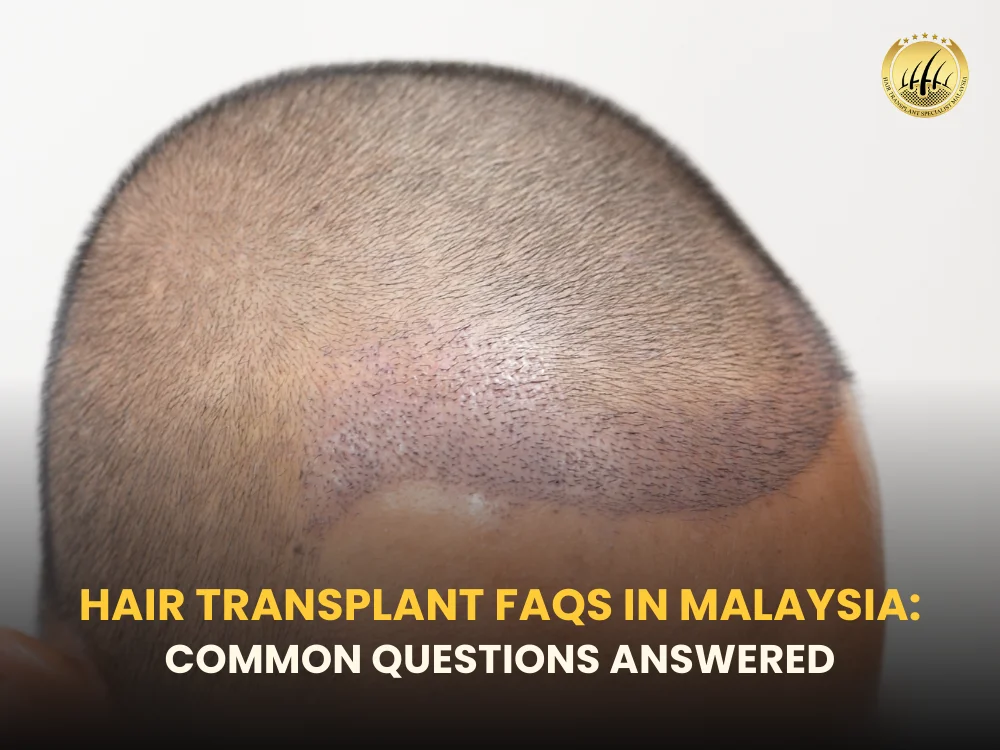
Hair loss can affect confidence, appearance, and even social interactions. In Malaysia, more men and women are exploring hair transplant procedures as a long-term solution for thinning hair and baldness. However, before making a decision, most people have many important questions. This comprehensive guide covers the most searched Hair Transplant FAQ in Malaysia — from cost and safety to recovery time and results — helping you make an informed choice. Hair Transplant FAQ: What You Should Know Before Treatment If you’ve been researching hair restoration, you’ve likely encountered numerous Hair Transplant FAQ about techniques, risks, and outcomes. In Malaysia, hair transplant procedures such as FUE (Follicular Unit Extraction) and DHI (Direct Hair Implantation) are widely performed by qualified doctors in aesthetic and dermatology clinics. Understanding the process, realistic expectations, and recovery timeline is essential before committing to treatment. Below, we answer the most common questions patients ask during consultations. 1. What Is a Hair Transplant? A hair transplant is a minimally invasive surgical procedure that moves healthy hair follicles from a donor area (usually the back or sides of the scalp) to areas experiencing thinning or baldness. The transplanted follicles are genetically resistant to DHT (dihydrotestosterone), the hormone responsible for androgenetic alopecia. Once implanted, they continue to grow naturally. 2. What Are the Main Techniques Used in Malaysia? In Malaysia, two modern techniques dominate the field: FUE (Follicular Unit Extraction) Individual follicle extraction No linear scar Faster healing time Suitable for most patients DHI (Direct Hair Implantation) Uses an implanter pen Greater control over angle and density Ideal for precise hairline design Both methods are safe when performed by experienced practitioners. 3. Who Is a Suitable Candidate? You may be suitable if you: Have male or female pattern baldness Possess a strong donor area Are in good general health Have realistic expectations Patients with advanced baldness may require more grafts, while those with active scalp conditions must treat underlying issues first. 4. Is Hair Transplant Painful? One of the most common Hair Transplant FAQ is about pain. The procedure is performed under local anesthesia, meaning patients remain awake but feel minimal discomfort. Some mild soreness may occur after the anesthesia wears off, but it is manageable with prescribed medication. Most patients describe the experience as more comfortable than expected. 5. How Long Does the Procedure Take? The duration depends on the number of grafts: 1,000–2,000 grafts: 4–6 hours 3,000–4,000 grafts: 6–8 hours Large sessions may be split into two days. Clinics in Kuala Lumpur and other major cities often provide same-day discharge. 6. What Is the Recovery Timeline? Recovery follows a predictable pattern: Days 1–7: Mild redness and swelling Small scabs form around grafts Weeks 2–4: Temporary shedding (shock loss) Months 3–4: New hair begins growing Months 6–12: Noticeable density improvement Final results visible Patients are usually able to return to office work within a few days. 7. Are the Results Permanent? Yes. Because donor hair is resistant to DHT, transplanted follicles typically continue growing permanently. However, non-transplanted hair may continue thinning over time. Doctors often recommend maintenance treatments such as: Minoxidil Finasteride (for men) PRP therapy This helps preserve overall scalp density. 8. How Much Does a Hair Transplant Cost in Malaysia? Cost varies depending on: Number of grafts Technique used (FUE or DHI) Clinic reputation Surgeon expertise In Malaysia, prices typically range from RM 10,000 to RM 25,000. While cheaper options exist overseas, many patients prefer local clinics for safety, follow-up care, and convenience. 9. Are There Risks or Side Effects? Hair transplant is generally safe, but minor temporary effects may include: Swelling Redness Itching Numbness Temporary shedding Serious complications are rare when performed in licensed medical facilities. Choosing a qualified doctor reduces risks significantly. 10. When Will I See Full Results? Patience is essential. Hair grows in cycles. Visible improvement begins around month three, with fuller density developing between months six and twelve. In some cases, final maturation may take up to 15 months. The results look natural because the hair grows from your own follicles. Hair Transplant FAQ: Male vs Female Hair Transplant Another important topic within Hair Transplant FAQ involves gender differences. For men: Focus on restoring receding hairline and crown Larger bald areas may require more grafts For women: Often treat diffuse thinning Hairline typically remains intact May require unshaven FUE technique Women usually require a customized density-focused approach. Hair Transplant FAQ: Can I Combine It with Non-Surgical Treatments? Yes — and in many cases, combination therapy is strongly recommended to maximize both short-term graft survival and long-term hair stability. A hair transplant restores hair to thinning or bald areas, but it does not stop the progression of underlying hair loss. That’s why many clinics integrate supportive non-surgical treatments to strengthen existing hair and protect future density. Here are the most commonly recommended options: 1. PRP (Platelet-Rich Plasma) Platelet-Rich Plasma therapy involves drawing a small amount of your blood, processing it to concentrate growth factors, and injecting it into the scalp. How it helps: Improves blood supply to transplanted grafts Stimulates dormant hair follicles Reduces post-surgery shedding Speeds up healing PRP is often performed before surgery, during the procedure, or as maintenance sessions after transplantation. 2. Low-Level Laser Therapy (LLLT) Low-Level Laser Therapy uses specific wavelengths of red light to stimulate cellular activity in hair follicles. Benefits include: Increased cellular energy production Improved scalp circulation Reduced inflammation Support for existing thinning hair LLLT devices may be used in-clinic or at home under medical guidance. 3. Medical Scalp Treatments These may include medicated shampoos, topical growth stimulants, or doctor-prescribed medications such as Minoxidil or Finasteride. Why they matter: Stabilize ongoing hair loss Protect non-transplanted hair Improve overall scalp health Enhance long-term density Your doctor will assess whether these medications are suitable for you based on age, gender, and medical history. Why Combination Therapy Works A transplant moves healthy follicles to thinning areas — but combination therapy: Protects your native hair Enhances graft survival Reduces shock loss Supports long-term maintenance Think of surgery as the
Hair Transplant Timeline: From Consultation to Full Results
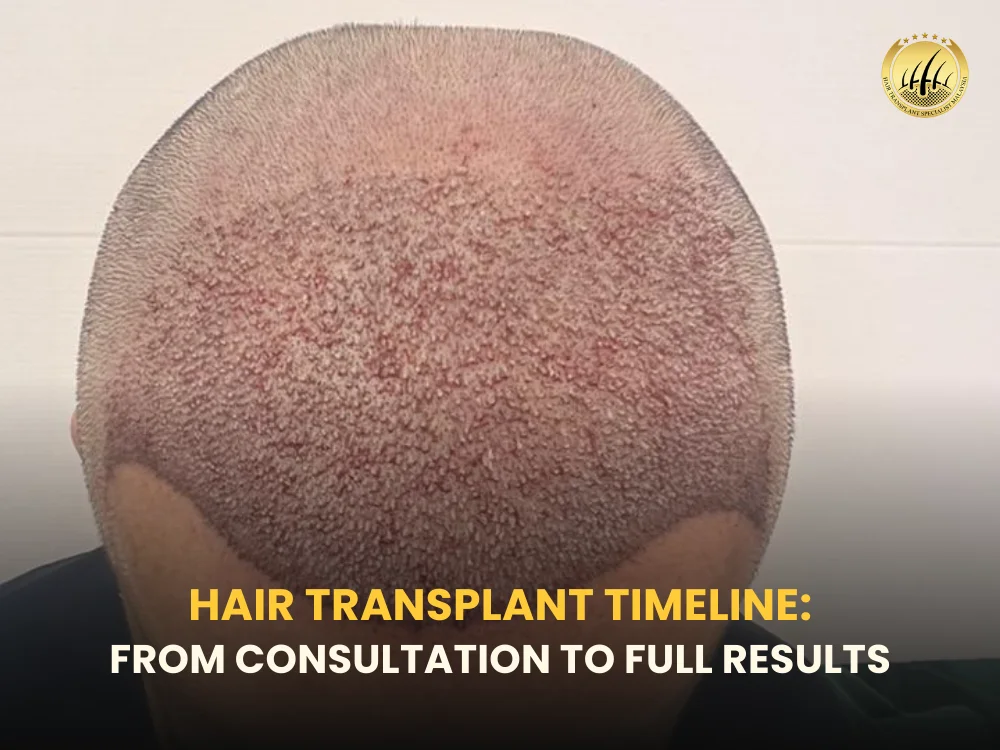
Undergoing a hair transplant is a big decision — not just financially, but emotionally. One of the most common questions patients ask is: “How long does it take to see results?” Understanding the hair transplant timeline helps you set realistic expectations, reduce anxiety, and follow the right aftercare steps. From your initial consultation to seeing full hair growth, the journey typically spans 12–18 months. Let’s break down every stage in detail. Understanding the Hair Transplant Timeline The hair transplant timeline refers to the complete process from consultation, surgery day, recovery phase, shedding period, and finally achieving full hair density. While techniques like FUE (Follicular Unit Extraction) and DHI (Direct Hair Implantation) offer faster healing compared to FUT, the biological hair growth cycle still determines when visible results appear. Hair grows in natural cycles: Anagen (growth phase) Catagen (transition phase) Telogen (resting/shedding phase) Because transplanted grafts follow this cycle, patience is essential. Stage 1: Initial Consultation (Week 0) The journey begins with a detailed consultation at a certified hair restoration clinic. During this stage, the surgeon will: Assess your scalp condition and donor area Evaluate hair density and hairline design Identify the cause of hair loss (often androgenetic alopecia) Discuss medical history Estimate the number of grafts required Clinics may use digital scalp analysis tools to calculate graft survival rates and predict coverage. This step ensures you are a suitable candidate and helps create a personalized treatment plan. Stage 2: Pre-Procedure Preparation (1–2 Weeks Before Surgery) Once surgery is scheduled, patients receive preparation guidelines: Avoid smoking and alcohol Stop certain medications (if advised) Avoid blood-thinning supplements Wash hair with prescribed shampoo Arrange post-surgery transport Proper preparation improves graft survival and minimizes complications. Stage 3: Surgery Day (Day 1) On the day of your procedure: Local anesthesia is administered Grafts are extracted from the donor area Follicles are implanted into the recipient area Depending on graft count (e.g., 2,000–4,000 grafts), the procedure may take 6–8 hours. You’ll leave the clinic the same day with aftercare instructions and medication. Stage 4: Immediate Recovery (Days 1–7) This phase focuses on healing. What to expect: Mild swelling Redness Tiny scabs around grafts Tightness in donor area By Day 3–5: Swelling usually subsides Scabs begin forming By Day 7–10: Scabs naturally fall off Most visible signs of surgery disappear It’s critical not to scratch or rub the scalp during this period. Stage 5: Shedding Phase (Weeks 2–8) This stage surprises many patients. Around 2–4 weeks after surgery, transplanted hairs begin to fall out. This is called shock loss. Important to remember: Shedding is normal Hair follicles remain intact It signals the start of a new growth cycle This is part of the natural hair transplant timeline and does not mean failure. Stage 6: Dormant Phase (Months 2–3) After shedding, the scalp may look similar to pre-surgery. This “quiet phase” can feel discouraging, but beneath the skin: Follicles are adapting Blood supply is stabilizing Roots prepare for new growth Patience is key during this stage. Stage 7: Early Growth Phase (Months 3–4) New hair begins to emerge. Initially, hair appears: Thin Soft Uneven This is completely normal. Early growth may look patchy. Approximately 10–20% of final results are visible by month four. Stage 8: Noticeable Improvement (Months 5–6) At this stage: Hair becomes thicker Density increases Hairline shape becomes clearer Around 40–50% of final results are visible. Most patients feel significantly more confident during this period. Stage 9: Major Growth Phase (Months 7–9) This is when transformation becomes obvious. You may notice: Substantial density improvement Better styling ability Natural blending with existing hair About 70–80% of final growth is achieved by month nine. Hair texture also improves during this stage. Stage 10: Full Results (Months 12–18) Final results are typically visible between 12 and 18 months. At this point: Hair reaches full thickness Density stabilizes Natural growth cycle is established Final hairline is fully defined Crown areas sometimes take longer (up to 15–18 months) compared to frontal hairline. Factors That Influence the Hair Transplant Timeline Not all patients follow the exact same schedule. Several variables affect progress: 1. Technique Used DHI and FUE usually allow faster recovery than FUT. 2. Number of Grafts Higher graft counts may require longer healing. 3. Individual Healing Capacity Age, genetics, and health impact recovery speed. 4. Aftercare Compliance Following post-operative instructions improves graft survival. 5. Smoking & Lifestyle Smoking reduces blood circulation, delaying growth. Hair Transplant Timeline Comparison: FUE vs DHI vs FUT Stage FUE DHI FUT Healing Time 7–10 days 7–10 days 10–14 days Scarring Minimal Minimal Linear scar Early Growth 3–4 months 3–4 months 3–4 months Full Results 12–15 months 12–15 months 12–18 months Regardless of technique, the biological growth cycle remains similar. Emotional Journey During the Hair Transplant Timeline Hair restoration isn’t just a physical transformation — it’s a psychological journey. Understanding the emotional ups and downs that commonly occur after a hair transplant can help patients stay calm, confident, and patient throughout the process. Because results develop gradually, your emotions may change at different stages of the hair transplant timeline. Excitement after surgeryRight after the procedure, many patients feel hopeful and energized. Seeing the newly implanted grafts can create a strong sense of optimism. You’ve taken action to address hair loss, and that alone often boosts confidence. Anxiety during the shedding phaseAround weeks 2–6, transplanted hairs typically enter a temporary shedding phase (often called “shock loss”). This is completely normal, but it can be emotionally challenging. Patients sometimes worry that the procedure didn’t work — even though shedding is a necessary part of the growth cycle. Impatience at 3 monthsBy month three, visible growth is still minimal for most people. This is when impatience often peaks. It may feel like progress is slow, but beneath the surface, follicles are actively transitioning into the growth phase. Satisfaction at 6 monthsAround the six-month mark, noticeable improvement usually begins. Hair starts to look fuller, and styling becomes easier. This stage often restores confidence and reassures patients that the procedure is