Corrective Hair Transplant Malaysia: The Complete Revision Guide
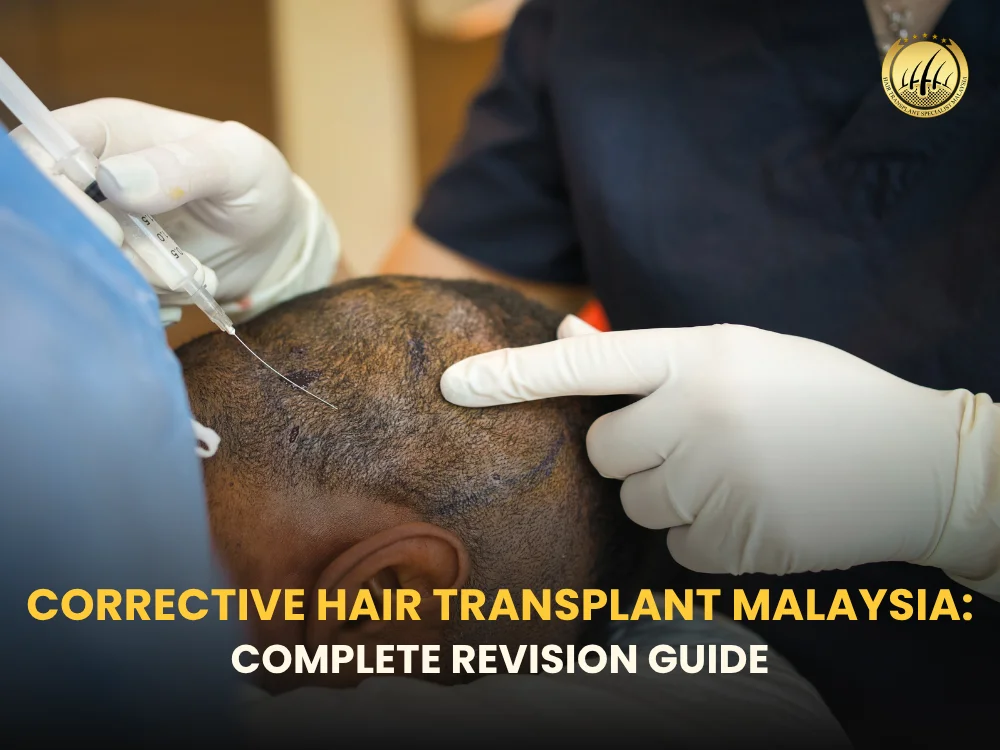
Corrective Hair Transplant Cost Estimator Select your repair scope to estimate your revision investment in Malaysia. 1. Select Repair Type: Minor Touch-up / Hairline Correction (Up to 1,000 grafts)Moderate Revision / Patchy Graft Repair (1,000 – 2,500 grafts)Complex Full Scalp Overhaul & Scar Repair (2,500+ grafts) 2. Preferred Extraction Method: Advanced FUE (Follicular Unit Extraction)BHT / Combination (Body Hair Transplant for depleted donor) Estimated Price Range (MYR): RM 15,000 – RM 28,000 *Prices are rough estimates for corrective procedures in Malaysia and vary based on individual scalp tissue condition. Get Exact Quote via WhatsApp A corrective hair transplant is a specialized revision surgery designed to fix, improve, or camouflage the unnatural or unsuccessful results of a previous hair restoration procedure. It repairs issues like pluggy hairlines, scarring, or poor graft angles to restore a natural, aesthetically pleasing appearance. Understanding Corrective Hair Transplant What Is a Corrective Hair Transplant? A corrective hair transplant is a microsurgical intervention focused on reversing aesthetic or structural flaws from prior Follicular Unit Extraction (FUE) or Follicular Unit Transplantation (FUT) surgeries. Unlike initial operations that focus strictly on filling bald spots, revision procedures require deep artistic precision to correct unnatural angles, fix low or aggressive hairlines, and resolve donor-site depletion. Why Previous Hair Transplants Fail Many failed hair transplants stem from inexperienced technicians, poor surgical planning, or disregard for future hair miniaturization. Common root causes include improper graft selection, ignoring natural hair growth direction, and over-harvesting the donor region. When clinics fail to respect individual physiological traits, patients are left with cosmetic deformities that demand specialized revision. Common Signs You Need Revision Surgery “Pluggy” or Doll-like Appearance: Multi-hair grafts placed rigidly along the front hairline instead of fine single hairs. Unnatural Growth Angles: Hair follicles pointing straight out or downward incorrectly, clashing with natural growth dynamics. Widened Linear Scars: Noticeable stretching or hypertrophic scarring from past strip surgeries. Patchy Density: Uneven distribution leaving stark gaps between native and transplanted hair. Advanced Techniques for Hair Transplant Repair Follicular Unit Extraction (FUE) for Revision FUE is frequently chosen for revision cases because individual follicular units can be precisely harvested without leaving a linear scar. Surgeons can safely extract misplaced grafts from the hairline one by one and relocate them to more appropriate areas, such as the crown or mid-scalp. Camouflage Techniques and Strategic Placement When misaligned grafts cannot be safely extracted, expert surgeons use camouflage. By placing soft, single-hair grafts strategically in front of poorly placed plugs, practitioners break up harsh lines and recreate a natural framing effect for the face. The Corrective Procedure Process Initial Consultation and Repair Strategy A comprehensive medical evaluation maps out your scalp’s remaining donor supply and evaluates tissue health. Surgeons design a bespoke blueprint that addresses past mistakes while conserving finite follicular reserves for long-term aging. Managing Scar Tissue and Graft Placement Prior surgeries often leave underlying fibrosis or scar tissue, which restricts blood supply. Surgeons utilize specialized micro-punches and refined implantation protocols to ensure newly placed grafts successfully anchor and receive adequate vascularization. Recovery and Post-Post-Operative Care What to Expect Immediately After Surgery Mild swelling, redness, and tiny scabs around the newly placed grafts are standard during the first week. Patients receive explicit post-operative guidelines detailing gentle washing techniques, sleeping positions, and prescribed medications to eliminate infection risks. Healing Timeline and Milestone Weeks Weeks 1 to 2: Grafts anchor securely; scabs gently shed off. Weeks 3 to 8: Temporary shock loss may occur as native and transplanted hairs rest. Months 3 to 6: New, healthy hair growth begins to emerge visibly. Months 12 to 18: Final maturation, density, and natural texture settle completely. Choosing the Right Clinic in Malaysia Qualifications of Specialist Surgeons Revision surgery is significantly more complex than a standard first-time procedure. Patients should verify that their treating doctor holds verified credentials, specialized board certifications, and extensive portfolios dedicated exclusively to corrective hair surgery. Evaluating Before and After Repair Portfolios Reviewing documented case studies allows you to assess a clinic’s technical capability. Look for verifiable close-up photographs of hairline redesigns, scar repair, and dense packing transformations that showcase seamless, undetectable outcomes. Costs and Financial Planning in Malaysia Cost Factors for Revision Surgeries Revision procedures typically command higher per-graft investments than standard procedures due to the technical delicacy required to navigate scarred tissue and extract deeply embedded follicles. The total fee depends heavily on graft count, extraction complexity, and surgical hours. Estimated Price Range in Malaysia Malaysia remains a leading medical tourism hub because it offers world-class clinical infrastructure at competitive global rates. Corrective procedures generally range from RM8,000 to RM30,000+ (approximately $2,000 to $7,000+ USD), varying by case complexity and the chosen medical facility. Clinical Insight: Revision hair surgery demands meticulous tissue handling. Because blood supply is often compromised by prior scarring, spacing out graft placement or utilizing regenerative therapies like PRP can significantly boost graft survival and integration rates. Frequently Asked Questions What causes a hair transplant to look unnatural? Unnatural results usually stem from placing multi-hair follicular units along the frontal hairline, ignoring the natural micro-irregularities of growth, or implanting grafts at incorrect angles that defy the patient’s native hair flow. Can old hair transplant scars be fixed? Yes. Linear strip scars can often be revised through surgical excision, trichophytic closure techniques, or by camouflaging the area using FUE graft placement directly into the scar tissue. Is a corrective hair transplant more painful than the first one? The procedure utilizes local anesthesia, ensuring you remain comfortable throughout. However, because surgeons work through existing scar tissue, post-operative tightness or minor discomfort can occasionally be slightly more pronounced. How many grafts are needed for a repair procedure? The graft count varies widely based on the extent of the correction. Minor hairline softening may require only 500 to 1,000 grafts, whereas extensive reconstruction involving plug removal and density rebuilding can require 2,500+ grafts. When is the right time to undergo corrective surgery? Most ethical specialists recommend waiting at least 12 months after your initial surgery. This ensures that the
Celebrity Hair Transplant in Malaysia: Celebrities Have Had One?
A celebrity hair transplant is an advanced, high-discretion hair restoration procedure utilizing precise techniques like FUE or DHI. Designed for minimal downtime and undetectable scarring, it ensures natural hairlines, optimal graft survival, and immediate return to public life for high-profile individuals. Why Celebrities Choose Advanced Techniques Public figures face intense scrutiny under high-definition cameras and media spotlights, making natural aesthetics non-negotiable. Advanced techniques eliminate linear scars and unnatural “pluggy” appearances. By mimicking natural hair growth angles, direction, and density, modern procedures allow public figures to undergo restoration securely and return to the screen seamlessly. Defining High-End Hair Restoration Standards High-end hair restoration elevates standard medical procedures into an exacting art form. It demands meticulous graft selection, ultra-fine micro-punches, and strict adherence to international safety protocols. Clinics operating at this tier prioritize complete patient confidentiality, bespoke treatment environments, and bespoke care models tailored to public figures who cannot afford visible operational downtime. Famous Global Celebrities Who Have Undergone Hair Transplants The social stigma surrounding hair restoration has largely vanished, driven heavily by public figures who openly embrace or visibly showcase the benefits of modern procedures. From international sports stars to Hollywood icons, many influential individuals have turned to advanced hair transplants to revitalize their personal and professional image: Wayne Rooney: One of the most famous pioneers of modern transparency, the English football icon openly shared his FUE hair transplant journey in 2011, inspiring millions of men to address hair thinning early. Elon Musk: The tech entrepreneur underwent a transformative hair restoration procedure early in his career, significantly altering his hairline and overall appearance using meticulous grafting techniques. Gordon Ramsay: The world-renowned celebrity chef opted for FUE procedures to restore temples and reinforce thinning areas, maintaining a sharp, camera-ready look. Jimmy Carr: The popular television comedian openly discussed his 2020 FUE hair transplant, praising how a dense frontal hairline and defined framing enhanced his stage presence and confidence. David Beckham: Though subject to years of media speculation regarding natural aging, style icon David Beckham displays a restored, full, and impeccably designed hairline indicative of modern, high-end follicular restoration. Popular Hair Transplant Techniques in Malaysia FUE Hair Transplant Follicular Unit Extraction (FUE) involves harvesting individual follicular units directly from the donor area using specialized micro-punches. Because it avoids linear incisions, it leaves tiny, virtually invisible dot scars. Malaysia’s leading medical hubs utilize refined FUE variants to maximize patient comfort and accelerate healing timelines. Achieving Natural Results: Design and Density Customized Hairline Design A successful hair restoration blueprint respects facial proportions, age-appropriate maturation, and bone structure. Master surgeons avoid flat, straight lines that look artificial. Instead, they recreate irregular, soft micro-irregularities along the frontal zone to match natural anatomical growth patterns. Graft Placement and Density Control Achieving a full look requires strategic placement: single-hair grafts are meticulously positioned along the very front edge, while multi-hair grafts populate the interior zones to build volume. Controlling density prevents over-harvesting of the donor site and preserves long-term scalp health. Hair Transplant Cost in Malaysia Average Price Range for Premium Procedures The cost of premium hair restoration in Malaysia typically ranges from RM 8,000 to RM 30,000+ (approximately USD $2,000 to $7,000+), depending heavily on the scale of the procedure. Per-graft pricing generally spans between RM 6 to RM 18, reflecting the technical complexity and the expertise of the operating surgeon. Factors Affecting the Total Cost Total Graft Count: Larger balding areas require more grafts, increasing procedural time and cost. Chosen Technique: Specialized methods like un-shaved celebrity FUE demand advanced skill, raising the per-graft investment. Surgeon and Clinic Reputation: Facilities equipped with top-tier technology and renowned specialists command higher fees. Selecting a Hair Transplant Clinic in Malaysia Surgeon Expertise and Qualifications The single most critical factor in hair restoration success is the operating doctor’s skill. Look for certified plastic surgeons or dermatologists with specialized fellowship training in hair restoration surgery. Board certifications and memberships in international bodies like the International Society of Hair Restoration Surgery (ISHRS) serve as strong trust signals. Clinic Facilities and Safety Standards World-class clinics maintain pristine, sterile operating theatres equipped with advanced magnification and illumination tools. Adherence to strict Ministry of Health regulations ensures that emergency protocols are in place, minimizing infection risks and safeguarding patient health throughout the surgical journey. The Hair Transplant Procedure and Recovery What Happens During the Surgery The procedure begins with local anesthesia to ensure the donor and recipient areas are completely numb. Follicles are carefully extracted from the back or sides of the head, sorted under microscopic magnification, and stored in a nutrient-rich solution. Finally, the surgeon meticulously creates recipient sites or implants the grafts directly. Post-Operative Recovery Timeline Days 1 to 7: Tiny scabs form around the newly planted grafts. Mild swelling or redness typically subsides within the first week. Weeks 2 to 4: A normal shedding phase occurs where transplanted hairs fall out; this is a standard part of the follicle lifecycle. Months 3 to 6: New, permanent hair growth begins to sprout through the scalp. Months 12 to 18: Final maturation, full density, and complete structural results become visible. Clinical Experience Insight: Successful outcomes rely heavily on atraumatic graft handling and minimizing out-of-body time for follicles. Maintaining strict tissue hydration and precise temperature control during extraction dramatically boosts long-term graft survival percentages. Frequently Asked Questions What is a celebrity hair transplant? A celebrity hair transplant is an advanced FUE procedure prioritizing strict anonymity, minimal downtime, zero linear scarring, and immaculate artistic hairline design tailored for individuals in the public eye. Are hair transplant results in Malaysia permanent? Yes. Transplanted hair follicles are genetically resistant to the hormone DHT (dihydrotestosterone) responsible for male pattern baldness, meaning they will continue to grow naturally for a lifetime. How much does a high-end hair transplant cost in Malaysia? High-end procedures typically range from RM 8,000 to RM 30,000+, depending on the total graft count required and whether standard FUE or advanced techniques are selected. Will people be able to tell I had a hair transplant? When performed by
What Is a Black Market Hair Transplant?
What Defines a “Black Market” Hair Transplant? Hover or tap each point to learn how to identify unsafe practices. Definition: A black market hair transplant refers to surgeries performed by uncertified technicians or non-medical personnel in unlicensed facilities, often bypassing strict safety, hygiene, and ethical standards. 1. Performed by Unlicensed Technicians RED FLAG In black market clinics, doctors only consult briefly (or not at all), while untrained assistants perform the actual surgical incisions and graft extractions. 2. Operating Outside Medical Regulations RED FLAG These setups often operate in illegal spaces, apartments, or unlicensed centers without proper sterilization protocols or emergency medical equipment. 3. Over-Harvesting & Graft Damage RED FLAG Unqualified personnel often extract too many hair follicles at once to promise “maximum density,” permanently ruining the donor area and leaving severe scarring. Ask a Doctor via WhatsApp A black market hair transplant refers to an illegal hair restoration procedure performed by unlicensed individuals—such as beauticians, technicians, or unauthorized operators—outside regulated medical facilities. These underground practices bypass safety standards, proper sterilization protocols, and official oversight, frequently leading to botched aesthetic results, permanent scalp damage, severe infections, and life-threatening medical complications. What Is a Black Market Hair Transplant? Definition and How Underground Clinics Operate A black market hair transplant is an illegal surgical procedure conducted by individuals without a medical license. These illicit operations often run out of residential homes, unlicensed beauty salons, or temporary hotel rooms. Underground operators heavily rely on social media platforms like Instagram, TikTok, and direct messaging apps to lure patients. They advertise unrealistic outcomes, “painless” operations, and unlimited graft counts at a fraction of standard clinical fees. Unqualified Technicians vs Licensed Medical Doctors In a regulated setting, hair restoration is treated as a minor surgical procedure requiring years of specialized medical education. Feature Unqualified Technicians (Black Market) Licensed Medical Doctors Qualifications Minimal or informal training; no medical degree Fully registered medical doctor (MD/MBBS) Legal Status Illegal, non-compliant with health authorities Registered with government medical boards Scalp Assessment Blind extractions; cannot diagnose hair loss causes Comprehensive clinical evaluation of donor site Surgical Execution Performs entire surgery without oversight Hands-on execution of incisions and design Complication Readiness Zero emergency medical protocols Trained in Advanced Cardiac Life Support (ACLS) Major Dangers and Risks of Unlicensed Hair Transplants Severe Infections and Poor Sterilization Standards Black market clinics frequently ignore basic sterile techniques. The reuse of non-autoclaved instruments, contaminated punch needles, or dirty environments can introduce dangerous bacteria into open scalp wounds. Patients risk acquiring severe bacterial skin infections like Staphylococcus aureus, necrosis (tissue death), or blood-borne pathogens such as Hepatitis B, Hepatitis C, and HIV. Donor Area Overharvesting and Irreversible Scalp Damage Extracting hair follicles requires precise depth and spacing. Unlicensed technicians routinely overharvest the donor zone at the back and sides of the head to reach exaggerated graft counts. Critical Risk: Overharvesting leaves the donor region thin, patchy, and permanently scarred with a “moth-eaten” appearance. Once donor hair follicles are destroyed, they cannot grow back. [Safe Harvesting] –> Spaced extraction preserves original donor density [Overharvesting] –> Excessive extraction creates permanent, patchy scars Botched Hairlines and Unnatural Growth Patterns Designing a natural hairline demands artistic skill and anatomical understanding. Unqualified operators often place hair follicles at straight, rigid angles or fail to match natural growth directions. Common errors include: Using multi-hair grafts along the frontal hairline (creating a harsh “doll hair” appearance). Placing the hairline too low or unnatural for the patient’s facial structure. Misjudging hair direction, causing transplanted hair to grow sideways or sticking straight up. Anesthesia Risks and Lack of Emergency Protocols Local anesthesia requires precise dosage calculations based on patient body weight and medical history. Overdosing local anesthetics like lidocaine can lead to Systemic Toxicity (LAST), triggering seizures, cardiac arrhythmia, or fatal collapse. Unlicensed operators lack emergency oxygen, resuscitation equipment, and medical training to manage acute allergic reactions (anaphylaxis). Malaysia Ministry of Health (MOH) Standards for Hair Restoration Legal Requirements for Aesthetic Medical Practice in Malaysia In Malaysia, aesthetic and surgical procedures fall strictly under the jurisdiction of the Ministry of Health (MOH). Under the Private Healthcare Facilities and Services Act 1998, any facility performing invasive hair restoration must be registered as a licensed medical clinic or private hospital. Performing surgical extractions or skin incisions in a beauty salon or home studio is illegal and punishable under Malaysian law. Importance of LCP (Letter of Credentialing and Privileging) Certification The MOH enforces a strict framework to protect public safety. A general medical degree alone does not allow a doctor to perform aesthetic procedures independently. Doctors must obtain the official Letter of Credentialing and Privileging (LCP) in Aesthetic Medical Practice issued by the MOH. The LCP confirms that the practitioner has undergone supervised clinical training and passed rigorous government board evaluations. How to Identify a Black Market Hair Transplant Clinic in Malaysia Common Red Flags and Warning Signs Extremely Low Prices: Costs priced drastically below market standard (e.g., “unlimited grafts” for under RM3,000). Non-Medical Venues: Consultations or procedures hosted in beauty parlors, wellness centers, or residential places. Aggressive Up-selling: Pushy sales staff offering massive discounts for immediate cash bookings. Vague Staff Details: Failure to disclose the full name or medical registration number of the operating physician. Zero Medical Screening: Skipping pre-operative blood tests, blood pressure checks, or detailed medical history reviews. The Token Doctor Trap and Unsupervised Technicians A common tactic used by illegitimate centers is the “Token Doctor Trap.” The clinic features a licensed doctor’s picture on their website or has them conduct a brief 2-minute greeting. However, once anesthesia is administered, the doctor leaves the room entirely, allowing uncertified technicians to perform the incisions and graft extractions. In a legal, safe medical practice, the certified doctor executes the surgical steps personally. How to Safely Choose a Qualified Hair Transplant Specialist in Malaysia Verifying Doctor Credentials with Malaysian Medical Council (MMC) Before committing to any procedure, verify your practitioner’s legal status: Check MMC Registration: Search the doctor’s full name on the official Malaysian Medical Council (MMC) MeRITS System
Ghost Hair Transplant in Malaysia: Meaning, Risks, and Safety
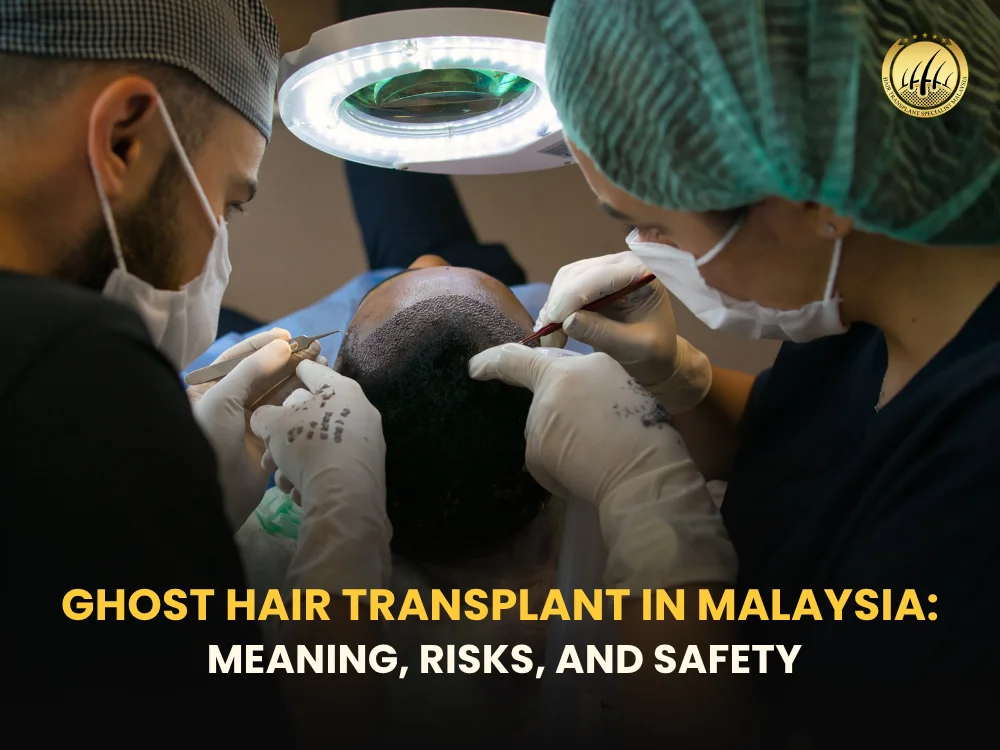
Safety Check Is Your Hair Clinic Safe? Select all statements that apply to your prospective hair transplant clinic to check for “Ghost Doctor” red flags. The surgeon personally conducts the initial consultation (not just a salesperson). The doctor performs critical surgical steps (donor design and graft incision creation). The doctor is verified with Malaysia’s MOH / LCP (Letter of Credentialing & Privileging). The procedure takes place in a registered medical clinic (not a beauty salon, hotel, or spa). Unchecked Check the options above Ghost hair transplants occur when unlicensed personnel execute medical steps without a certified doctor present, risking permanent scarring and infection. Verify Doctor Safety on WhatsApp A ghost hair transplant refers to a deceptive medical procedure where a qualified surgeon consults with the patient, but unlicensed technicians perform the actual surgery—such as graft extraction and channel creation. The doctor vanishes or acts as a ghost during the critical stages, putting patient safety and surgical outcomes at risk. Definition of Ghost Hair Transplantation Ghost hair transplantation is an unethical practice in hair restoration surgery. In this scenario, a certified medical doctor completes the initial evaluation or hairline design, but delegate the surgical steps—including harvesting follicular units and making scalp incisions—entirely to non-medical technicians. This practice misleads patients into believing they are receiving expert surgical care, when in reality, uncertified personnel are executing complex micro-surgical tasks. Doctor vs Unlicensed Technician Roles in Hair Surgery Understanding the legal and clinical boundary between a doctor and a technician is vital for your safety. Role Parameter Certified Medical Doctor Unlicensed Technician Legal Status Registered with Malaysian Medical Council (MMC) Non-medical support staff Surgical Incisions Fully authorized to perform recipient site creation Strictly prohibited by medical guidelines Graft Extraction Direct performance or active clinical supervision Assistance only (e.g., sorting, loading grafts) Complication Handling Qualified to administer local anesthesia & manage emergencies Unqualified to manage medical emergencies Signs and Red Flags of Ghost Hair Transplant Clinics Identifying a ghost clinic early prevents severe surgical complications and poor esthetic results. Look out for these major red flags during your consultation. Doctor Missing During the Procedure If the doctor who conducted your consultation disappears as soon as local anesthesia is administered, you are likely experiencing a ghost hair transplant. Medical guidelines mandate that a certified surgeon remain in the operating room to execute or directly supervise every step of the hair restoration procedure. Suspiciously Low Pricing Unusually low prices—often advertised as “unlimited grafts” at a fraction of market rates—are a massive warning sign. Operating a legitimate medical facility with qualified doctors, proper sterilization, and licensed staff carries overhead costs. Discounted rates often mean the clinic cuts costs by relying entirely on low-wage, unlicensed technicians instead of a doctor. Lack of Transparent Surgeon Credentials Reputable clinics proudly display their doctor’s qualifications, registration numbers, and medical board certifications. Be wary of clinics that: Use vague terms like “our expert clinical team” instead of naming the operating doctor. Refuse to provide the surgeon’s MMC Registration details. Prevent you from meeting the performing doctor prior to the day of surgery. Risks of Ghost Hair Transplants When unlicensed technicians perform invasive procedures, the likelihood of irreversible damage increases significantly. Technician-Led Surgery ──> Poor Depth Control ──> Severe Follicular Trauma ──> Low Graft Survival Severe Scalp Scarring and Infections Surgical scalp incisions require precise knowledge of vascular anatomy and skin depth. Unlicensed technicians often harvest grafts too close together or insert punches too deeply, leading to: Sub-dermal Necrosis: Skin tissue death caused by vascular compromise. Cobblestone Scarring: Raised, irregular scars around implanted follicles. Bacterial Infections: Poor aseptic techniques can trigger severe scalp sepsis. Damaged Donor Area and Poor Graft Survival Rates Over-harvesting in the donor zone (the back of the head) is a hallmark of inexperienced technician work. When hair follicles are extracted recklessly, the donor area becomes patchy and depleted, permanently destroying precious grafts. Furthermore, improper graft handling outside the body leads to high transection rates and poor survival. Unnatural Hairline Results Creating a natural hair restoration result demands artistic skill and anatomical precision. Technicians frequently make classic errors, such as placing multi-hair units along the front hairline, placing grafts at incorrect angles, or creating harsh, linear hairlines that look artificial. Malaysia MOH Guidelines on Hair Transplants The Malaysian Ministry of Health (MOH) enforces strict regulatory frameworks to protect patients from illegal medical practices. MMC Doctor Registration Requirements Every medical practitioner in Malaysia must hold a valid full registration and a current Annual Practising Certificate (APC) issued by the Malaysian Medical Council (MMC). It is illegal for anyone without an active MMC registration to perform invasive medical procedures in the country. MOH Letter of Credentialing and Privileging (LCP) Rules For aesthetic procedures—including surgical hair restoration—doctors must possess a specialized qualification. The MOH Aesthetic Medical Practice Guidelines require practitioners to obtain a Letter of Credentialing and Privileging (LCP). Important Note: A doctor without an active LCP in Aesthetic Medical Practice is not legally cleared by KKM (Kementerian Kesihatan Malaysia) to perform hair transplant surgeries. Restrictions on Unlicensed Technicians Performing Incisions Under Malaysian law and MOH guidelines, clinical technicians are only permitted to assist doctors with non-invasive supportive tasks. Making skin incisions, punching donor sites, or inserting grafts into recipient sites are strictly defined as medical acts reserved exclusively for qualified doctors. How to Avoid Ghost Hair Transplants in Malaysia Protecting yourself requires proactive verification before booking any procedure. Verifying Doctor MMC and LCP Status Before signing any consent forms or making payments: Search the official MMC MeRITS Portal to check if your doctor holds a valid Annual Practising Certificate. Confirm that the practitioner holds an active LCP certification recognized by the Ministry of Health Malaysia for aesthetic practice. Ensure the clinic itself is registered as a licensed medical clinic, not a beauty salon or medispa. Essential Questions to Ask Before Surgery Ask these critical questions during your pre-op consultation: “Will you, the doctor, personally perform the graft extractions and surgical incisions?” “May I see your MMC registration number and LCP certificate?” “What
Klinik Tanam Rambut Terbaik di Malaysia: Prosedur & Testimoni
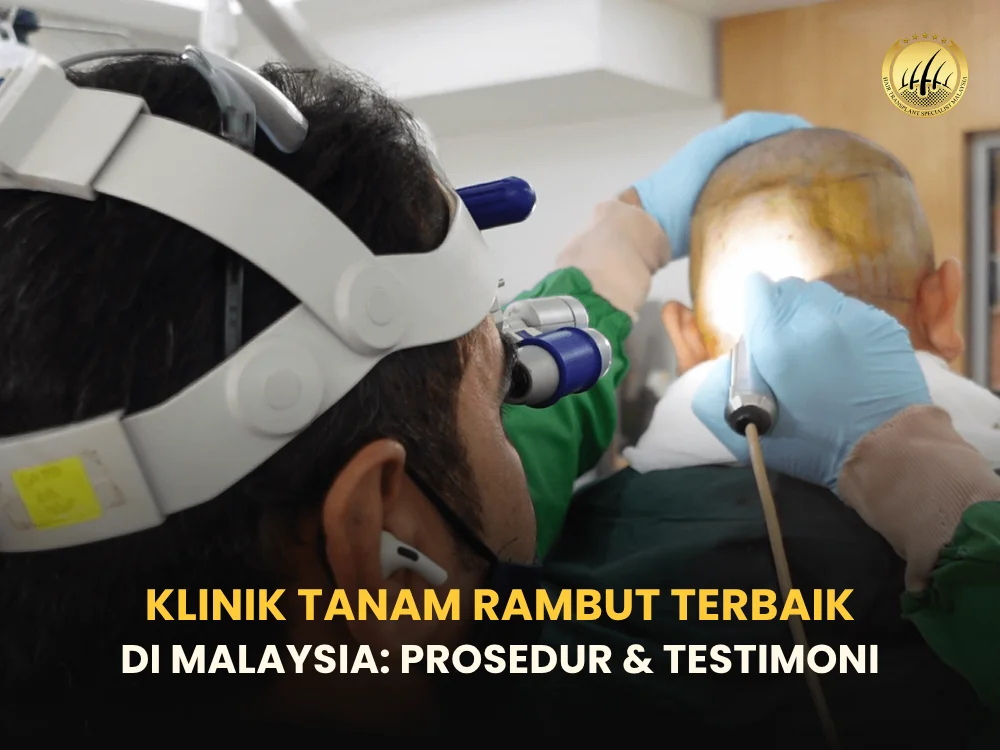
Semak Kriteria Klinik Pilihan Anda Tandakan kriteria yang ada pada klinik pilihan anda untuk melihat sama ada ia memenuhi standard terbaik. Doktor mempunyai kelayakan bertauliah (LCP / ABHRS) Menyediakan portfolio gambar ‘Sebelum & Selepas’ yang tulen Klinik berdaftar secara sah dengan KKM Konsultasi telus tanpa caj tersembunyi Sila tanda kriteria di atas… Ingin konsultasi pakar secara percuma untuk rambut anda? Hubungi Kami di WhatsApp Klinik tanam rambut adalah fasiliti perubatan estetik khusus yang menawarkan rawatan pemulihan rambut gugur kekal. Melalui prosedur pembedahan minor, doktor pakar akan memindahkan folikel rambut yang sihat dari kawasan penderma (selalunya di belakang kepala) ke kawasan yang mengalami kebotakan atau rambut jarang. Kriteria Memilih Klinik Tanam Rambut Terbaik dan Selamat Memilih klinik yang betul adalah langkah paling kritikal bagi memastikan keselamatan diri dan keberhasilan prosedur anda. Kelulusan KKM dan Tauliah LCP Doktor Pastikan klinik pilihan anda berdaftar dengan Kementerian Kesihatan Malaysia (KKM). Apa yang lebih penting, doktor yang mengendalikan prosedur wajib memiliki kelayakan Letter of Credentialing and Privileging (LCP) dalam bidang perubatan estetik. Anda boleh menyemak status pendaftaran doktor perubatan secara sah melalui portal rasmi Malaysian Medical Council (MMC). Nota Pakar: Mengambil jalan pintas dengan melakukan rawatan di salon kecantikan tidak berlesen atau dikendalikan oleh ‘doktor’ tanpa LCP boleh mengundang risiko jangkitan kuman kronik dan kegagalan graf rambut kekal. Ulasan dan Testimoni Sebenar Pengguna Selidik ulasan pengguna di platform neutral seperti Google Reviews atau forum perubatan. Cari testimoni yang memaparkan gambar sebelum dan selepas (before-after) yang jelas serta konsisten dalam tempoh 6 hingga 12 bulan untuk melihat hasil yang realistik. Apa Itu Prosedur Tanam Rambut (Hair Transplant)? Prosedur tanam rambut (hair transplant) adalah kaedah rawatan moden untuk mengatasi masalah kebotakan (alopecia) dan garis rambut yang semakin surut. Rawatan ini melibatkan pemindahan akar rambut yang kalis hormon DHT ke kawasan yang botak. Ia merupakan penyelesaian jangka masa panjang yang sangat efektif berbanding penggunaan ubat-ubatan topikal. Prosedur ini dilakukan secara pesakit luar di bawah bius setempat, bermakna anda boleh pulang pada hari yang sama. Teknik FUE (Follicular Unit Extraction) Teknik FUE adalah kaedah paling popular di Malaysia. Doktor akan mengekstrak folikel rambut secara individu menggunakan alat penebuk mikro khas sebelum menanamnya semula di kawasan botak. Kelebihan utama FUE adalah ia tidak meninggalkan parut linear yang ketara. Proses penyembuhan juga sangat cepat, menjadikannya pilihan utama bagi mereka yang gemar berambut pendek. Teknik FUT (Follicular Unit Transplantation) Teknik FUT, atau dikenali sebagai kaedah jalur (strip method), melibatkan pemotongan satu jalur kecil kulit berkepala dari kawasan penderma. Jalur ini kemudiannya dipisahkan kepada ratusan graf kecil di bawah mikroskop. Walaupun meninggalkan parut garisan halus di belakang kepala, FUT sangat sesuai untuk pesakit yang memerlukan jumlah graf yang besar dalam satu sesi. Teknik ini sering diiktiraf oleh badan antarabangsa seperti International Society of Hair Restoration Surgery (ISHRS) sebagai kaedah klasik yang masih sangat efektif. Teknik DHI (Direct Hair Implantation) Teknik DHI adalah inovasi terbaharu dan lanjutan daripada kaedah FUE. Menggunakan alat khas berbentuk pen yang dipanggil DHI Implanter, proses ekstraksi dan penanaman rambut dilakukan secara serentak. Kelebihan DHI adalah doktor mempunyai kawalan penuh terhadap sudut, kedalaman, dan arah pertumbuhan rambut. Ini memberikan hasil akhir yang kelihatan sangat padat dan semula jadi. Kos Tanam Rambut di Malaysia Kos rawatan di Malaysia adalah sangat kompetitif berbanding negara jiran, namun ia bergantung sepenuhnya kepada tahap kebotakan anda. Anggaran Harga Mengikut Jumlah Graf (Graft) Secara umumnya, harga tanam rambut dikira berdasarkan jumlah graf yang diperlukan. Satu graf biasanya mengandungi 1 hingga 4 helai rambut. Tahap Kebotakan Anggaran Jumlah Graf Anggaran Kos (RM) Ringan (Garis rambut surut) 1,000 – 1,500 graf RM 6,000 – RM 9,000 Sederhana (Botak bahagian depan/tengah) 1,500 – 2,500 graf RM 9,000 – RM 15,000 Serius (Kebotakan Pax Norwood 5-7) 2,500 – 4,000+ graf RM 15,000 ke atas Faktor yang Mempengaruhi Kos Rawatan Teknik yang Digunakan: Kaedah DHI biasanya lebih mahal daripada FUE dan FUT kerana memerlukan kepakaran dan peralatan yang lebih khusus. Pengalaman Doktor: Doktor pakar reputasi tinggi yang berpengalaman luas biasanya mengenakan kos premium. Ubat Tambahan: Pakej rawatan susulan seperti terapi PRP (Platelet-Rich Plasma) atau ubat pencegah gugur rambut pasca-prosedur boleh mempengaruhi kos keseluruhan. Proses dan Tempoh Pemulihan Selepas Tanam Rambut Fasa pemulihan memainkan peranan sebanyak 50% dalam menentukan sama ada rambut yang ditanam hidup subur atau gugur. Penjagaan Rapi Selepas Prosedur (Post-Op Care) Pada 3 hingga 5 hari pertama, kawasan implan akan kelihatan sedikit bengkak dan berkerak. Anda wajib memakai pelindung kepala yang disediakan dan tidur dalam posisi kepala mendongak 45 darjah. Penggunaan syampu khas mengikut panduan American Academy of Dermatology (AAD) sangat digalakkan untuk membersihkan kerak darah tanpa merosakkan graf baru. Avoid aktiviti fizikal berat atau senaman intensif selama 2 minggu. Garis Masa Pertumbuhan Rambut Baharu Minggu 2 – 6: Fasa shedding berlaku di mana rambut yang ditanam akan gugur. Jangan panik, ini adalah proses normal kerana akar rambut sedang memasuki fasa rehat (telogen). Bulan 3 – 4: Rambut halus baru mula tumbuh dari folikel yang ditanam. Bulan 6 – 9: Anda akan melihat perubahan ketara dengan rambut yang lebih tebal dan panjang. Bulan 12 – 18: Hasil akhir yang matang, lebat, dan kekal sepenuhnya dapat dilihat. Soalan Lazim (FAQ) Mengenai Klinik Tanam Rambut Adakah prosedur tanam rambut ini menyakitkan? Tidak. Prosedur ini dijalankan di bawah bius setempat (local anesthesia) pada kulit kepala. Anda hanya akan merasai sedikit gigitan semut semasa suntikan bius diberikan di peringkat awal, dan selepas itu anda tidak akan merasai sebarang kesakitan sepanjang prosedur berjalan. Berapa lama hasil tanam rambut boleh bertahan? Hasil pemulihan rambut melalui kaedah implan ini adalah bersifat kekal. Ini kerana folikel rambut yang diambil dari bahagian belakang kepala secara genetiknya adalah kuat dan imun terhadap hormon DHT yang menyebabkan kebotakan lelaki (male pattern baldness). Adakah rambut yang ditanam kelihatan semula jadi? Ya, dengan syarat prosedur dilakukan oleh doktor pakar yang mahir. Penggunaan teknik moden seperti DHI dan FUE membolehkan doktor menyusun arah serta sudut pertumbuhan rambut baru menyamai corak rambut asal anda. Siapa yang layak untuk melakukan prosedur ini? Individu yang mengalami keguguran rambut matang (androgenetic alopecia) dan mempunyai kawasan penderma (donor site) yang sihat serta tebal di bahagian belakang atau