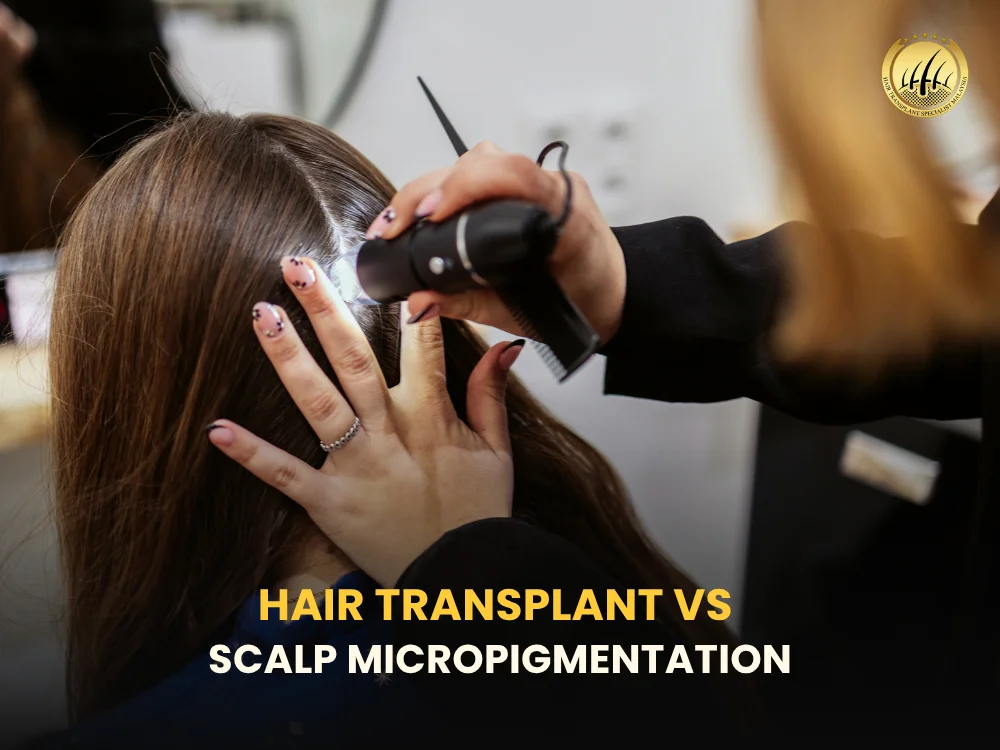
A hair transplant is a surgical procedure involving the redistribution of follicular units from a donor site to thinning areas to restore natural hair growth. Conversely, Scalp Micropigmentation (SMP) is a non-invasive cosmetic tattooing technique that uses medical-grade pigment to replicate the appearance of dense hair follicles or a buzzed hairstyle.
What is Hair Transplant vs SMP?
A hair transplant is a surgical procedure that relocates permanent hair follicles to thinning areas for natural growth. Scalp Micropigmentation (SMP) is a non-surgical medical tattoo that uses pigment dots to mimic the look of hair follicles. While transplants restore actual hair, SMP creates the illusion of density.
Hair Transplant vs Scalp Micropigmentation (SMP): Key Differences
Choosing between these two depends on your goals, budget, and the extent of your thinning. A transplant provides texture and length, while SMP provides color and coverage.
How Hair Transplant Works: Surgical Hair Restoration
Hair transplantation typically involves Follicular Unit Extraction (FUE) or Follicular Unit Transplantation (FUT). Surgeons harvest healthy follicles from the “donor area” (usually the back of the head) and implant them into balding zones.
Because these follicles are genetically resistant to DHT, the transplanted hair continues to grow naturally for a lifetime.
How Scalp Micropigmentation Works: Non-Surgical Hair Tattoo
SMP is often called a “hair tattoo,” but it uses specialized needles and medical-grade pigments. A technician deposits tiny dots of pigment into the dermal layer of the scalp.
This technique replicates the appearance of a “buzz cut” or adds a shadow of density behind thinning long hair. It does not involve surgery, incisions, or real hair growth.
Comparison of Results and Appearance
Natural Hair Growth vs The Shaved Look Effect
The biggest difference is texture. A transplant gives you real hair that you can style, cut, and wash. It is the gold standard for restoring a receding hairline or a thinning crown with actual volume.
SMP is 2D. It looks incredibly realistic from a distance but lacks height. It is best suited for those who prefer a “shaved head” aesthetic or want to camouflage a pale scalp peeking through thin hair.
Immediate Results vs Long-Term Maturation
SMP offers almost immediate gratification. You will see a darker, fuller-looking scalp right after your first session, though it usually requires three appointments for the final look.
In contrast, hair transplants require patience. Most patients experience “shock loss” where transplanted hairs fall out temporarily before the new, permanent hair begins to sprout at month four, with full results visible by month 12.
Procedure and Recovery Comparison
Treatment Duration and Number of Sessions
Hair Transplant: Usually a single, long session lasting 6 to 8 hours.
SMP: Typically 3 separate sessions, each lasting 2 to 4 hours, spaced a few weeks apart.
Downtime and Healing Process
Hair transplant recovery involves about 7 to 10 days of visible scabbing and mild swelling. You must follow strict post-operative care to ensure graft survival.
SMP recovery is minimal. There is usually some redness for 24 to 48 hours. Most people return to work the very next day, making it a popular choice for those with busy schedules.
Cost Analysis of Hair Transplant vs SMP in Malaysia
In Malaysia, the cost is a major deciding factor. Generally, SMP is more budget-friendly in the short term, while a transplant is a larger one-time investment.
| Feature | Hair Transplant (FUE/FUT) | Scalp Micropigmentation (SMP) |
| Initial Cost | Higher (Price per graft) | Lower (Price per area) |
| Maintenance | Low (Natural hair care) | Moderate (Touch-ups every 3–5 years) |
| Longevity | Permanent | Semi-permanent (Fades over time) |
Pros and Cons of Each Hair Restoration Method
Benefits and Risks of Hair Transplant
Pros: Real hair growth, permanent results, and a completely natural look.
Cons: Higher upfront cost, surgical risks like infection, and limited donor hair supply.
Benefits and Risks of Scalp Micropigmentation
Pros: No surgery, instant results, and works for Totalis/Universalis alopecia.
Cons: Pigment can fade or blue over time if poor ink is used, and it offers no physical texture.
Clinical Experience:
We often see patients who choose SMP to “fill in the gaps” after a transplant. This hybrid approach provides the best of both worlds: the physical hair of a transplant and the dense “shadow” of SMP to hide any remaining scalp visibility.
Choosing the Right Method for Your Level of Hair Loss
When to Choose a Hair Transplant
You are an ideal candidate if you have a stable donor area and want to regain length and volume. It is the best choice for Male Pattern Baldness (MPB) stages 2 through 5 on the Norwood Scale.
When to Choose SMP
SMP is excellent for those who are completely bald and have no donor hair left. It is also a fantastic solution for covering surgical scars from old FUT procedures or for women with diffuse thinning.
Frequently Asked Questions
Is SMP more affordable than a hair transplant?
Yes, SMP is generally more affordable. While a hair transplant in Malaysia can cost several thousand ringgit depending on graft count, SMP is priced by the size of the treatment area and typically costs significantly less upfront.
Can you combine a hair transplant with SMP?
Absolutely. Combining both is a common strategy to maximize the appearance of density. The transplant provides the real hair fibers, while SMP removes the contrast between the scalp and the hair, making the hair look twice as thick.
Which procedure lasts longer?
A hair transplant lasts longer because the moved follicles are permanent. SMP is semi-permanent; the pigment will naturally lighten over 3 to 5 years due to UV exposure and skin exfoliation, requiring a “touch-up” session.
Does SMP hurt more than a transplant?
Most patients describe SMP as a mild stinging sensation, similar to a traditional tattoo. Hair transplants are performed under local anesthesia, so you feel nothing during the surgery, though there may be mild soreness during recovery.
Will people be able to tell I had SMP?
When performed by a skilled technician using high-quality pigments, SMP is virtually indistinguishable from real hair follicles at a glance. However, it will not have the 3D texture of a transplant if someone touches your scalp.
Ready to reclaim your confidence?
Book a consultation at Hair Transplant Malaysia Clinic today to find out which treatment is perfect for your unique hair loss profile.