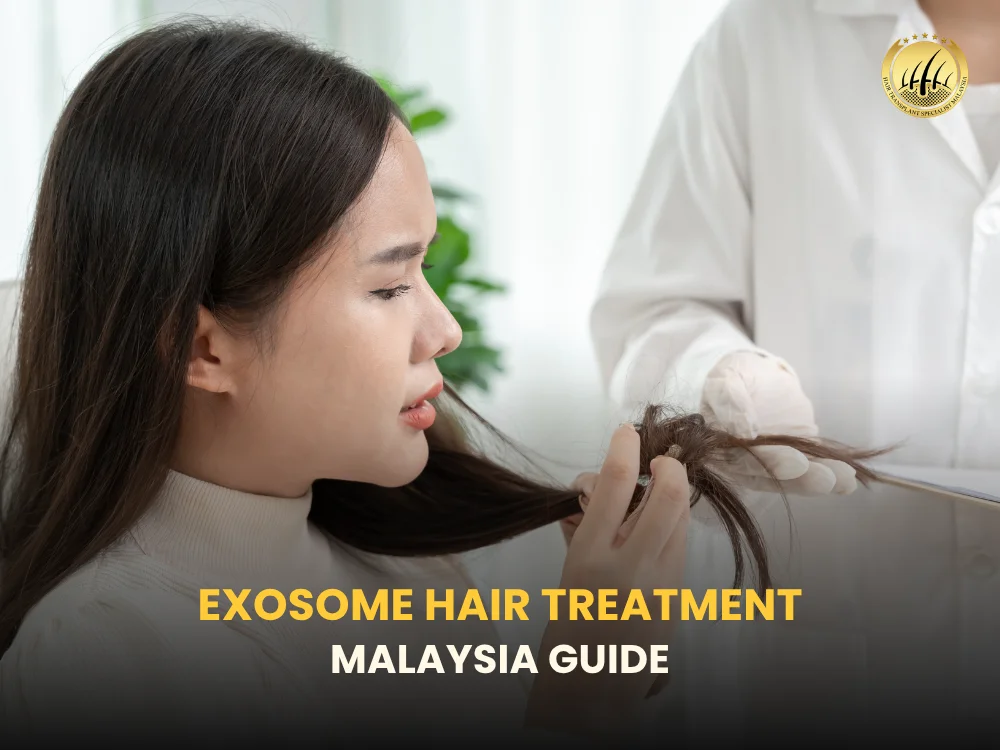
Exosome hair treatment is an advanced, non-surgical regenerative therapy that uses microscopic extracellular vesicles to reverse hair thinning. Derived from stem cells, these biotechnology-based vesicles deliver thousands of growth factors, coenzymes, and signaling proteins directly to dormant hair follicles, stimulating rapid cellular repair, reducing inflammation, and triggering robust new hair growth cycles.
What is Exosome Hair Treatment for Hair Loss
The Science Behind Exosomes and Hair Regrowth
Exosomes represent a massive leap forward in regenerative medicine. Unlike whole stem cells, exosomes are highly purified nanovesicles (roughly 30 to 200 nanometers in size) that act as intercellular messengers.
When introduced into the scalp, they travel directly to the dermal papilla cells within the hair follicles. They deliver a dense cargo of microRNA and messenger RNA (mRNA) that actively reprograms aging, miniaturized follicles. This process switches the hair follicles from a resting phase (telogen) back into an active growth phase (anagen), effectively counteracting the hormonal triggers of androgenetic alopecia.
Key Benefits of Exosome Therapy for Thinning Hair
Massive Growth Factor Density: Provides a significantly higher concentration of signaling proteins compared to traditional cellular therapies.
Anti-Inflammatory Action: Actively calms scalp micro-inflammation, which is a major, hidden cause of female and male pattern baldness.
Vascular Regeneration: Promotes angiogenesis, creating new microscopic blood vessels to deliver vital oxygen and nutrients to gasping follicles.
Zero Blood Draw: Extracted from sterile, laboratory-controlled donor stem cells (such as umbilical mesenchymal stem cells or specialized botanical sources like Damask Rose), removing the need to harvest patient tissue.
How Exosome Hair Treatment Works
The Step-by-Step Procedure in Malaysia Clinics
Medical practices in Kuala Lumpur and Selangor follow strict clinical protocols to ensure optimal delivery of the biotehnology.
Digital Trichoscopy Analysis: A certified medical practitioner uses high-magnification cameras to assess follicle density and pinpoint areas of active thinning.
Scalp Preparation: The target area is thoroughly cleansed with a medical-grade antiseptic solution. A topical numbing cream is then applied for 20 to 30 minutes to maximize comfort.
Targeted Delivery: The physician delivers the premium exosome solution (popularly utilizing trusted medical brands like ASCE+ or Exomide) into the scalp at the exact depth of the dermal papilla using fine-gauge micro-needles or advanced mechanical mesotherapy systems.
Post-Procedure Soothing: The scalp is sanitized again, and a soothing, anti-inflammatory serum may be applied to accelerate immediate recovery.
What to Expect During Your First Session
The actual procedure takes roughly 45 to 60 minutes to complete. Thanks to the numbing cream, most patients report feeling only a light, repetitive pinching or pressure sensation across the vertex and hairline.
Directly following the session, your scalp might look slightly flushed, similar to a mild sunburn. This temporary redness usually fades completely within 12 to 24 hours, allowing you to return to work or daily activities immediately with no visible signs of a medical procedure.
Exosome Hair Treatment vs PRP (Platelet-Rich Plasma)
Key Differences in Efficacy and Technology
While both are considered regenerative therapies, exosomes provide a vastly superior technological approach to standard Platelet-Rich Plasma (PRP). PRP relies entirely on drawing your own blood and spinning it in a centrifuge to isolate platelets. This means the quality of a PRP treatment depends heavily on your current health, age, and hydration levels.
Conversely, exosome therapy uses standardized, factory-verified vials with predefined, massive concentrations of pure signaling molecules.
| Comparison Factor | Exosome Therapy | PRP (Platelet-Rich Plasma) |
| Primary Source | Lab-purified stem cell-derived vesicles | Patient’s own autologous blood |
| Growth Factor Density | Up to 3x to 5x higher concentration than PRP | Variable, depending on patient age/health |
| Patient Convenience | No blood draw required | Blood draw and centrifugation mandatory |
| Cellular Target | Deep mRNA reprogramming of hair follicles | Basic growth factor stimulation |
| Typical Sessions Needed | 1 to 4 sessions | 4 to 6 sessions |
Why Exosomes are Replacing Traditional Hair Loss Treatments
Exosome treatments are rapidly replacing legacy options due to their reliable consistency. Because the cell-signaling payload is manufactured under rigorous laboratory conditions, patients do not suffer from the unpredictable clinical results seen with PRP.
Furthermore, older individuals or those suffering from chronic stress often have nutrient-depleted platelets, making PRP less effective; exosomes circumvent this issue entirely by providing a fresh, potent cellular boost that performs independently of the patient’s biological age.
Who is the Ideal Candidate for Exosome Hair Therapy
Best Candidates for Early-Stage Balding and Hair Thinning
Exosome therapy yields its most dramatic results when used to save follicles that are struggling but still alive. It is perfectly optimized for men and women experiencing early-to-moderate stages of hair thinning, a receding hairline, or general diffuse loss across the crown. It is also highly recommended as an adjunct treatment after a hair transplant to accelerate graft survival and boost overall donor-area healing.
Who Should Avoid This Treatment
This cellular therapy requires a living follicle structure to work its regenerative magic. Consequently, individuals with completely bald, shiny, or heavily scarred areas of the scalp will not see results, as the underlying hair follicles have already completely withered away. It is also contraindicated for pregnant or breastfeeding women, individuals undergoing active oncological treatments, or anyone with an active, untreated scalp infection.
Expected Results and Treatment Timeline
When Will You See Visible Hair Growth and Thickness
Regenerating hair at a cellular level takes patience, as it must align with your natural biological growth cycles.
[Timeline of Exosome Hair Regrowth: Week 2-3 (Shedding drops) -> Month 1-2 (Fine baby hairs appear) -> Month 3-6 (Noticeable density & thickness)]
Weeks 2 to 3: The first positive indicator is a measurable drop in daily hair shedding during brushing or showering.
Months 1 to 2: You will begin to spot very fine, soft baby hairs emerging along the treated areas of the hairline or parting lines.
Months 3 to 6: The newly activated hairs transition into thicker, darker terminal strands, providing visible improvements in volume, coverage, and overall scalp density.
Post-Treatment Care Tips for Maximum Results
To ensure the premium nanovesicles settle perfectly into the dermal layer without disruption, proper aftercare is essential:
Do not wash your hair or wet your scalp for at least 24 hours post-treatment.
Avoid strenuous workouts, heavy sweating, public saunas, and steam rooms for 48 hours.
Refrain from chemical hair dyeing, perming, or harsh chemical treatments for at least two weeks.
Protect your treated scalp from direct, intense tropical sunlight by wearing a clean, loose-fitting hat when outdoors.
Clinical Experience Insight
In clinical practice at Hair Transplant Malaysia Centre, we observe that combining exosome therapy with low-level laser therapy (LLLT) or low-dose oral hair supplements creates a powerful synergistic response. While exosomes supply the necessary biological commands to restart hair growth, proper systemic nutrition ensures the body has the physical building blocks required to rapidly construct the new hair shaft.
Cost of Exosome Hair Treatment in Malaysia
Estimated Price Range for Hair Exosome Therapy
Because it relies on high-tier biotechnology and precise laboratory cultivation, exosome therapy is positioned as a premium clinical solution. In Malaysia, the average cost for a single standalone session of exosome hair treatment generally ranges from RM 1,500 to RM 4,000. Comprehensive multi-session packages designed for advanced thinning typically range between RM 5,000 and RM 9,000.
Factors That Influence the Total Treatment Cost
The final investment required for your hair restoration journey depends on several clinical variables:
Exosome Brand & Concentration: Premium, highly pure international brands (such as those from South Korea or the USA) naturally command higher baseline pricing.
Method of Delivery: Clinics utilizing automated medical injectors or combining the solution with advanced fractionated lasers or microneedling will have slightly higher procedural fees.
Severity of Thinning: Larger treatment areas requiring multiple vials per session will scale up the cost.
Doctor’s Qualifications: Treatments administered by highly experienced, LCP-certified aesthetic physicians or dermatologists often carry a premium reflecting their medical expertise.
Frequently Asked Questions About Exosome Hair Treatment
Is Exosome Hair Therapy Safe and KKM Approved?
Yes, exosome hair therapy is highly safe when administered by a licensed professional. In Malaysia, reputable clinics utilize medical-grade exosome formulations that comply with National Pharmaceutical Regulatory Agency (NPRA) guidelines under the Ministry of Health (KKM), ensuring the solutions are completely free from cellular impurities, heavy metals, and pathogens.
How Many Sessions are Required for Best Results?
While a reduction in hair shedding is frequently noticed after just one session, most clinical protocols recommend a series of 3 to 4 loading sessions spaced roughly 4 weeks apart. To maintain optimal follicle vitality and combat ongoing hereditary hair loss, a single maintenance session every 6 to 12 months is highly encouraged.
Are There Any Side Effects or Downtime?
The treatment carries virtually zero downtime. Side effects are exceptionally rare and mild, limited mostly to temporary injection-site redness, light scalp tenderness, or minor localized swelling that naturally resolves within 24 hours. Because exosomes are acellular (containing no actual cell nuclei), there is no risk of a host-versus-graft allergic rejection.
Can Exosome Therapy Fix a Completely Bald Spot?
No, it cannot. Exosome therapy works by repairing and reviving weakened, miniaturized hair follicles that are struggling to produce thick hair strands. If an area of your scalp is completely smooth, shiny, and void of any fine hair, it indicates the follicles are gone, and a surgical hair transplant would be required instead.
Can I Combine Exosomes with Minoxidil or Finasteride?
Absolutely. Exosome therapy works beautifully alongside traditional, scientifically proven hair loss medications. While daily topicals or oral medications focus on blocking the systemic hormones (DHT) that actively damage your hair, exosomes provide the localized regenerative signals to maximize your hair’s thickness and growth speed.
Take the Next Step Toward Fuller Hair
Are you ready to stop hiding your thinning hair and restore your natural volume with the world’s leading regenerative technology? Don’t let hair loss dictate your confidence. Book a professional scalp evaluation today at Hair Transplant Malaysia Clinic to receive a personalized, expert treatment plan tailored uniquely to your needs.