Hair Loss Stages: Understanding the Progression of Hair Loss
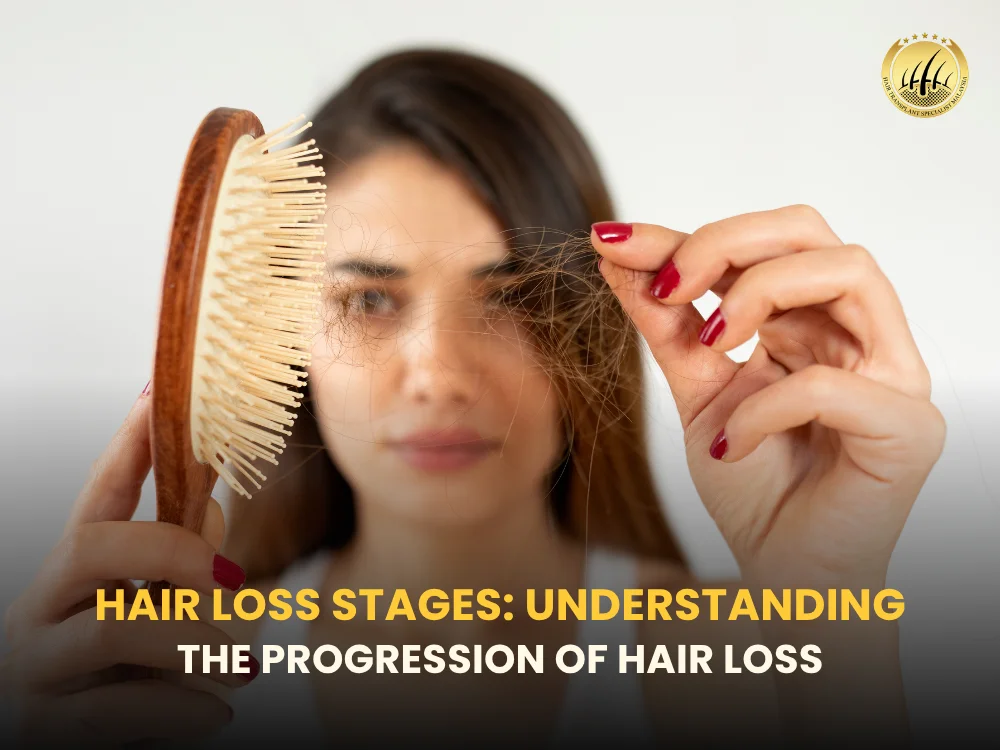
Hair Loss Stages: Understanding the Progression Select a stage below to explore how hair thinning and recession typically advance over time. Stage 1-2 Stage 3-4 Stage 5-6 Stage 7 Stages 1 & 2: Early Signs & Mature Hairline What happens: Stage 1 shows minimal or no recession from the youthful hairline. Stage 2 introduces slight symmetrical recession around the temples, commonly known as a mature hairline. Full or near-full crown density Subtle temple corners retreat slightly Easiest phase for early preventive care Stages 3 & 4: Clinical Balding & Crown Thinning What happens: Stage 3 is globally recognized as the clinical threshold for balding, featuring deep M, U, or V-shaped temple recessions. Stage 4 adds prominent thinning or baldness at the crown. Deepened frontal recession lines Emerging or distinct vertex (crown) bald spot A dividing band of hair separates front and crown zones Stages 5 & 6: Advanced Progression What happens: The separating strip of hair across the top narrows and breaks down. In Stage 6, the frontal and crown bald zones merge completely into a single expansive area of loss. Very sparse bridging hair tissue Top scalp becomes largely exposed Classic horseshoe configuration begins forming Stage 7: Most Advanced Hair Loss What happens: This represents the most advanced classification level. Only a thin, horseshoe-shaped band of hair remains around the lower sides and back of the scalp. Entire top and crown regions are completely bare Remaining donor hair restricted to lower perimeter Specialized evaluation required for restoration options Unsure which stage you are experiencing? Get a professional assessment today. Consult via WhatsApp Hair loss stages describe the gradual progression of thinning hair and baldness over time. In men, hair loss is commonly classified using the Norwood Scale, while women are typically assessed using the Ludwig Scale. Understanding your hair loss stage helps determine the most effective treatment options and can improve the chances of preserving existing hair. Hair loss affects millions of people worldwide and can occur due to genetics, hormones, aging, medical conditions, or lifestyle factors. Recognizing the stage of hair loss early allows for timely intervention and better long-term outcomes. What Are Hair Loss Stages? Hair loss stages are classification systems used to measure the severity and progression of hair thinning and baldness. These stages help hair restoration specialists diagnose the condition, track changes over time, and recommend suitable treatments. For men, the Norwood-Hamilton Scale is the most widely used system. For women, the Ludwig Classification is commonly used to assess female pattern hair loss. Identifying your stage can help answer important questions such as: How severe is my hair loss? Is my hair loss progressing? Which treatment is most suitable? Am I a candidate for a hair transplant? Understanding the Hair Growth Cycle Hair loss progression is closely linked to the natural hair growth cycle. Anagen (Growth Phase) The anagen phase is the active growth stage of the hair follicle. Key facts: Lasts 2–7 years Around 85–90% of scalp hairs are in this phase Determines maximum hair length A shorter anagen phase can contribute to thinner hair and reduced density. Catagen (Transition Phase) Catagen is a brief transition stage between growth and rest. Characteristics include: Lasts approximately 2–3 weeks Hair growth stops Follicles begin shrinking Only about 1% of scalp hairs are typically in this phase at any time. Telogen (Resting Phase) During telogen, the hair follicle remains inactive. Features include: Lasts 2–4 months Hair remains attached but no longer grows Prepares for natural shedding Stress, illness, and hormonal changes can push more hairs into telogen prematurely. Exogen (Shedding Phase) Exogen is the shedding stage where old hairs fall out. Normal shedding includes: 50–100 hairs per day New hair begins growing from the follicle Excessive shedding may indicate telogen effluvium or another hair disorder. For more information on the hair growth cycle, the American Academy of Dermatology provides an excellent overview. Hair Loss Stages in Men Male pattern baldness typically follows the Norwood Scale. Stage 1: No Significant Hair Loss Hairline remains intact with minimal or no visible thinning. Characteristics: Full hair density Juvenile hairline maintained No noticeable recession Stage 2: Early Hairline Recession The temples begin showing mild recession. Signs include: Slight M-shaped appearance Minimal cosmetic concern Often first noticeable change Stage 3: Noticeable Hairline Recession This is generally considered the first clinically significant stage of male pattern baldness. Features: Deeper temple recession More defined M-shaped hairline Visible hairline changes Stage 4: Crown Thinning and Hairline Recession Hair loss affects both the frontal hairline and crown area. Common findings: Noticeable bald spot at the vertex Progressive frontal recession Reduced hair density Stage 5: Enlarging Bald Areas The frontal and crown bald areas expand significantly. Characteristics: Narrow bridge of hair remains Increased scalp visibility Greater cosmetic impact Stage 6: Advanced Hair Loss The connecting bridge disappears. Features include: Large bald area across the top scalp Minimal separation between crown and front Significant density loss Stage 7: Extensive Baldness This is the most advanced stage. Characteristics: Only hair on the sides and back remains Extensive scalp exposure Limited donor hair availability for transplantation The U.S. National Library of Medicine identifies androgenetic alopecia as the most common cause of male pattern baldness. Hair Loss Stages in Women Women usually experience diffuse thinning rather than complete baldness. Stage 1: Mild Hair Thinning Early changes are often subtle. Signs: Slight widening of the part line Mild reduction in volume Easily concealed with styling Stage 2: Moderate Hair Thinning Hair density decreases noticeably. Characteristics: Wider part line Increased scalp visibility Reduced ponytail thickness Stage 3: Advanced Hair Thinning Hair loss becomes more extensive. Features: Significant scalp exposure Diffuse thinning over the crown Markedly reduced hair density The notes that female pattern hair loss often develops gradually with age and hormonal changes. Early Signs of Hair Loss Recognizing early symptoms can help prevent progression. Receding Hairline A receding hairline often begins around the temples. Common indicators: M-shaped appearance Uneven hairline Difficulty styling frontal hair Thinning at the Crown Crown thinning may
Hair Transplant Failure Risks in Malaysia: Causes, Signs & Prevention
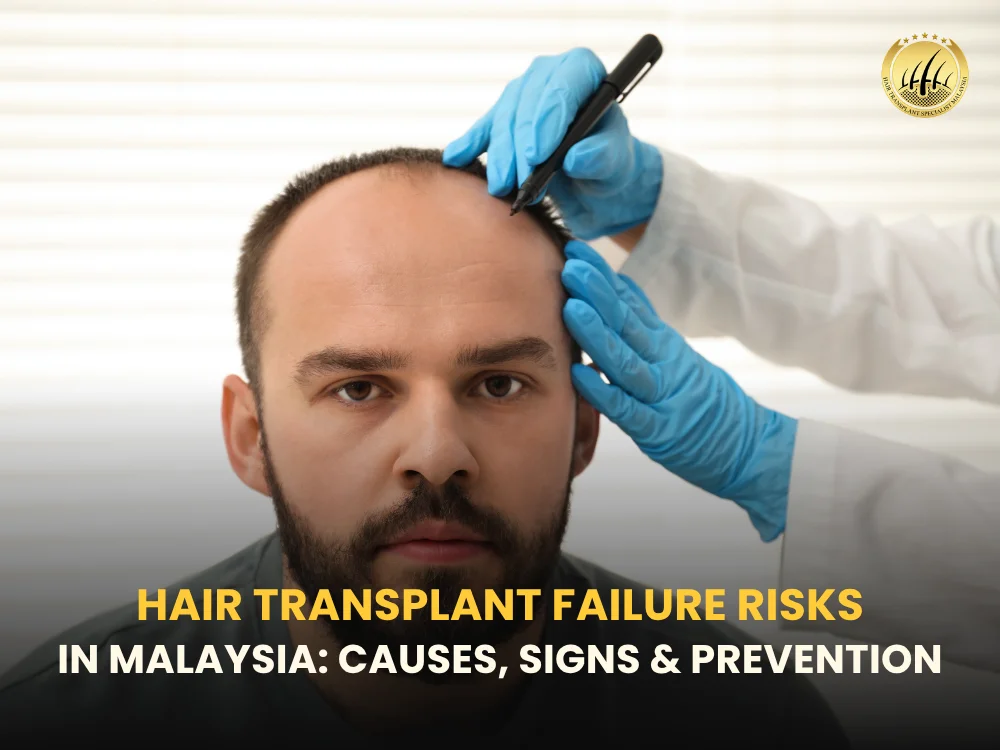
Hair transplant failure risks refer to factors that can cause a hair transplant procedure to produce poor, unnatural, or unsatisfactory results. These risks include low graft survival, infection, poor surgical technique, excessive scarring, and inadequate aftercare. Understanding these risks helps patients choose qualified providers and improve the chances of successful hair restoration. What Is Hair Transplant Failure? Hair transplant failure occurs when transplanted hair follicles do not survive, grow poorly, or produce results that look unnatural. Failure can affect the recipient area, donor area, or both. A successful hair transplant should provide natural-looking hair growth, adequate density, and minimal visible scarring. When these goals are not achieved, corrective treatment may be required. Failed Hair Transplant vs Poor Hair Transplant Results A failed hair transplant and poor hair transplant results are not always the same. Poor results may involve lower density, slower growth, or a hairline that does not meet patient expectations. However, the grafts are still alive and growing. A failed hair transplant usually involves significant graft loss, severe scarring, infection, or an unnatural appearance that requires revision surgery. How Often Does Hair Transplant Failure Occur? Modern hair transplant procedures generally achieve high graft survival rates when performed by experienced medical professionals. Studies often report graft survival rates exceeding 90% under optimal conditions. However, outcomes vary depending on surgical skill, patient health, donor hair quality, and post-operative care. According to the International Society of Hair Restoration Surgery (ISHRS), advancements in hair restoration techniques have significantly improved outcomes over the last decade. Hair Transplant Failure Risks Several factors can increase the risk of hair transplant failure. Inexperienced Surgeon One of the most common causes of hair transplant failure is poor surgical technique. An inexperienced surgeon may: Damage follicles during extraction Place grafts at incorrect angles Create unnatural hairlines Overharvest the donor area Even advanced technologies cannot compensate for poor surgical planning. Poor Graft Handling Hair follicles are delicate biological structures. Improper handling outside the body can reduce graft viability. Excessive exposure to air, dehydration, or rough manipulation may permanently damage follicles before implantation. Low Graft Survival Rate Not every transplanted graft survives. Factors that may reduce graft survival include: Poor blood supply Excessive trauma during implantation Infection Smoking Medical conditions affecting healing Lower survival rates often result in patchy hair growth. Incorrect Hairline Design Hairline design requires both technical and artistic expertise. A poorly designed hairline can appear: Too low Too straight Asymmetrical Age-inappropriate Even when grafts survive, an unnatural hairline may make the procedure appear unsuccessful. Overharvesting of Donor Hair The donor area contains a limited supply of permanent hair follicles. Removing too many grafts can lead to: Visible thinning Patchy donor regions Reduced options for future procedures Overharvesting is especially concerning in patients with extensive hair loss. Infection After Hair Transplant Although infections are uncommon, they can threaten graft survival. Symptoms may include: Redness Swelling Pus formation Pain Delayed healing Patients should follow hygiene instructions carefully and seek medical advice if symptoms worsen. The American Academy of Dermatology recommends prompt medical evaluation for signs of infection following any skin-related procedure. Poor Post-Operative Care Aftercare plays a major role in transplant success. Common mistakes include: Scratching the scalp Intense exercise too soon Ignoring washing instructions Excessive sun exposure Failure to follow recovery guidelines can negatively affect graft survival. Smoking and Lifestyle Factors Smoking reduces blood circulation and oxygen delivery to healing tissues. Research consistently links smoking with delayed wound healing and increased complication rates after surgical procedures. Alcohol misuse, poor nutrition, and chronic stress may also affect recovery. Underlying Medical Conditions Certain health conditions can impact healing and hair growth. Examples include: Diabetes Autoimmune disorders Scalp diseases Thyroid disorders Nutritional deficiencies A thorough medical assessment helps identify potential risk factors before surgery. Signs of Hair Transplant Failure Recognising warning signs early may improve treatment options. Uneven Hair Growth Some variation is normal during recovery. However, large areas with inconsistent growth after 12 months may indicate poor graft survival. Patchy or Sparse Results Low density is a common complaint among patients with unsuccessful outcomes. Patchiness often occurs when a significant number of grafts fail to establish blood supply. Unnatural Hairline Appearance A successful transplant should blend naturally with facial features. Warning signs include: Sharp straight lines Plug-like appearance Visible gaps Incorrect hair direction Excessive Scarring Scarring varies depending on technique and healing response. Visible or widened scars may indicate surgical complications or abnormal healing. Persistent Redness or Inflammation Temporary redness is expected. Persistent inflammation lasting several months may suggest infection, irritation, or underlying scalp problems. Poor Graft Growth Most transplanted hairs begin growing between three and four months after surgery. If significant growth is absent after nine to twelve months, further evaluation may be necessary. Clinical Experience Hair transplant assessments often reveal that many perceived failures are actually part of the normal growth cycle. Shock loss, temporary shedding, and delayed growth can occur during the first few months. Final results are typically assessed at 12 to 18 months, depending on the procedure and individual healing response. Hair Transplant Failure Risks by Procedure Type Different techniques carry different risk profiles. FUE Hair Transplant Failure Risks Follicular Unit Extraction (FUE) is widely performed in Malaysia. Potential risks include: Graft damage during extraction Overharvesting Lower density if graft planning is poor When performed correctly, FUE generally produces minimal visible scarring. FUT Hair Transplant Failure Risks Follicular Unit Transplantation (FUT) involves removing a strip of scalp from the donor area. Potential risks include: Linear scarring Wound healing complications Tension-related scar widening FUT may still be appropriate for selected patients requiring larger graft numbers. DHI Hair Transplant Failure Risks Direct Hair Implantation (DHI) uses specialised implantation devices. Potential risks include: Follicle damage from improper handling Poor placement angles Inconsistent density Success remains highly dependent on practitioner skill. Who Is at Higher Risk of Hair Transplant Failure? Certain patients face greater challenges. Patients With Extensive Hair Loss Advanced hair loss limits available donor hair and increases planning complexity. Patients With Poor Donor Hair Quality Thin, weak,
Rawatan PRP Rambut: Cara Berfungsi, Kebaikan, Harga & Hasil Rawatan
Masalah rambut gugur dan rambut menipis sering kali menjejaskan keyakinan diri. Jika anda sedang mencari penyelesaian yang efektif tanpa pembedahan, rawatan PRP rambut (Platelet-Rich Plasma) adalah antara terapi pemulihan rambut (hair restoration) yang paling popular di Malaysia. Artikel ini membincangkan secara lengkap tentang fungsi, proses, keberkesanan, serta kos PRP rambut Malaysia untuk membantu anda membuat keputusan yang tepat. Apa Itu Rawatan PRP Rambut? Maksud PRP (Platelet Rich Plasma) PRP rambut atau Platelet-Rich Plasma ialah kaedah rawatan rambut gugur menggunakan komponen darah pesakit sendiri. Darah kita mengandungi plasma yang kaya dengan platelet (sel pembeku darah) yang mengandungi kepekatan growth factors (faktor pertumbuhan) yang tinggi. Bagaimana PRP Membantu Pertumbuhan Rambut Apabila suntikan PRP rambut dimasukkan ke dalam kulit kepala, ia bertindak mengejutkan folikel rambut yang tidak aktif atau sedang mengecut (miniaturization). Proses ini meningkatkan aliran darah ke akar rambut, membekalkan nutrisi penting, dan memulakan fasa pertumbuhan aktif (anagen phase). Kandungan Faktor Pertumbuhan Dalam PRP Plasma darah yang telah diproses mengandungi entiti biologikal penting seperti: Platelet-Derived Growth Factor (PDGF) – Merangsang replikasi sel dan pertumbuhan tisu. Vascular Endothelial Growth Factor (VEGF) – Membina saluran darah baru untuk membekalkan oksigen ke folikel. Transforming Growth Factor-Beta (TGF-β) – Menyokong struktur folikel dan kesihatan kulit kepala. Bagaimana Rawatan PRP Rambut Berfungsi? Prosedur pemulihan ini menggunakan teknologi sains biologi mudah melalui tiga langkah utama: [Pengambilan Darah] ➔ [Pengasingan Centrifuge] ➔ [Suntikan ke Kulit Kepala] 1. Pengambilan Sampel Darah Doktor akan mengambil sedikit sampel darah (donor blood) daripada lengan anda, sama seperti ujian darah biasa di makmal (sekitar 10ml hingga 20ml). 2. Proses Pengasingan Plasma Menggunakan Centrifuge Sampel darah dimasukkan ke dalam mesin centrifuge. Mesin ini akan berputar pada kelajuan tinggi untuk mengasingkan sel darah merah daripada plasma kaya platelet (plasma extraction). Proses ini menghasilkan kepekatan platelet (platelet concentration) sehingga 5 hingga 10 kali ganda lebih tinggi daripada darah biasa. 3. Suntikan PRP Ke Kulit Kepala & Pengaktifan Folikel Plasma tulen yang kaya dengan growth factors ini disuntik secara teliti menggunakan jarum halus ke kawasan kulit kepala yang mengalami rambut menipis atau kebotakan. Ini mencetuskan stimulasi folikel (follicular stimulation) dan pengaktifan sel stem (stem cell activation) untuk pertumbuhan rambut baru. Siapa Yang Sesuai Menjalani Rawatan PRP Rambut? Golongan Yang Sesuai (Kandidat Terbaik) Lelaki dengan kebotakan keturunan (male pattern baldness / androgenetic alopecia). Wanita dengan rambut menipis (female pattern hair loss). Individu yang mengalami garis rambut surut (receding hairline) atau botak tengah kepala. Ibu yang mengalami keguguran rambut selepas bersalin (postpartum hair loss). Pesakit yang ingin mempercepatkan penyembuhan selepas tanam rambut (hair transplant). Siapa Yang Tidak Sesuai Menjalani PRP? Rawatan ini tidak sesuai atau kurang berkesan untuk: Individu yang sudah mengalami kebotakan kekal atau kawasan kulit kepala yang sudah licin sepenuhnya (tiada lagi folikel rambut aktif). Pesakit yang mempunyai penyakit darah (seperti fungsian platelet tidak normal atau thrombocytopenia). Individu dengan jangkitan kuman aktif pada kulit kepala. Kebaikan Rawatan PRP Rambut Mengurangkan Rambut Gugur: Menghentikan kitaran keguguran rambut secara mendadak dengan menguatkan akar rambut. Meningkatkan Ketumpatan Rambut (Hair Density): Merangsang rambut tumbuh semula di kawasan yang jarang, menjadikan rambut lebih lebat. Menebalkan Folikel Rambut: Menukarkan rambut halus (vellus hair) menjadi rambut lebih tebal dan matang (terminal hair). Sangat Selamat: Kerana menggunakan darah sendiri, tiada risiko alahan atau penolakan imuniti badan. Tiada “Downtime”: Anda boleh terus kembali bekerja atau melakukan aktiviti harian sejurus selepas rawatan (scalp rejuvenation). Pelan Sesi dan Hasil Rawatan (Timeline) Terapi PRP rambut bukanlah rawatan sekali siap. Untuk mendapatkan hasil PRP rambut yang optimum, pelan rawatan berstruktur diperlukan. Fasa 1: Pelan Rawatan 3 Bulan PertamaBulan 1 – 3 Memerlukan 3 hingga 6 sesi awal, yang dijarakkan setiap 4 hingga 6 minggu. Pada bulan pertama, anda akan mula melihat mengurangkan rambut gugur. Fasa 2: Pertumbuhan Anak RambutBulan 3 – 6 Pertumbuhan anak rambut baru mula kelihatan di kawasan rawatan. Ketumpatan rambut bertambah dan rambut sedia ada kelihatan lebih sihat. Fasa 3: Hasil Maksimum & PenyelenggaraanBulan 6+ Hasil sebelum dan selepas rawatan PRP rambut kelihatan jelas dengan rambut lebih lebat dan tebal. Seterusnya, maintenance hanya perlu dilakukan setiap 6 hingga 12 bulan sekali untuk mengekalkan fungsi folikel. Harga Rawatan PRP Rambut Di Malaysia Kos PRP rambut Malaysia berubah mengikut lokasi klinik, kepakaran doktor, dan teknologi kit PRP yang digunakan. Berikut adalah anggaran pasaran terkini di klinik estetika dan pakar rambut Malaysia: Jenis Sesi / Pakej Anggaran Julat Harga (RM) Nota / Penerangan Satu Sesi (Ala Carte) RM 800 – RM 1,500 Sesuai untuk sesi percubaan atau penyelenggaraan (maintenance). Pakej Standard (3 Sesi) RM 1,800 – RM 3,500 Pilihan popular untuk fasa permulaan rawatan (jimat 15–20%). Pakej Intensif (6 Sesi) RM 3,500 – RM 6,000 Disyorkan untuk masalah penipisan tahap sederhana. Nota: Sesetengah klinik menawarkan harga pengenalan (first trial) serendah RM 299 untuk sesi pertama, manakala sesi analisis kulit kepala (trichoscopy) mungkin dicaj sekitar RM 100 – RM 300 jika tidak mengambil pakej. Perbandingan: PRP vs Rawatan Rambut Gugur Lain Sebelum memilih, fahami bagaimana terapi PRP rambut berbanding dengan alternatif lain dalam industri pemulihan rambut: PRP vs Minoxidil / Finasteride: Minoxidil (topikal) dan Finasteride (ubat makan lelaki) memerlukan komitmen harian seumur hidup. PRP berfungsi sebagai terapi regeneratif tambahan (regenerative adjunct) yang mempercepatkan kesan ubat-ubatan ini. PRP vs Exosome / Mesoterapi: Mesoterapi memasukkan campuran vitamin, manakala Exosome menggunakan faktor pertumbuhan sintetik/sel stem luaran. PRP pula lebih organik kerana menggunakan 100% sel pemulihan daripada badan anda sendiri. PRP vs Tanam Rambut (Hair Transplant): Tanam rambut adalah pembedahan kekal untuk memindahkan folikel dari kawasan subur ke kawasan botak (kos sekitar RM 8,000 – RM 15,000+). PRP tidak boleh menumbuhkan rambut di kawasan yang sudah botak licin, tetapi ia sangat efektif untuk menebalkan rambut yang sedang menipis. Gabungan PRP dan Tanam Rambut Sangat disyorkan! Menggabungkan PRP selepas tanam rambut akan meningkatkan kadar kelangsungan hidup (survival rate) graf rambut yang baru ditanam dan mempercepatkan proses penyembuhan luka kulit kepala. Kesan Sampingan Rawatan PRP Rambut Oleh kerana PRP menggunakan formula autologus (darah sendiri), kesan sampingan yang serius adalah tersangat jarang. Kesan ringan yang biasa berlaku termasuk: Sakit ringan atau rasa tegang di kulit kepala semasa atau selepas suntikan. Kemerahan dan bengkak sementara pada kawasan suntikan (biasanya
PRP Hair Treatment Side Effects: Safety, Risks & What to Expect
What are the side effects of PRP hair treatment? Because Platelet-Rich Plasma (PRP) therapy uses your own blood, the risk of an allergic reaction or disease transmission is virtually zero. The most common side effects are mild and temporary localized reactions at the injection site, including temporary scalp soreness, mild swelling, redness, pinprick bleeding, and a feeling of tightness. These symptoms typically resolve on their own within 24 to 48 hours after the procedure. Is PRP Hair Treatment Safe? Yes, PRP hair therapy is considered an exceptionally safe, minimally invasive clinical procedure. Because the serum injected consists entirely of your own autologous plasma, your body recognizes the fluid naturally, eliminating the risk of systemic rejection or allergic reactions associated with foreign chemicals. However, because the procedure involves drawing blood and using fine needles to inject the plasma into the scalp, minor localized side effects are a normal part of the healing response. Common and Expected Side Effects (Downtime: 24–48 Hours) These side effects are typical signs that your scalp is reacting to the micro-injections and the concentrated growth factors. They usually fade completely within a couple of days: Mild Scalp Soreness & Tenderness: A dull ache or “bruised” sensation across the treated areas of the scalp is common once the local numbing wears off. Temporary Swelling (Edema): Mild swelling may occur around the injection sites. On occasion, gravity may cause this swelling to migrate down toward the forehead or around the eyebrows 1 to 2 days post-treatment. It is harmless and subsides quickly. Redness & Pinprick Bleeding: Small red puncture marks and minimal spotting are normal immediately following the injections. Scalp Tightness: The volume of plasma introduced beneath the skin can create a temporary sensation of pressure or tightness in the scalp. Rare but Potential Clinical Risks While rare, complications can occur if post-treatment care instructions are neglected or if the procedure is performed in an unsterile environment: Infection: Any procedure that breaks the skin barrier carries a minor risk of infection. This is prevented by choosing a licensed clinic that utilizes sterile, medical-grade equipment. Nerve or Blood Vessel Injury: Inexperienced injectors may inject too deeply, potentially causing temporary localized nerve irritation or minor bruising. Scar Tissue Formation: Extremely rare, but improper injection techniques can lead to micro-scarring around the injection sites. Shock Loss (Temporary Shedding): Very rarely, the trauma of the needles can shock nearby hairs, causing temporary shedding. This hair almost always grows back thicker during the growth phase. How to Minimize PRP Side Effects: Pre & Post-Care Protocol Following a strict medical protocol before and after your sessions drastically reduces your risk of experiencing prolonged swelling or bruising. Before Your Session Avoid Blood Thinners: Stop taking aspirin, ibuprofen, vitamin E, and omega-3 fish oil supplements for 3 to 7 days prior to treatment (consult your physician first) to minimize bleeding and bruising. Stay Hydrated: Drink plenty of water before your appointment to make the blood draw easier and ensure high-quality plasma collection. After Your Session First 24 Hours: Do NOT wash your hair, engage in strenuous exercise, or use heavy hair styling products. │ ▼ First 48 Hours: Avoid swimming pools, saunas, direct steam, and prolonged exposure to direct sunlight. │ ▼ First 72 Hours: Refine your routine — avoid harsh chemical hair dyes, bleaches, or perms. Who Should Avoid PRP Hair Treatment? (Contraindications) PRP therapy may not be safe or effective if you have underlying hematological or systemic conditions. You are generally not a suitable candidate if you have: Platelet Disorders: Low platelet counts (Thrombocytopenia) or platelet dysfunction syndrome. Active Scalp Infections: Open wounds, active psoriasis, or shingles on the scalp. Chronic Diseases: Uncontrolled diabetes, active skin cancers, or severe systemic liver/blood diseases. Blood-Thinning Medication: If you are on irreversible prescription anti-coagulant therapies. Frequently Asked Questions (FAQ) Can PRP cause long-term hair loss? No. PRP stimulates hair growth. While a very small number of patients experience a temporary “shock shedding” phase shortly after a session due to localized injection stress, this hair sheds naturally to make way for healthier, thicker hair shafts. How soon can I return to work after PRP? Immediately. There is virtually no clinical downtime. Most patients experience minor redness or a tight sensation but can drive themselves back to work or resume normal daily activities right after leaving the clinic. Can I take painkillers if my scalp hurts after PRP? If you experience scalp soreness, take Acetaminophen (such as Panadol). Avoid NSAID pain relievers like Ibuprofen or Aspirin, as these act as blood thinners and can suppress the inflammatory response required for PRP growth factors to work effectively.
PRP Hair Treatment Before & After: Results, Timeline & What to Expect
What results can you expect from PRP hair treatment before and after? Before PRP (Platelet-Rich Plasma) hair treatment, patients typically experience noticeable hair thinning, a receding hairline, or widening parts due to androgenetic alopecia. After a full course of PRP treatment (usually 3–4 initial sessions), patients see a significant reduction in hair shedding, increased hair density, and visible thickening of existing hair shafts. Full structural results are typically visible 3 to 6 months after starting the treatment. PRP Hair Treatment: Before vs. After Results PRP (Platelet-Rich Plasma) therapy is a non-surgical medical procedure that uses your own blood plasma, enriched with a high concentration of growth factors, to stimulate dormant hair follicles and reverse hair thinning. Before and After Results at a Glance Hair Condition (Before PRP) Clinical Changes (After PRP) Active Hair Shedding: Excessive hair fall in the shower or on brushes. Reduced Shedding: Hair fall stabilizes and returns to normal limits within 1–2 sessions. Miniaturized Hair: Thin, brittle, and translucent hair strands. Thicker Hair Shafts: Existing hair grows coarser, stronger, and more pigmented. Dormant Follicles: Widening hair parts or visible scalp patches. Increased Density: Reactivated follicles trigger new baby hair growth (excess hair growth). The PRP Hair Treatment Results Timeline PRP is a biological therapy that relies on your body’s natural cellular repair mechanism. Because hair growth cycles take time, changes happen progressively. Month 1: The Stabilization Phase What happens: You will complete your first or second session. The Result: You won’t see new hair yet, but a significant baseline improvement is a distinct decrease in daily hair shedding. Months 3: The Early Growth Phase What happens: Usually occurs after your third monthly session. The Result: Early signs of new baby hairs (vellus hairs) begin to sprout along the treated areas (such as the hairline or crown). The texture of existing hair feels less brittle. Month 6: Peak Structural Density What happens: The maintenance phase begins. The Result: This is where the most dramatic before and after contrast is visible. Hair density is visibly higher, the scalp is less visible, and the newly sprouted hairs transition into thicker, permanent terminal strands. What Happens During a PRP Hair Session? Understanding the procedural journey helps set realistic expectations for your clinical experience. Step 1: Blood Draw (A small sample of blood is drawn from your arm, exactly like a standard blood test) │ ▼ Step 2: Centrifugation (The blood tube is spun in a centrifuge machine to separate red blood cells from the gold, growth-factor-rich plasma) │ ▼ Step 3: Scalp Injection (The concentrated Platelet-Rich Plasma is meticulously injected into the thinning areas of the scalp using a fine needle) Factors That Determine Your PRP Success Rate Not everyone achieves identical before and after transformations. The efficacy of your obesity management or hair health regime depends on these clinical variables: Stage of Hair Loss: PRP works best on active, thinning hair follicles. If an area of the scalp has been completely bald for many years, the hair follicles are likely fibrotic (dead), and PRP will not be able to revive them. Underlying Medical Conditions: Chronic stress, thyroid imbalances, severe iron deficiency, or untreated hormonal issues (like high DHT levels) can hinder follicle regeneration. Post-Procedure Aftercare: Following your specialist’s advice—such as avoiding harsh chemical dyes immediately after a session and utilizing recommended topical solutions—maximizes your long-term results. PRP vs. Other Hair Restoration Methods How does PRP hold up against competitive clinical and pharmaceutical treatments? PRP vs. Hair Transplant Surgery PRP Therapy: Non-surgical, zero downtime, budget-friendly, and perfect for diffuse thinning. It thickens existing hair but cannot grow hair in completely bald areas. Hair Transplant: An invasive surgical procedure that physically moves hair follicles from a donor area to a bald zone. It is permanent and highly effective for severe baldness but requires a significantly higher upfront financial investment and healing time. PRP vs. Hair Loss Medications (Minoxidil / Finasteride) PRP Therapy: Localized, natural treatment with zero systemic side effects since it utilizes your own biological material. Medications: Highly effective but require strict daily commitment. Discontinuing topical Minoxidil or oral Finasteride often leads to a rapid reversal of all hair gains within a few months. Frequently Asked Questions (FAQ) How many PRP sessions are needed to see a clear “after” result? Medical experts generally recommend an initial protocol of 3 to 4 sessions, spaced exactly 4 weeks apart. To maintain your newly achieved hair density, maintenance sessions are required every 6 to 12 months. Is the PRP hair procedure painful? There is mild discomfort, often described as a pinprick or a tight, pressure sensation during the scalp injections. Most reputable aesthetic clinics apply a topical numbing cream or use a cold-air chiller device to minimize discomfort. Is there any downtime after PRP injections? Virtually none. You can drive home and resume your regular daily activities immediately after the session. However, it is highly recommended to avoid washing your hair with hot water, strenuous exercise, or heavy sweating for at least 24 hours post-treatment.