Hair loss can affect confidence, appearance, and even professional image. With modern techniques like FUE and FUT becoming more accessible, many people are exploring surgical hair restoration. But one critical question remains: Are you suitable for hair transplant surgery?
Not everyone experiencing hair thinning is an ideal candidate. A successful outcome depends on several medical, genetic, and lifestyle factors. In this guide, we’ll break down who is truly suitable for hair transplant procedures, what doctors evaluate during consultation, and when alternative treatments may be recommended.
What Does “Suitable for Hair Transplant” Really Mean?
Being suitable for hair transplant surgery means you have the right donor hair supply, stable hair loss pattern, realistic expectations, and good overall health to undergo the procedure safely.
Hair transplantation works by relocating healthy hair follicles from the donor area (usually the back or sides of the scalp) to thinning or bald regions. If donor supply is insufficient or hair loss is still aggressively progressing, surgery may not produce optimal results.
A proper medical assessment is always necessary before making a decision.
Understanding the Basics of Hair Transplantation
Modern hair restoration primarily uses two techniques:
- FUE (Follicular Unit Extraction) – Individual follicle extraction
- FUT (Follicular Unit Transplantation) – Strip harvesting method
Both methods can produce natural results when performed by licensed surgeons registered under the Malaysian Medical Council.
However, suitability depends more on patient characteristics than the technique itself.
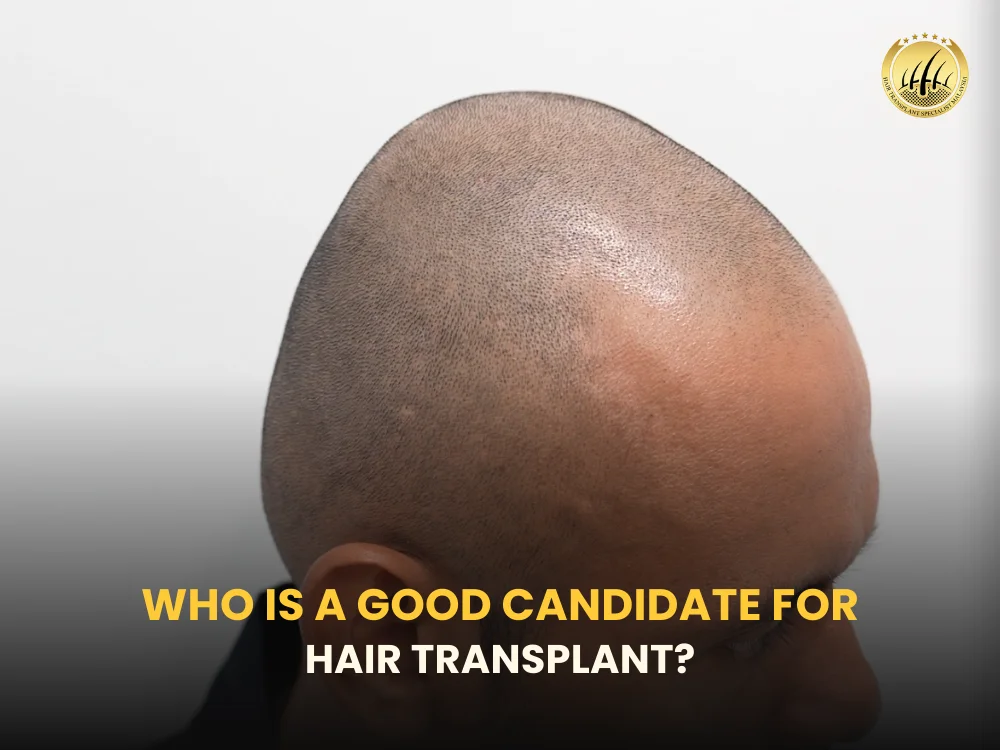
1. You Have Sufficient Donor Hair
The most important requirement is a healthy donor area.
Good candidates typically have:
- Thick hair density at the back of the scalp
- Strong hair shaft quality
- Minimal miniaturization in donor zones
Hair transplantation redistributes existing hair — it does not create new follicles. If donor supply is weak, results may appear thin or incomplete.
2. Your Hair Loss Pattern Is Stable
Patients with androgenetic alopecia (male or female pattern baldness) are often suitable because this condition follows a predictable pattern.
Doctors may use the Norwood Scale (for men) or Ludwig Scale (for women) to classify hair loss stage.
You may be suitable if:
- Hair loss has slowed
- You are over 25 with a stable pattern
- The hairline recession has matured
If hair loss is still rapidly progressing, doctors may recommend medical therapy first.
3. You Have Realistic Expectations
Hair transplantation improves density — it does not restore teenage-level thickness.
A good candidate understands:
- Density may be moderate, not extreme
- Multiple sessions may be required
- Results take 9–12 months to mature
Natural-looking results depend on strategic graft placement rather than maximum graft numbers.
4. You Are in Good General Health
Since hair transplant is a minor surgical procedure, candidates should:
- Have controlled blood pressure
- Not have uncontrolled diabetes
- Avoid active scalp infections
- Not have bleeding disorders
A full medical history review is part of the consultation process.
5. You Understand Long-Term Hair Planning
Hair loss is progressive.
A suitable candidate is someone willing to:
- Consider maintenance medications (if recommended)
- Plan future sessions if needed
- Follow post-operative care instructions
Hair transplantation is a long-term strategy, not a quick fix.
Who May Not Be Suitable for Hair Transplant?
Certain conditions may make surgery less ideal:
❌ Extensive Baldness with Limited Donor Supply
If donor hair cannot provide sufficient coverage, results may look sparse.
❌ Active Alopecia Areata
This autoimmune condition causes unpredictable hair loss.
❌ Unrealistic Expectations
If a patient expects extremely dense coverage beyond donor capacity, surgery may not meet expectations.
❌ Very Young Patients (Under 21)
Hair loss pattern may not yet be stable.
Are Women Suitable for Hair Transplant?
Yes — but it depends on the type of hair loss.
Women with:
- Traction alopecia
- Stable frontal thinning
- Localized hair loss
may benefit from surgery.
However, women with diffuse thinning across the entire scalp may not have strong donor areas.
Consultation is essential to determine candidacy.
Age and Suitability
Age alone does not disqualify someone.
Younger Patients (25–35)
Suitable if hair loss pattern is stable and expectations are realistic.
Middle-Aged Patients (35–55)
Often ideal candidates with established hair loss pattern.
Older Patients (55+)
May still be suitable if donor hair is strong and health is stable.
Lifestyle Factors That Influence Who’s Suitable for Hair Transplant
Smoking, poor nutrition, and stress can impact healing and graft survival.
Patients suitable for hair transplant are typically willing to:
- Stop smoking before and after surgery
- Follow washing and medication guidelines
- Attend follow-up appointments
Commitment improves outcomes significantly.
The Consultation Process: What Doctors Assess
During a professional consultation, the surgeon evaluates:
✔ Donor density
✔ Hair shaft thickness
✔ Scalp elasticity (especially for FUT)
✔ Medical history
✔ Family history of baldness
✔ Long-term progression risk
In Malaysia, always verify that your doctor is registered with the Malaysian Medical Council.
Clinics in cities like Kuala Lumpur and Penang commonly provide detailed scalp analysis before recommending surgery.
Alternatives If You Are Not Suitable for Hair Transplant
Not everyone is immediately suitable for a hair transplant. If your hair loss is still progressing rapidly, your donor area is weak, or there are underlying medical concerns, a qualified doctor may recommend non-surgical treatments first. These options can slow down hair loss, improve scalp health, and sometimes make you a better candidate for surgery later on.
Here are the most common alternatives:
1. Minoxidil
Minoxidil is an FDA-approved topical solution or foam applied directly to the scalp. It works by increasing blood flow to hair follicles and prolonging the growth (anagen) phase of the hair cycle.
Best for:
Early-stage hair thinning
Both men and women
Stabilizing ongoing hair loss
It requires consistent daily use. Once stopped, the benefits gradually reverse.
2. Finasteride
Finasteride is an oral prescription medication primarily for men. It reduces DHT (dihydrotestosterone), the hormone responsible for male pattern baldness.
Best for:
Male pattern hair loss
Slowing further recession
Preserving existing hair before transplant
Many surgeons recommend stabilizing hair loss with finasteride for 6–12 months before considering surgery to protect native hair.
3. PRP (Platelet-Rich Plasma) Therapy
Platelet-Rich Plasma therapy involves drawing a small amount of your blood, processing it to concentrate growth factors, and injecting it into the scalp.
Benefits:
Strengthens miniaturized follicles
Improves hair thickness
Speeds up recovery after transplant
PRP is especially helpful for patients with diffuse thinning who are not yet ready for surgery.
4. Low-Level Laser Therapy (LLLT)
Low-level laser therapy uses red light wavelengths to stimulate follicle activity and improve scalp circulation.
Ideal for:
Early hair thinning
Maintenance after transplant
Patients avoiding medication
Laser caps or in-clinic sessions are available, but consistent use is essential for visible results.
5. Hair Systems (Non-Surgical Solutions)
Hair systems, also known as modern hair replacements, are customized prosthetic solutions that attach to the scalp. They provide immediate density and cosmetic improvement without surgery.
Suitable for:
Extensive baldness
Poor donor area
Individuals who prefer non-medical solutions
Today’s systems look natural when professionally fitted and maintained.
Can You Become Eligible Later?
Yes. In many cases, stabilizing hair loss first significantly improves your future transplant eligibility. Doctors often recommend:
Controlling active hair loss with medication
Improving scalp condition
Monitoring progression for 6–12 months
Strengthening donor density
Once hair loss stabilizes and expectations are realistic, surgical options like FUE or FUT may become viable.
The key is personalized evaluation. A reputable hair restoration clinic will prioritize long-term planning rather than rushing into surgery when it isn’t suitable yet.
Emotional Readiness Matters Too
Being suitable for hair transplant also includes emotional readiness.
Patients should:
- Understand gradual growth timeline
- Be patient during shock loss phase
- Avoid comparing results with unrealistic online images
A well-informed patient is often the most satisfied.
Frequently Asked Questions (10 FAQs)
1. How do I know if I’m suitable for hair transplant?
A scalp examination and medical consultation determine eligibility.
2. Can someone with complete baldness undergo transplant?
It depends on donor hair availability. Severe donor depletion may limit results.
3. Is age 25 too young?
Not necessarily, but stability of hair loss is key.
4. Can women be good candidates?
Yes, especially with localized thinning or traction alopecia.
5. What if my hair is very thin?
Thin hair may still work, but density outcomes vary.
6. Does curly hair improve results?
Curly or coarse hair often provides better visual coverage.
7. Can medical conditions disqualify me?
Certain uncontrolled conditions may delay or prevent surgery.
8. Will I need multiple sessions?
Some patients with advanced baldness may require staged procedures.
9. Is donor hair unlimited?
No. Donor hair is finite and must be managed carefully.
10. What happens if I’m not suitable?
Doctors may recommend non-surgical treatments first.
Final Thoughts: Suitable for Hair Transplant
Determining whether you are suitable for hair transplant surgery requires more than simply wanting thicker hair. Ideal candidates have stable hair loss, adequate donor supply, realistic expectations, and good overall health.
Hair transplantation redistributes existing hair strategically — it does not reverse genetics entirely. The best outcomes occur when surgical planning aligns with long-term hair loss patterns.
If you’re considering treatment, schedule a professional consultation to evaluate your scalp, discuss realistic density expectations, and explore whether surgery — or alternative therapies — best suits your condition.
A personalized assessment is always the safest first step.