
Hair transplantation is a life-changing procedure for many individuals struggling with thinning hair or pattern baldness. However, one common concern that surprises patients is shock loss after hair transplant.
If you’ve recently undergone a procedure — or are planning one — understanding Shock Loss After Hair Transplant can help you manage expectations and reduce unnecessary anxiety. In this comprehensive guide, we’ll explain what it is, why it happens, how long it lasts, and what you can do about it.
What Is Shock Loss After Hair Transplant?
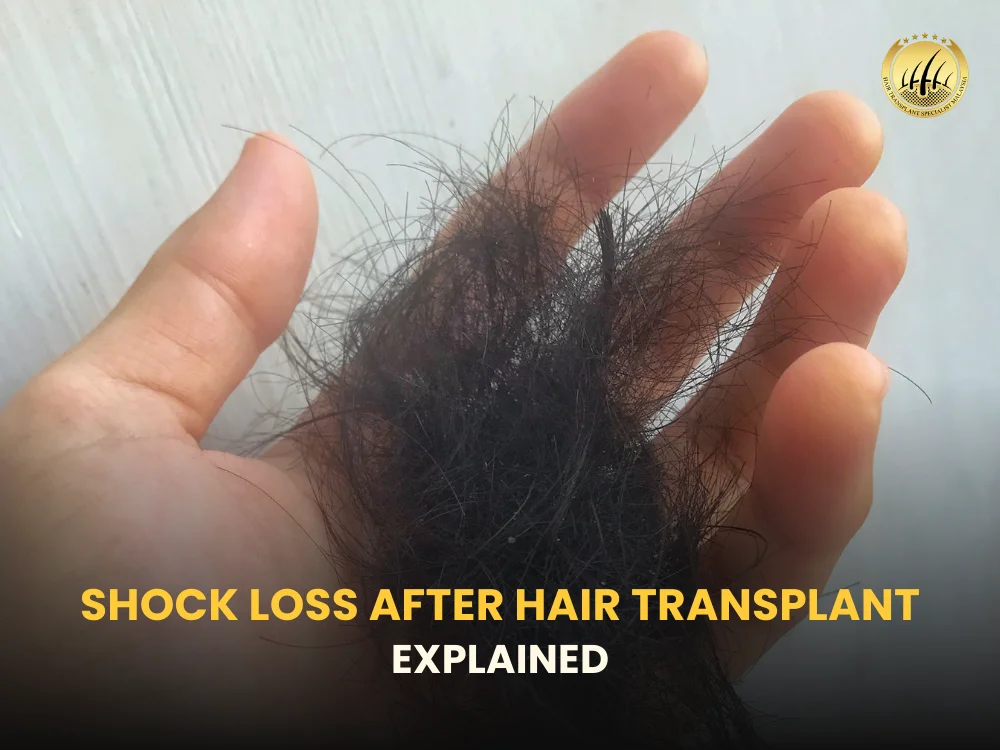
Shock loss after hair transplant refers to temporary hair shedding that occurs in the weeks following a hair restoration procedure. It may affect newly transplanted grafts, existing native hair, or both.
Although it can feel alarming, Shock Loss After Hair Transplant is usually temporary and part of the natural recovery process. In most cases, the hair regrows within a few months as the follicles enter a new growth cycle.
Understanding the Hair Growth Cycle
To understand why shock loss happens, you need to know how hair naturally grows.
Hair follicles go through three main phases:
- Anagen (Growth phase) – Active hair growth
- Catagen (Transition phase) – Follicle shrinks
- Telogen (Resting/shedding phase) – Hair falls out
A hair transplant procedure — whether performed using Follicular Unit Extraction (FUE) or Follicular Unit Transplantation (FUT) — temporarily disrupts the natural cycle.
The surgical process causes mild trauma to the scalp. As a response, some follicles prematurely shift into the telogen phase, resulting in shedding.
This phenomenon is medically known as telogen effluvium.
Why Does Shock Loss Happen?
Shock loss is not a sign of failure. It is a physiological response to:
1. Surgical Trauma
Even with minimally invasive techniques like FUE, the scalp undergoes controlled micro-injuries. This can temporarily stress nearby follicles.
2. Blood Supply Adjustment
After graft placement, the scalp needs time to re-establish stable blood circulation to each follicle.
3. Inflammation
Post-operative inflammation may temporarily weaken surrounding native hair.
4. Pre-Existing Miniaturized Hair
If you have underlying Androgenetic alopecia, the native hairs in thinning areas are already fragile. These are more prone to shedding after surgery.
When Does Shock Loss Start?
Most patients notice shedding:
- 2 to 8 weeks after surgery
- Often peaking around week 3–5
This timing aligns with the transition into the telogen phase.
It’s important to remember:
Shedding does not mean the grafts failed.
In fact, transplanted follicles often shed the hair shaft but remain alive beneath the skin.
How Long Does Shock Loss Last?
For most patients:
- Shedding phase: 2–6 weeks
- Dormant phase: 2–3 months
- Regrowth begins: Month 3–4
- Visible improvement: Month 6
- Full results: Month 12
Recovery timelines vary depending on:
- Age
- Overall scalp health
- Extent of surgery
- Genetic factors
Does Shock Loss Affect Transplanted Hair or Native Hair?
Shock loss can affect:
Transplanted Hair
This is completely normal. The graft sheds the visible hair shaft but begins producing new hair after a few months.
Native Hair
Temporary shedding may occur in surrounding areas. In patients with advanced male pattern baldness, some native hairs may not regrow if they were already severely miniaturized.
That’s why surgeons often recommend medications like:
- Finasteride
- Minoxidil
These help stabilize existing hair and reduce further thinning.
Is Shock Loss Permanent?
In the majority of cases, shock loss is temporary.
However, permanent loss can occur if:
- The surrounding native hair was already weak
- There is aggressive underlying androgenetic alopecia
- The patient does not follow post-operative care instructions
Proper surgical planning and long-term hair management significantly reduce permanent thinning risks.
Can You Prevent Shock Loss?
There is no guaranteed way to completely prevent shock loss, but you can minimize the severity:
1. Choose an Experienced Surgeon
Proper graft handling reduces trauma to surrounding follicles.
2. Stabilize Hair Before Surgery
Using finasteride or minoxidil before and after surgery may reduce shedding.
3. Follow Aftercare Strictly
Avoid scratching, rubbing, or exposing the scalp to excessive sun.
4. Manage Inflammation
Take prescribed medications as directed.
Emotional Impact: Why Shock Loss Feels Worse Than It Is
Many patients panic when they see hair falling out after investing time and money into a transplant.
But here’s the truth:
Hair transplantation is a long-term growth journey, not an instant cosmetic result.
The temporary shedding phase can make your hair look thinner before it looks better. This “ugly duckling” phase is normal.
Having realistic expectations is crucial for mental peace during recovery.
Shock Loss vs Graft Failure: How to Tell the Difference
Shock Loss | Graft Failure |
Temporary shedding | No regrowth after 12–15 months |
Begins within 2–8 weeks | No new growth by month 6 |
Follicles remain alive | Follicles damaged or infected |
Regrowth by month 3–4 | Requires medical review |
If you’re unsure, follow up with your clinic for evaluation.
Timeline Summary After Hair Transplant
Here’s what a typical recovery looks like:
Week 1 – Scabs fall off
Week 2–4 – Shock loss begins
Month 3 – Early regrowth
Month 6 – Noticeable density
Month 12 – Final result
Patience is key.
Who Is More Likely to Experience Shock Loss?
Shock loss can happen to anyone after a hair transplant, but certain patients have a higher likelihood of experiencing it. Understanding your risk profile helps set realistic expectations and allows for better long-term planning.
You may be at higher risk if you:
Have diffuse thinning
Patients with diffuse thinning still have many miniaturized (weakened) native hairs in the recipient area. These fragile hairs are more sensitive to surgical trauma and temporary inflammation, making them more likely to shed after the procedure.
Are undergoing dense packing
Dense packing involves placing a high number of grafts close together to achieve greater visual density. While effective when performed carefully, this technique can temporarily stress surrounding native hairs, increasing the chance of shock loss—especially if the existing hairs are already thin.
Have untreated androgenetic alopecia
If you have ongoing genetic hair loss (androgenetic alopecia), also known as male or female pattern baldness, your native hairs may already be progressively miniaturizing. Surgical stress can accelerate shedding of these vulnerable hairs. Without medical management, the underlying condition continues to progress even after transplantation.
Are younger with active hair loss
Younger patients, particularly those in their early 20s, often have unstable hair loss patterns. Transplanting into areas where native hair is still actively thinning increases the likelihood of shock loss and uneven density over time.
Have weak donor or recipient hair quality
Thin-caliber hair or low-density areas are generally more sensitive. Weaker follicles are more susceptible to temporary shedding following surgical manipulation.
Why Long-Term Planning Matters
Hair transplantation restores areas that have already thinned or become bald — but it does not stop the progression of genetic hair loss. Conditions like Androgenetic alopecia continue unless medically managed.
This is why a comprehensive treatment plan often includes:
Long-term medical therapy
Strategic graft placement
Conservative hairline design
Planning for future sessions if necessary
A well-designed transplant considers not just your current hair loss, but where your hair pattern may be in 5, 10, or even 20 years.
When performed with proper assessment and future planning, shock loss is usually temporary — and in many cases, preventable or minimized.
Should You Be Worried?
In most cases, no — shock loss is not a cause for panic.
It is typically a temporary phase that occurs as your scalp adjusts to the surgical procedure. During a hair transplant, tiny incisions are made and grafts are placed carefully into the recipient area. This process can briefly “shock” nearby native hairs, causing them to shed. While it may look alarming, this shedding is usually part of the normal healing cycle.
In fact, shock loss often indicates that your scalp is actively responding and healing. The hair follicles themselves are usually not permanently damaged — they simply enter a temporary resting (telogen) phase before regrowing.
What’s Considered Normal?
After surgery, it’s common to notice:
Mild redness for 1–2 weeks
Light itching
Temporary thinning in surrounding areas
Shedding within the first month
Regrowth typically begins between 3–4 months, with visible improvement continuing up to 12 months.
When Should You Be Concerned?
Although rare, certain symptoms may indicate complications rather than typical shock loss. You should contact your surgeon if you experience:
Persistent redness that worsens instead of improving
Increasing pain rather than mild tenderness
Pus or discharge, which may suggest infection
No signs of regrowth after 6 months
These symptoms are not characteristic of normal post-transplant recovery and require professional evaluation.
The Bigger Picture
It’s important to remember that shock loss does not mean your transplant has failed. In patients with ongoing genetic hair loss such as Androgenetic alopecia, native hairs may already be weakened and more prone to shedding. With proper medical management and long-term planning, outcomes remain stable and natural-looking.
If you are ever unsure, follow up with your clinic rather than relying on online speculation. Reassurance and early assessment can prevent unnecessary stress during your recovery journey.
Frequently Asked Questions (FAQs)
1. Is Shock Loss After Hair Transplant guaranteed after surgery?
Not always. Many patients experience mild shedding, but severity varies.
2. When does Shock Loss After Hair Transplant peak?
Typically between weeks 3 and 5.
3. Does Shock Loss After Hair Transplant mean the surgery failed?
No. It is part of the normal healing process.
4. Can Shock Loss After Hair Transplant be reduced?
Yes, medications like finasteride and minoxidil may help minimize shedding.
5. How long before new hair grows?
New growth usually starts around month 3 or 4.
6. Is Shock Loss After Hair Transplant worse with FUE or FUT?
It can happen with both techniques. Surgical skill and scalp condition matter more than method.
7. Can women experience shock loss?
Yes. Female patients can also experience temporary shedding.
8. What if native hair doesn’t grow back?
If the hair was severely miniaturized, regrowth may be limited. Ongoing medical therapy is important.
9. Does washing hair cause Shock Loss After Hair Transplant?
No. Gentle washing does not dislodge grafts after the first few days.
10. Can stress worsen Shock Loss After Hair Transplant?
Yes. High stress levels may prolong telogen shedding.
Final Thoughts
Shock loss after hair transplant can feel discouraging — but it is usually temporary and expected.
Understanding the science behind it helps you stay calm during the recovery phase. Hair restoration is a gradual biological process, not an overnight cosmetic change.
With proper surgical technique, medical therapy, and patience, most patients achieve natural, long-lasting results.
If you are considering a hair transplant, discuss shock loss openly during your consultation so you can plan realistically and confidently.