Hair restoration technology has evolved significantly over the past decade. Today, combining surgical precision with regenerative medicine is becoming the gold standard. One of the most popular combinations in Malaysia is PRP for Hair Transplant — a technique designed to enhance healing, improve graft survival, and boost overall hair density.
If you’re considering a hair transplant procedure in Malaysia, understanding how PRP therapy complements the surgery can help you make a more informed decision.
What Is PRP for Hair Transplant?
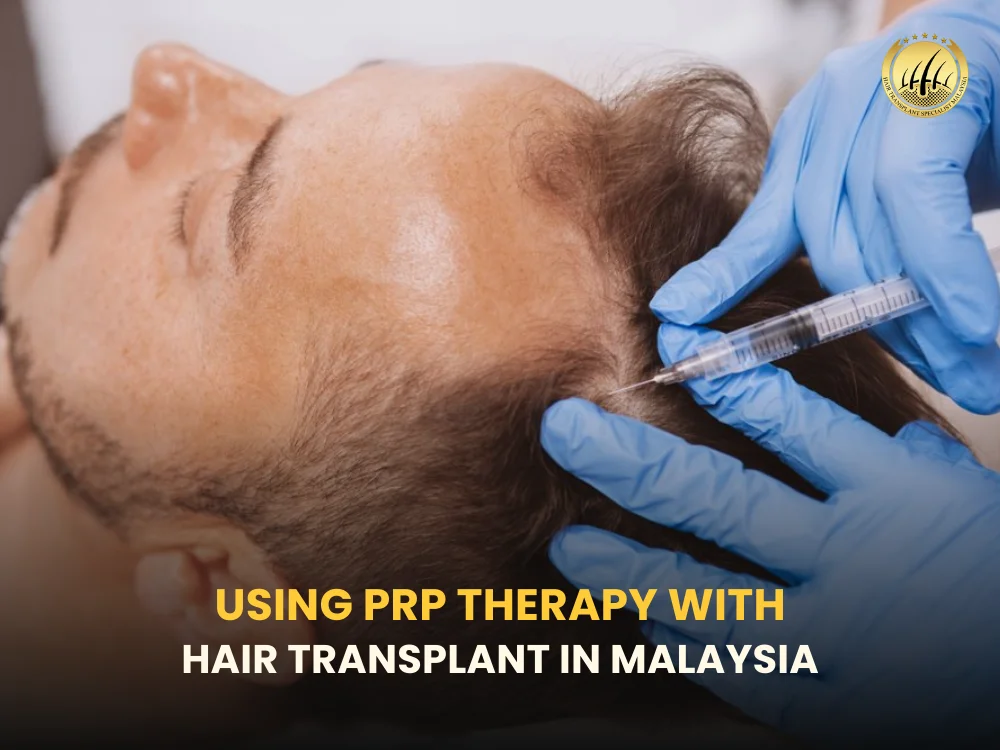
PRP for Hair Transplant refers to the use of Platelet-Rich Plasma therapy alongside hair restoration surgery to accelerate healing and improve hair growth outcomes.
PRP (Platelet-Rich Plasma) is derived from your own blood. It contains concentrated growth factors that stimulate tissue repair and follicle activity. When used during or after procedures like FUE (Follicular Unit Extraction) or FUT (Follicular Unit Transplantation), PRP supports stronger graft survival and faster recovery.
In Malaysia, many aesthetic clinics now integrate PRP with surgical hair restoration as part of a comprehensive treatment plan.
How PRP Therapy Works
PRP therapy follows a straightforward medical process:
- A small amount of your blood is drawn.
- The blood is placed into a centrifuge to separate platelets.
- The concentrated platelet-rich plasma is extracted.
- PRP is injected into the scalp or applied to graft sites.
Platelets contain natural growth factors such as:
- PDGF (Platelet-Derived Growth Factor)
- VEGF (Vascular Endothelial Growth Factor)
- TGF (Transforming Growth Factor)
These proteins promote:
- Tissue repair
- Blood vessel formation
- Collagen production
- Follicle stimulation
Because PRP uses your own blood, it is generally safe with minimal risk of allergic reactions.
Why Combine PRP for Hair Transplant?
Hair transplantation already delivers permanent results when performed by experienced surgeons. However, adding PRP can enhance outcomes in several ways:
1. Improved Graft Survival
Newly transplanted grafts are delicate. PRP provides a nutrient-rich environment that supports early survival and reduces graft shock.
2. Faster Healing
Patients often report reduced redness and swelling when PRP is used during surgery.
3. Reduced Shock Loss
Temporary shedding after transplant is common. PRP may help minimize the intensity and duration of this phase.
4. Enhanced Hair Thickness
PRP stimulates miniaturized follicles in surrounding areas, improving overall density — not just transplanted hair.
PRP for Hair Transplant: FUE vs FUT
Most Malaysian clinics perform:
- Follicular Unit Extraction
- Follicular Unit Transplantation
PRP works well with both techniques.
With FUE:
PRP is often applied directly to grafts before implantation to boost survival rates.
With FUT:
PRP may be injected along the incision site to promote faster wound healing.
Regardless of technique, PRP acts as a biological enhancer rather than a replacement for surgery.
Who Is a Good Candidate for PRP for Hair Transplant?
PRP for hair transplant is suitable for:
- Men with androgenetic alopecia
- Women with thinning hair and strong donor areas
- Patients undergoing large graft sessions
- Individuals wanting faster recovery
However, PRP may not be ideal for people with:
- Blood disorders
- Platelet dysfunction conditions
- Active scalp infections
A thorough medical consultation is necessary before proceeding.
The Treatment Timeline in Malaysia
When PRP therapy is combined with a hair transplant procedure in Malaysia, the recovery and growth process follows a predictable biological timeline. While individual healing rates vary, most patients experience the following phases:
Day of Surgery
PRP may be injected before graft placement (to prepare the recipient area) or after implantation (to support healing and graft survival).
Because PRP contains concentrated growth factors from your own blood, it may help:
Enhance blood supply to newly transplanted grafts
Reduce post-operative inflammation
Support early tissue repair
Potentially improve graft survival rates
Many clinics use PRP as an adjunct to both FUE and FUT procedures to optimize the surgical outcome.
Week 1–2: Early Healing Phase
During the first two weeks:
Mild redness and scabbing gradually resolve
Swelling subsides
Tenderness decreases
Patients who receive PRP often report less inflammation and improved comfort compared to transplant-only procedures. While this varies individually, PRP’s regenerative properties may help accelerate the healing process.
Month 1–3: Shedding & Stabilization Phase
This is the stage where shock loss commonly occurs.
Transplanted hairs shed temporarily
Surrounding native hair may also thin briefly
This phase can be worrying, but it is normal. PRP may help stabilize existing follicles and support quicker transition back into the growth phase. However, it does not completely prevent shock loss — it simply supports recovery.
Month 4–6: Early Visible Regrowth
At this stage:
Fine new hairs begin to emerge
Hair shafts gradually thicken
Density starts to improve
Growth is typically uneven at first, with gradual thickening over time. Patients begin noticing meaningful cosmetic improvement around month 6.
Month 9–12: Maturation & Full Results
By this phase:
Transplanted hairs mature and thicken
Density becomes more noticeable
Hair blends naturally with surrounding strands
Final results are usually assessed between 9–12 months, depending on the area treated (crown areas may take slightly longer).
Cost of PRP for Hair Transplant in Malaysia
In Malaysia, hair transplant costs vary based on:
- Number of grafts
- Clinic reputation
- Surgeon expertise
- Technology used
PRP sessions are usually priced separately and may range between:
RM 800 – RM 2,500 per session
When bundled with transplant surgery, clinics may offer package pricing.
Always prioritize medical experience over promotional pricing.
Is PRP for Hair Transplant Scientifically Proven?
Safety and Side Effects
PRP therapy is generally safe because it uses autologous blood (your own blood).
Possible temporary side effects:
- Mild swelling
- Tenderness at injection site
- Temporary redness
Serious complications are rare when performed in sterile medical settings.
Choosing a licensed medical clinic in Malaysia is essential for safety.
Emotional Benefits of PRP for Hair Transplant
Hair restoration is not just cosmetic — it’s psychological.
Patients who combine PRP with transplant often report:
- Faster visible improvement
- Reduced anxiety during shedding phase
- Greater confidence during recovery
Managing expectations remains key. PRP enhances results, but patience is still required.
How to Choose the Right Clinic in Malaysia
When selecting a clinic offering PRP and hair transplant:
✔ Verify doctor credentials
✔ Check before-and-after cases
✔ Ask about graft survival rates
✔ Confirm sterile centrifuge equipment
✔ Ensure personalized treatment planning
Avoid clinics that guarantee “instant” or “100% permanent” results.
Frequently Asked Questions (10 FAQs)
1. Does PRP make hair transplant results permanent?
No. The transplant provides permanent grafts. PRP enhances survival and growth but does not change genetic hair loss patterns.
2. Is PRP painful?
Most patients report mild discomfort. Local anesthesia minimizes pain during injections.
3. How many PRP sessions are needed?
Typically 3–4 sessions initially, followed by maintenance every 6–12 months.
4. Can PRP replace hair transplant surgery?
No. PRP can thicken existing hair but cannot restore completely bald areas.
5. Is PRP safe for women?
Yes, especially for female pattern hair thinning with good scalp health.
6. When will I see results?
Early improvement may appear at 3–4 months. Full results usually show at 9–12 months.
7. Are there risks of infection?
Risk is very low when performed in a sterile clinical environment.
8. Can PRP reduce shock loss?
It may reduce severity and duration, but shedding can still occur.
9. Is PRP for Hair Transplant approved in Malaysia?
PRP is widely practiced in aesthetic and dermatology clinics across Malaysia.
10. Is PRP worth the extra cost?
For many patients, improved density and healing justify the investment.
Final Thoughts
Combining PRP for Hair Transplant procedures in Malaysia represents a modern, regenerative approach to hair restoration. While surgery remains the foundation for permanent hair replacement, PRP therapy enhances the biological environment for stronger, healthier regrowth.
If you’re considering hair restoration, consult a qualified medical professional who can assess whether PRP combination therapy suits your specific hair loss pattern and goals.
With proper planning, realistic expectations, and expert hands, the journey toward fuller hair can be both safe and rewarding.