Hair transplant procedures are widely considered safe and effective, especially with modern techniques like FUE and DHI. However, like any medical procedure, they can come with temporary side effects and potential risks. Understanding hair transplant side effects helps patients prepare realistically, reduce anxiety, and make informed decisions before treatment. This guide explains what is normal, what is rare, and how most side effects can be managed safely.
Understanding Hair Transplant Side Effects
Hair transplant side effects refer to temporary physical reactions or, in rare cases, complications that may occur after a hair restoration procedure. Most side effects are mild, short-term, and part of the body’s natural healing response.
The likelihood and severity of side effects depend on:
- The technique used (FUE, DHI, FUT)
- Surgeon experience
- Individual healing response
- Post-procedure care
Common Hair Transplant Side Effects (Usually Temporary)
1. Swelling of the Scalp and Forehead
Mild swelling may appear within the first few days, especially around the forehead or eyes.
Why it happens:
- Local anesthesia
- Fluid movement under the scalp
How long it lasts:
- 2 to 5 days in most cases
2. Redness at the Recipient Area
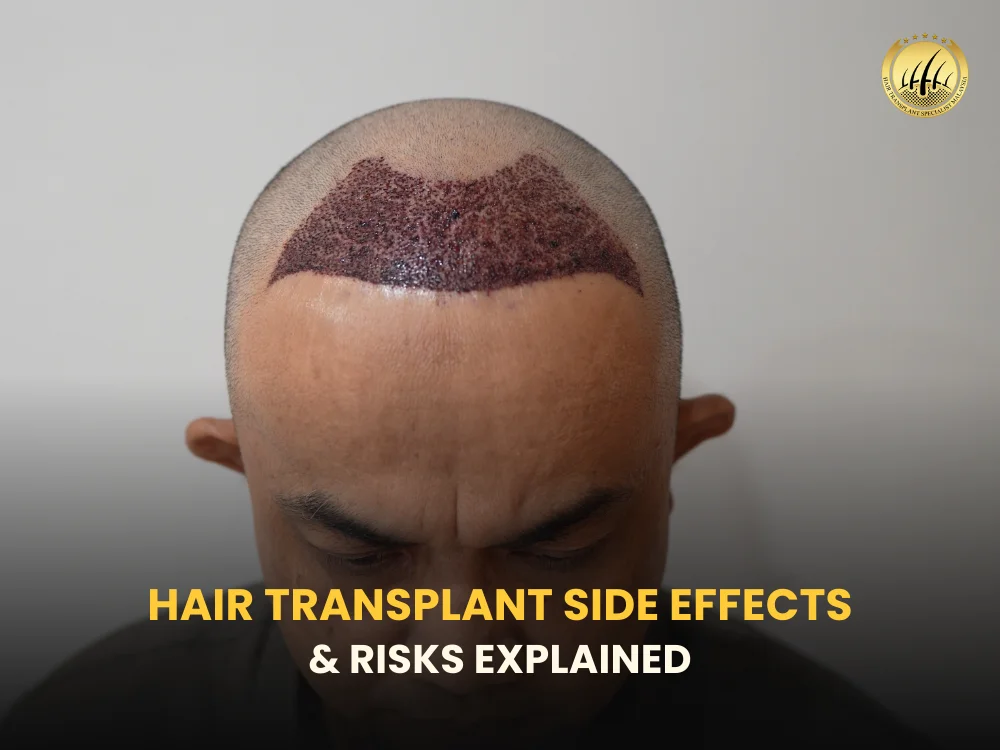
Redness around transplanted follicles is a normal inflammatory response.
What to know:
- More visible in lighter skin tones
- Gradually fades within 1–3 weeks
This is one of the most common hair transplant side effects and not a sign of failure.
3. Itching During Healing
Itching occurs as the scalp heals and scabs begin to fall off naturally.
Important:
- Avoid scratching to protect grafts
- Use prescribed sprays or shampoos
4. Scabbing and Crusting
Tiny scabs form around transplanted grafts during the first week.
Normal timeline:
- Scabs form within days
- Fall off naturally by day 7–10
Manually removing scabs can damage follicles and delay healing.
5. Temporary Hair Shedding (Shock Loss)
One of the most misunderstood hair transplant side effects is shedding of transplanted hair.
Why it happens:
- Hair follicles enter a resting phase
- Follicles remain healthy under the skin
Hair usually begins regrowing within 3–4 months.
Less Common but Possible Hair Transplant Side Effects
6. Numbness or Tingling Sensation
Temporary numbness may occur in donor or recipient areas due to minor nerve irritation.
Typical duration:
- A few weeks to several months
Sensation usually returns naturally.
7. Mild Pain or Discomfort
Most patients experience only mild soreness after the procedure.
Managed with:
- Prescribed pain medication
- Proper rest
Severe or prolonged pain should be evaluated by a doctor.
8. Folliculitis (Inflamed Hair Follicles)
Small pimple-like bumps may appear during early hair growth.
Causes:
- New hairs breaking through the skin
- Minor bacterial irritation
Usually resolves with topical treatment.
Rare Hair Transplant Risks to Be Aware Of
9. Infection
Infections are rare when procedures are performed in sterile environments.
Warning signs:
- Increasing pain
- Pus or unusual discharge
- Fever
Prompt treatment prevents complications.
10. Poor Graft Survival
In rare cases, grafts may not survive due to:
- Poor blood supply
- Excessive trauma
- Inadequate aftercare
Choosing an experienced surgeon significantly reduces this risk.
11. Unnatural Hairline or Uneven Growth
This is usually linked to:
- Poor hairline design
- Inexperienced placement
Modern techniques greatly minimize this risk when performed by qualified professionals.
Factors That Influence Hair Transplant Side Effects
Hair transplant procedures are generally safe when performed by experienced professionals. However, side effects can vary from one patient to another. Several key factors influence how the body responds after surgery and how smooth the recovery process will be.
1. Technique Used
The method chosen plays a major role in determining post-procedure reactions.
FUE (Follicular Unit Extraction) and DHI (Direct Hair Implantation) are minimally invasive techniques. They involve extracting individual hair follicles, resulting in tiny puncture wounds that heal relatively quickly. These methods typically cause less swelling, minimal scarring, and faster recovery.
FUT (Follicular Unit Transplantation), on the other hand, involves removing a strip of scalp tissue. Because it is more invasive, patients may experience more noticeable discomfort, tightness, and a linear scar at the donor area.
Choosing the appropriate technique based on your hair loss pattern and scalp condition can significantly reduce potential complications.
2. Number of Grafts Implanted
The total number of grafts transplanted directly affects the extent of trauma to the scalp.
Larger sessions involving 3,000–4,000 grafts may lead to:
Increased swelling
Prolonged redness
Temporary numbness
Longer healing time
Smaller sessions generally allow for quicker recovery and milder side effects. Your surgeon will usually recommend a graft count that balances density goals with safe healing.
3. Scalp Sensitivity and Individual Healing Response
Each person’s body reacts differently to surgical procedures. Some individuals naturally have:
Sensitive skin prone to redness
Slower wound healing
Higher inflammation response
Patients with certain skin conditions or a history of keloid scarring may also experience more noticeable post-surgical effects. A thorough pre-procedure assessment helps identify these risks in advance.
4. Smoking and Lifestyle Habits
Lifestyle choices significantly influence recovery outcomes. Smoking, in particular, reduces blood flow to the scalp and limits oxygen supply to transplanted follicles. This can:
Delay healing
Increase infection risk
Affect graft survival
Excessive alcohol consumption, poor sleep, dehydration, and inadequate nutrition can also slow the recovery process. Maintaining a healthy lifestyle before and after surgery supports better healing and minimizes side effects.
5. Compliance with Aftercare Instructions
Following post-operative instructions is one of the most important factors in preventing complications. Patients are usually advised to:
Avoid touching or scratching the scalp
Sleep with the head elevated
Use prescribed medications as directed
Follow proper washing techniques
Avoid strenuous activities for a recommended period
Failure to follow these guidelines can increase the risk of infection, graft displacement, excessive swelling, or delayed healing.
How to Minimize Hair Transplant Side Effects
Choose a Qualified Hair Transplant Surgeon
Surgeon experience directly impacts both results and safety.
Follow Post-Procedure Instructions Carefully
Aftercare guidelines are designed to protect grafts and reduce complications.
Avoid Smoking and Alcohol
These can slow healing and reduce blood flow to transplanted follicles.
Keep the Scalp Clean
Using only recommended products helps prevent infection and irritation.
Attend Follow-Up Appointments
Regular check-ups allow early detection of potential issues.
When Are Hair Transplant Side Effects a Concern?
Here’s a more detailed and structured expansion of your section:
When Are Hair Transplant Side Effects a Concern?
Most hair transplant side effects are mild and temporary. Redness, minor swelling, slight discomfort, and scabbing are all part of the normal healing process. However, certain symptoms may indicate complications that require medical attention. Knowing the difference between normal recovery and warning signs is essential for protecting your results.
You should contact your clinic immediately if you experience any of the following:
1. Severe or Worsening Pain
Mild tenderness or tightness in the donor and recipient areas is expected during the first few days. This discomfort usually improves with prescribed medication.
However, pain becomes a concern if it:
Intensifies instead of improving
Persists beyond the first week
Does not respond to prescribed pain relief
Severe or escalating pain may indicate infection, excessive inflammation, or other complications that need prompt evaluation.
2. Prolonged Swelling Beyond Two Weeks
Swelling typically appears on the forehead or around the eyes within the first few days after the procedure. In most cases, it subsides within 3–7 days.
If swelling:
Lasts longer than two weeks
Becomes increasingly firm or painful
Is accompanied by redness or warmth
it may signal abnormal inflammation or infection. Early medical assessment can prevent more serious issues.
3. Signs of Infection
Infection after a hair transplant is rare but possible, especially if aftercare instructions are not followed properly. Warning signs may include:
Persistent redness that spreads
Unusual discharge or foul odor
Fever
Increased tenderness in specific areas
Prompt treatment with prescribed medication can resolve infections quickly and protect transplanted grafts.
4. Sudden Hair Loss Outside the Expected Shedding Phase
It is completely normal to experience “shock loss” within 2–8 weeks after the procedure. This temporary shedding happens as transplanted hairs enter a resting phase before regrowth begins.
However, you should consult your clinic if:
Hair loss occurs immediately in large patches
Native (non-transplanted) hair falls out excessively
Shedding continues far beyond the typical timeline
Your doctor can assess whether the hair loss is part of the normal cycle or requires additional treatment.
Are Hair Transplant Side Effects Permanent?
In most cases, no. The majority of side effects are temporary and resolve completely within weeks. Permanent complications are rare and often linked to unqualified providers or poor aftercare.
FAQs About Hair Transplant Side Effects
- Are hair transplant side effects common?
Yes, mild side effects are common but usually temporary and manageable. - Is swelling after a hair transplant normal?
Yes, especially in the first few days after the procedure. - Why does transplanted hair fall out?
This is a normal shedding phase and part of the hair growth cycle. - Can hair transplant side effects be prevented?
Most can be minimized by choosing an experienced surgeon and following aftercare instructions. - How long does redness last after a hair transplant?
Redness usually fades within 1–3 weeks. - Is numbness after a hair transplant permanent?
No, sensation typically returns as nerves heal. - Can infection occur after a hair transplant?
It is rare but possible if aftercare instructions are ignored. - Does the technique affect side effects?
Yes, FUE and DHI generally cause fewer side effects than FUT. - When should I worry about side effects?
If symptoms worsen or persist longer than expected. - Are the results affected by early side effects?
No, temporary side effects do not impact final hair growth results.
Conclusion
Understanding hair transplant side effects allows patients to approach the procedure with realistic expectations and confidence. While minor reactions such as swelling, redness, or temporary shedding are normal, serious complications are rare when treatment is performed by qualified professionals. With proper planning, expert care, and good aftercare, most patients experience a smooth recovery and successful long-term results.