Undergoing a hair restoration procedure is an exciting step toward regaining confidence. But once the surgery is done, many patients become concerned about one common recovery phase — scabbing.
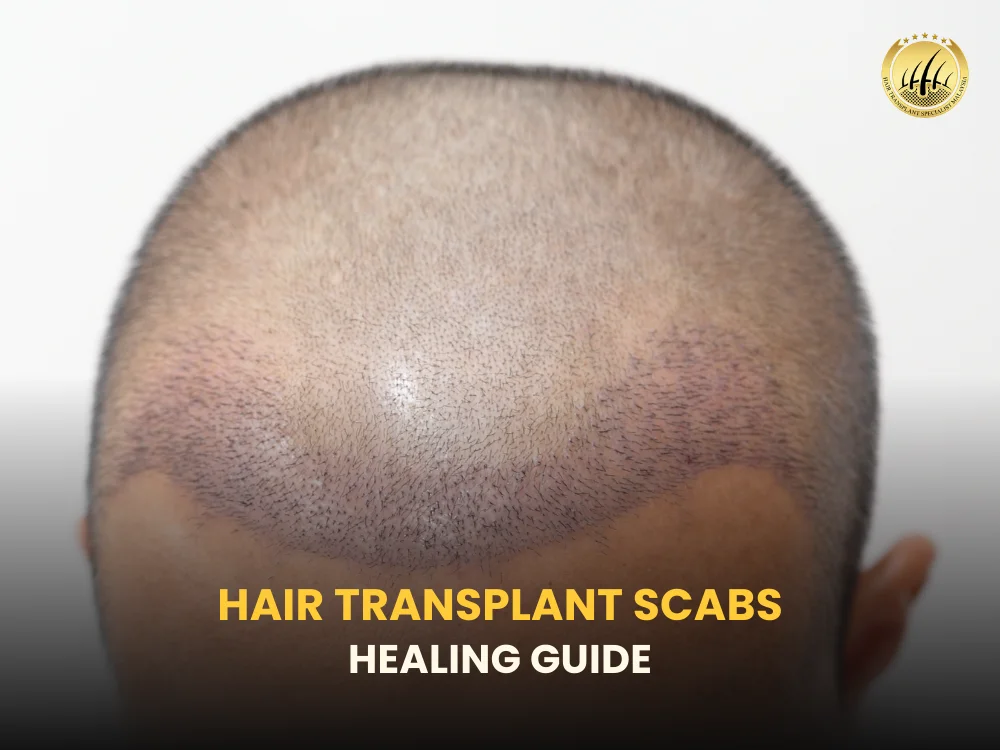
Hair transplant scabs healing is a normal and essential part of recovery. These tiny crusts form around newly implanted grafts and typically fall off within 7–14 days. Understanding why they appear, how to care for them properly, and what to avoid can protect your graft survival and ensure optimal results.
Whether you’ve had Follicular Unit Extraction (FUE) or Follicular Unit Transplantation (FUT), this complete guide will walk you through the healing process step by step.
What Is Hair Transplant Scabs Healing?
Hair transplant scabs healing refers to the natural process where small crusts form around implanted hair grafts and gradually shed as the scalp repairs itself.
These scabs are made of:
- Dried blood
- Plasma
- Lymphatic fluid
- Dead skin cells
They act as protective shields over each graft during the critical early healing phase. In most cases, scabs begin forming within 24–48 hours after surgery and resolve within 10 days.
Scabbing is not a complication — it’s part of normal wound healing.
Why Do Scabs Form After a Hair Transplant?
During a transplant procedure, tiny incisions are made in the scalp to insert grafts. Even though these incisions are extremely small, they trigger the body’s healing response.
Here’s why scabs develop:
1. Micro-Incisions
Both Follicular Unit Extraction and Follicular Unit Transplantation involve controlled surgical wounds.
2. Blood Clotting Mechanism
The body naturally forms clots to protect exposed tissue.
3. Protective Barrier Formation
Scabs seal the area and prevent bacteria from entering while grafts anchor securely into the scalp.
This early healing phase is crucial for graft survival.
Hair Transplant Scabs Healing Timeline
Understanding the timeline helps reduce anxiety:
Day 1–2:
Scabs begin forming around graft sites.
Day 3–5:
Scabs become more visible and slightly firm.
Day 6–9:
Scabs start loosening as the scalp regenerates.
Day 10–14:
Most scabs fall off naturally with gentle washing.
If scabs remain beyond 14 days, it may indicate inadequate washing or delayed healing.
Are Hair Transplant Scabs Healing Normal After FUE and FUT?
Yes. Scabbing occurs with both techniques, although patterns may differ slightly.
- FUE: Tiny circular scabs across donor and recipient areas.
- FUT: Linear donor scar plus recipient area scabs.
Clinics following standards set by organizations like the International Society of Hair Restoration Surgery emphasize proper post-operative care to ensure smooth healing.
How to Wash Your Hair During the Scabbing Phase
Proper washing is essential for safe hair transplant scabs healing.
First 48 Hours
Avoid direct water pressure. Follow your clinic’s specific instructions.
Day 3 Onwards
- Use mild shampoo recommended by your clinic.
- Dilute shampoo with water before applying.
- Gently pat — do not rub.
- Let foam sit for a few minutes before rinsing with low pressure.
After Day 7
Light circular motions may be allowed (only if advised by your surgeon).
Washing too aggressively can dislodge grafts in the first 5–7 days.
What Happens If You Pick the Scabs?
Picking scabs is one of the biggest mistakes patients make.
Doing so can:
- Dislodge grafts
- Cause bleeding
- Increase infection risk
- Affect hair growth outcome
Remember: If a graft is accidentally removed within the first week, it will not regrow.
Let them fall off naturally.
Do Hair Transplant Scabs Healing Affect Hair Growth?
No — as long as they are not forcefully removed.
Once scabs shed, the hair shafts may also fall out in a process called shock loss. This is completely normal and temporary. The follicles remain beneath the skin and begin producing new hair within 3–4 months.
Signs of Healthy Healing
How to Speed Up Hair Transplant Scabs Healing
While you can’t rush biology, you can support recovery:
1. Follow Washing Instructions Strictly
Consistency is key.
2. Avoid Smoking and Alcohol
They impair circulation and delay healing.
3. Stay Hydrated
Healthy skin heals faster.
4. Avoid Intense Exercise
Sweating may irritate scabs in the early days.
5. Protect from Sun Exposure
UV exposure can worsen redness and delay recovery.
When Can You Resume Normal Hair Care?
Most patients return to regular shampoo routines after 14 days.
Hair styling products, coloring, and chemical treatments should typically wait 4–6 weeks (or as advised by your surgeon).
Emotional Reassurance During the Scab Phase
It’s common to feel concerned when your scalp looks crusted or uneven. Some patients worry that something went wrong.
But remember:
- Scabbing is expected.
- It is temporary.
- It does not determine final results.
By Month 1, your scalp will look significantly clearer.
Common Mistakes That Delay Hair Transplant Scabs Healing
Hair Transplant Scabs Healing is generally straightforward, but small mistakes can slow down healing and affect your overall results. While your grafts are secure within the first few days, the scalp is still delicate and requires proper care.
Here’s what to avoid:
❌ Scratching itchy areas
Itching is common during the first 7–14 days as scabs form and fall off. Scratching can dislodge grafts (especially in the first 5–7 days), cause micro-injuries, and increase infection risk. Instead, use the recommended saline spray or doctor-approved soothing products to relieve discomfort.
❌ Using harsh shampoos
Strong shampoos containing sulfates, alcohol, or heavy fragrances can irritate the scalp and delay scab shedding. Always use the mild shampoo recommended by your clinic and follow the gentle washing technique provided during your post-operative briefing.
❌ Washing too late (allowing thick buildup)
Some patients avoid washing because they’re afraid of harming grafts. However, delaying washes allows thick scab buildup, which can prolong redness and healing. Proper, gentle washing starting from the recommended day (usually Day 2–3) helps soften scabs and promotes smoother recovery.
❌ Wearing tight caps too early
Tight hats, helmets, or beanies can create friction and pressure on the recipient area. If headwear is allowed, it should be loose-fitting and only worn after your surgeon gives approval—typically after the first week.
❌ Ignoring post-op instructions
Every clinic may have slightly different protocols based on technique (FUE, FUT, density, graft count). Not following instructions regarding sleeping position, medications, washing schedule, or activity restrictions can increase swelling, infection risk, or delayed healing.
Why Recovery Discipline Matters
Hair transplantation is a medical procedure, not just a cosmetic one. The grafts need time to anchor, blood supply must stabilize, and the scalp needs to repair micro-incisions.
Patients who follow instructions carefully tend to experience:
Faster scab shedding
Less prolonged redness
Lower infection risk
Better graft survival
More predictable final density
Your final result at 12 months is influenced not just by surgical technique—but also by how responsibly you manage the first 2–4 weeks of recovery. Recovery discipline directly impacts your final outcome.
Frequently Asked Questions (FAQs)
1. How long does hair transplant scabs healing take?
Most scabs fall off within 7–14 days.
2. Is it normal to see dried blood?
Yes. Minor dried blood around grafts is expected.
3. Can I remove scabs manually?
No. Let them shed naturally during washing.
4. What if scabs don’t fall off after 2 weeks?
Consult your clinic. You may need guided washing techniques.
5. Do scabs mean grafts are damaged?
No. They protect grafts during early healing.
6. Is itching normal?
Mild itching is part of healing. Avoid scratching.
7. Can infection occur during the scabbing phase?
Rarely, if aftercare is followed properly.
8. Will scabs leave scars?
No. Properly healed micro-incisions do not leave visible scars.
9. Does FUE cause more scabbing than FUT?
FUE creates more tiny scabs due to individual extraction sites.
10. When does new hair start growing?
New growth typically begins around Month 3–4.
Final Thoughts: Hair Transplant Scabs Healing
Hair transplant scabs healing is a predictable and temporary stage in your recovery journey. Although it may look concerning, these crusts serve a protective function and usually resolve within two weeks.
By practicing gentle washing, avoiding picking, and following professional aftercare instructions, you support healthy graft anchoring and long-term growth.
Hair restoration is not just about the surgery — it’s about disciplined recovery. Stay patient, stay consistent, and trust the process.