
Hair transplant procedures have become increasingly popular among individuals experiencing hair thinning or baldness. As more clinics in Malaysia offer advanced hair restoration techniques, many patients want to understand the hair transplant price per graft and what determines the overall cost of treatment.
Unlike flat-rate procedures, most hair transplant clinics calculate pricing based on the number of grafts required. This makes the total cost vary depending on the extent of hair loss, the technique used, and the clinic’s expertise. Understanding how graft pricing works can help patients plan their treatment budget and make informed decisions before undergoing surgery.
What Does Hair Transplant Price Per Graft Mean?
The hair transplant price per graft refers to the cost charged by a clinic for transplanting a single hair follicular unit, commonly known as a graft.
In modern hair restoration procedures, a graft typically contains:
- 1 hair follicle
- 2 hair follicles
- 3 to 4 hair follicles
Hair transplant surgeons carefully extract and implant these grafts to recreate a natural hairline and improve hair density.
Most clinics calculate the final cost by multiplying the hair transplant price per graft by the number of grafts required.
For example:
- 2,000 grafts × RM10 per graft = RM20,000
The total price therefore depends heavily on the severity of hair loss and the treatment plan recommended by the specialist.
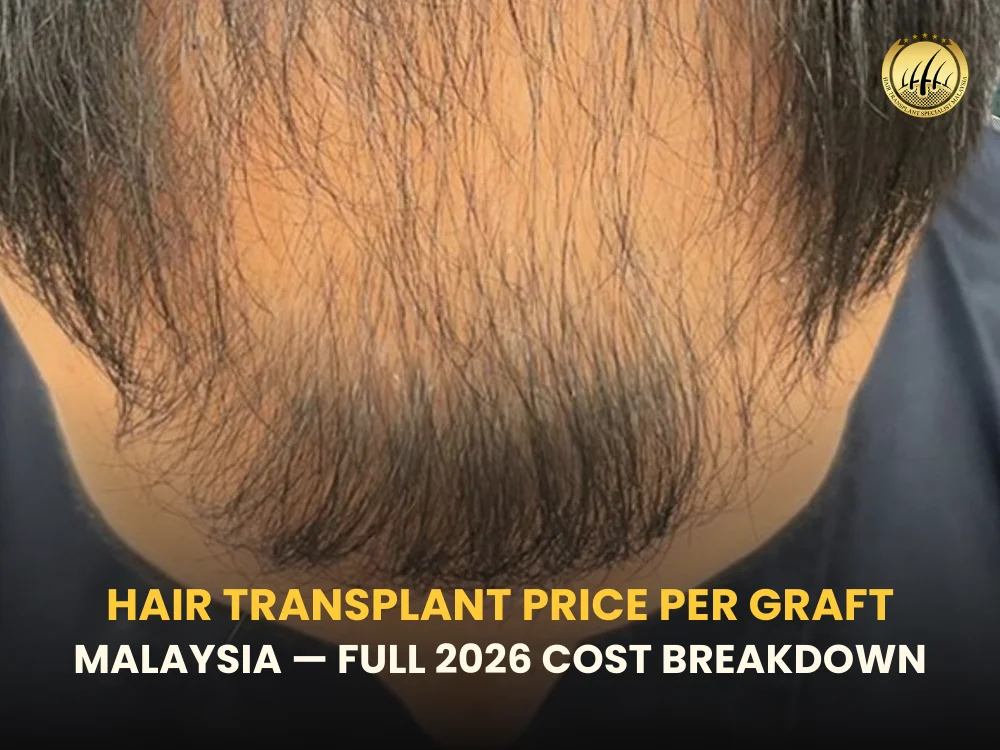
Average Hair Transplant Price Per Graft in Malaysia (2026)
The hair transplant price per graft in Malaysia generally ranges between RM6 and RM15 per graft, depending on the clinic and technology used.
Typical price ranges include:
Procedure Type | Estimated Hair Transplant Price Per Graft |
Basic packages | RM6 – RM8 |
Standard clinics | RM8 – RM12 |
Premium clinics | RM12 – RM15 |
Malaysia is often considered a competitive destination for hair restoration compared to Western countries.
Procedures are commonly performed using techniques such as Follicular Unit Extraction and Direct Hair Implantation, both known for producing natural-looking results.
Total Hair Transplant Cost Based on Graft Numbers
Because each patient requires a different number of grafts, the total cost of a hair transplant can vary significantly.
Here is a rough estimate based on common graft requirements.
1,000 Grafts
Estimated cost:
RM6,000 – RM15,000
Usually suitable for:
- Minor hairline correction
- Early-stage hair thinning
2,000 Grafts
Estimated cost:
RM12,000 – RM30,000
Suitable for:
- Moderate temple recession
- Restoring frontal hairline density
3,000 Grafts
Estimated cost:
RM18,000 – RM45,000
Common for patients experiencing moderate Androgenetic Alopecia.
4,000+ Grafts
Estimated cost:
RM24,000 – RM60,000 or more
Often required for:
- Advanced hair loss
- Crown restoration
- Large bald areas
A specialist usually determines the exact graft requirement after evaluating your scalp and hair density.
Factors That Affect Hair Transplant Price Per Graft
Several factors influence the hair transplant price per graft in Malaysia.
Understanding these factors helps explain why pricing varies between clinics.
Hair Transplant Technique
Different procedures require different levels of skill and equipment.
Two of the most commonly used techniques are:
Follicular Unit Extraction (FUE)
Individual hair follicles are extracted and transplanted one by one.
Direct Hair Implantation (DHI)
Hair follicles are implanted directly using a specialized implanter pen.
DHI procedures are often slightly more expensive due to precision tools and longer surgical time.
Surgeon’s Experience
Highly experienced hair transplant surgeons typically charge higher fees due to their expertise and track record of successful results.
An experienced surgeon can significantly influence:
- Hairline design
- Graft survival rate
- Natural appearance
Choosing a qualified professional is crucial for long-term satisfaction.
Number of Grafts Required
The larger the bald area, the more grafts are needed.
Hair loss severity is commonly assessed using the Norwood Scale, which classifies male pattern baldness into several stages.
Patients with advanced stages may require multiple sessions.
Clinic Location and Reputation
Clinics located in major cities such as:
- Kuala Lumpur
- Petaling Jaya
- Johor Bahru
may charge higher prices due to operating costs and demand.
Well-established clinics also tend to offer premium facilities and advanced equipment.
How Many Grafts Do You Actually Need?
Below is a general guideline.
Hair Loss Area | Approximate Grafts Needed |
Hairline restoration | 1,000 – 1,500 |
Front scalp | 1,500 – 2,500 |
Crown | 2,000 – 3,000 |
Full scalp restoration | 3,500 – 5,000 |
A consultation with a hair transplant specialist will provide the most accurate estimate.
Is Hair Transplant Cheaper in Malaysia?
Malaysia is often considered an attractive destination for hair restoration treatments.
Compared to countries like:
- United States
- United Kingdom
- Australia
hair transplant procedures in Malaysia can cost 40–60% less while maintaining high medical standards.
This affordability has contributed to the growth of medical tourism in the country.
Additional Costs to Consider
Besides the hair transplant price per graft, patients should also consider additional expenses.
These may include:
- Consultation fees
- Post-surgery medications
- Follow-up appointments
- PRP or supportive therapies
- Accommodation for international patients
Some clinics offer package pricing that includes these services.
Is a Higher Price Always Better?
Not necessarily.
While extremely cheap clinics may compromise quality, the most expensive clinic does not always guarantee the best outcome.
Patients should evaluate:
- Surgeon credentials
- Before-and-after results
- Clinic reputation
- Technology used
A balanced combination of experience, transparency, and safety standards is usually the best indicator of quality.
FAQs About Hair Transplant Price Per Graft
1. What is the average hair transplant price per graft in Malaysia?
Most clinics charge between RM6 and RM15 per graft depending on the procedure and clinic.
2. How many grafts are needed for a hair transplant?
Patients typically require 1,000 to 4,000 grafts, depending on the severity of hair loss.
3. Is FUE more expensive than FUT?
Yes, Follicular Unit Extraction is generally more expensive because it requires precise extraction of individual follicles.
4. How long does a hair transplant procedure take?
Most procedures take 4 to 8 hours, depending on the number of grafts being transplanted.
5. Is the price per graft negotiable?
Some clinics may offer package pricing or discounts for larger graft sessions.
6. When will transplanted hair start growing?
Hair growth usually begins around 3 to 4 months, with full results visible after about 12 months.
7. Are hair transplant results permanent?
Yes, transplanted hair follicles are typically resistant to hair loss and can grow permanently.
8. Can I calculate the cost before consultation?
You can estimate based on graft numbers, but a professional consultation is necessary for accurate planning.
9. Does insurance cover hair transplants?
Most insurance plans consider hair transplants cosmetic procedures and do not cover them.
10. Is Malaysia a good place for hair transplant procedures?
Yes, Malaysia has many reputable clinics offering advanced hair restoration techniques at competitive prices.
Conclusion
Understanding the hair transplant price per graft is essential for anyone considering hair restoration surgery. Pricing in Malaysia typically ranges from RM6 to RM15 per graft, depending on the technique, clinic expertise, and number of grafts required.
While cost is an important factor, choosing a qualified surgeon and reputable clinic should always be the top priority. A well-performed hair transplant can provide natural-looking, permanent results that significantly improve confidence and appearance.
Before making a decision, it is always best to schedule a professional consultation to assess your hair loss pattern and develop a personalized treatment plan.