Hair loss can be emotionally challenging — whether it’s a receding hairline, thinning crown, or diffuse shedding. Fortunately, FUE Hair Transplant Malaysia has become one of the most sought-after solutions for long-term, natural-looking hair restoration.
Malaysia is now recognized as a regional hub for aesthetic medical procedures, offering advanced techniques, experienced surgeons, and competitive pricing compared to countries like the UK, Australia, and Singapore.
In this guide, we’ll break down everything you need to know — how FUE works, benefits, recovery timeline, costs in Malaysia, and answers to the most common patient questions.
What Is FUE Hair Transplant Malaysia?
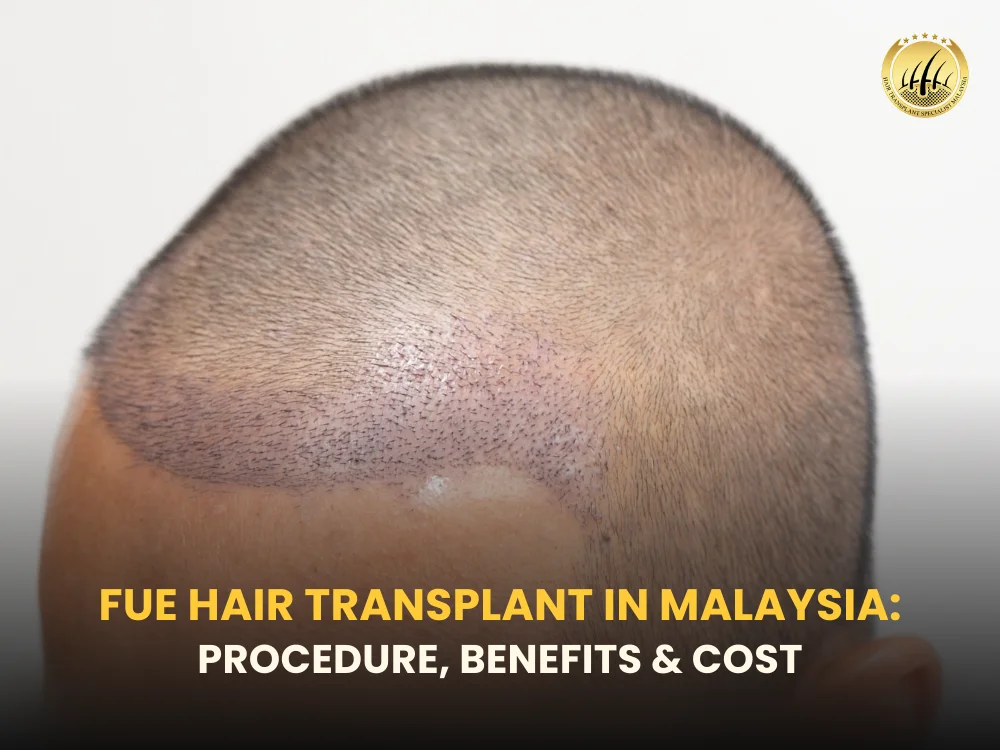
FUE Hair Transplant Malaysia refers to the Follicular Unit Extraction technique performed by licensed hair restoration surgeons in Malaysia. Unlike traditional strip surgery, FUE extracts individual hair follicles directly from the donor area (usually the back of the scalp) and implants them into thinning or bald areas.
The result? Minimal scarring, faster recovery, and natural density when performed correctly.
Understanding the FUE Hair Transplant Malaysia Technique
FUE stands for Follicular Unit Extraction, a minimally invasive hair transplant method.
Here’s how the procedure works:
1. Donor Area Preparation
The back or sides of the scalp are trimmed. These areas are genetically resistant to hair loss caused by androgenetic alopecia.
2. Individual Graft Extraction
Using micro-punch tools (typically 0.7–0.9mm in diameter), the surgeon extracts individual follicular units.
3. Recipient Site Creation
Tiny incisions are made in the thinning area, carefully designed to match natural hair direction and angle.
4. Graft Implantation
The extracted follicles are implanted into the prepared sites to recreate a natural hairline and density.
Modern clinics may also combine FUE Hair Transplant Malaysia with:
- Sapphire blade implantation
- Implanter pen techniques
- Platelet-rich plasma (PRP) therapy
Why FUE Hair Transplant Malaysia Is Popular?
Malaysia has grown into a leading destination for hair restoration due to several key advantages:
✔ Experienced Surgeons
Many Malaysian surgeons are registered under the Malaysian Medical Council and trained internationally.
✔ Affordable Pricing
Compared to United Kingdom, Australia, or Singapore, Malaysia offers competitive rates without compromising quality.
✔ Modern Technology
Clinics in cities like Kuala Lumpur and Penang are equipped with advanced surgical tools and sterile environments.
✔ Medical Tourism Hub
Malaysia is known for medical tourism, attracting patients from Indonesia, Australia, and the Middle East.
Who Is a Suitable Candidate?
FUE Hair Transplant Malaysia is a highly versatile hair restoration technique, but not everyone is an ideal candidate. A proper scalp assessment is crucial to determine suitability and long-term success.
✅ FUE Hair Transplant Malaysia Is Ideal For:
Men with Male Pattern Baldness
Men experiencing androgenetic alopecia (receding hairline, thinning crown, or both) are among the most common candidates. FUE works well when hair loss has stabilized and donor hair is strong.
Women Experiencing Hair Thinning
Women with localized thinning (rather than diffuse hair loss across the entire scalp) may benefit from FUE, especially for hairline lowering or filling specific areas.
Individuals with Receding Hairlines
FUE Hair Transplant Malaysia is particularly effective for restoring frontal hairlines. The technique allows precise angle and direction placement for natural-looking density.
Patients with Stable Donor Hair Supply
A strong and healthy donor area (usually at the back and sides of the scalp) is essential. These hairs are typically resistant to DHT and can provide long-term growth after transplantation.
Those Who Prefer Minimal Scarring
Because FUE leaves only tiny dot scars, it is suitable for individuals who prefer short hairstyles or want to avoid a linear scar.
⚠ FUE May Not Be Suitable For:
Individuals with Severe Donor Area Depletion
If the donor zone is too thin or weak, there may not be enough healthy grafts to achieve satisfactory coverage.
Patients with Active Scalp Infections or Skin Conditions
Conditions such as severe dermatitis, fungal infections, or uncontrolled inflammation must be treated first before considering surgery.
Individuals with Unrealistic Expectations
Hair transplantation redistributes existing hair — it does not create new follicles. Patients expecting extremely high density despite limited donor supply may need expectation counseling.
Very Young Patients with Ongoing Rapid Hair Loss
If hair loss is aggressive and not yet stabilized, long-term planning becomes more complex and may require medical therapy first.
Why Proper Assessment Matters
A detailed consultation should include:
Scalp examination
Donor density measurement
Hair caliber assessment
Medical history review
Long-term hair loss pattern planning
Clinics in Malaysia operate under medical standards regulated by the Malaysian Medical Council, and a qualified doctor should always evaluate your suitability before proceeding.
Hair restoration is not a one-size-fits-all solution. A careful, individualized assessment ensures safe results and natural-looking outcomes that last for years.
Benefits of FUE Hair Transplant Malaysia
Follicular Unit Extraction (FUE) has become one of the most popular hair restoration techniques due to its minimally invasive nature and natural-looking outcomes. Here’s why many patients choose FUE:
1. Minimal Scarring
FUE involves extracting individual follicular units using micro-punch tools. This method leaves tiny dot scars that are barely visible to the naked eye.
No linear strip scar
Ideal for short hairstyles or faded cuts
Easier future hairstyle flexibility
For patients concerned about visible scarring, FUE offers a significant cosmetic advantage.
2. Faster Recovery
Because FUE does not require stitches or large incisions, healing is generally quicker.
Most patients resume light daily activities within 3–5 days
Redness and scabbing typically subside within 7–10 days
Lower risk of wound tension
This makes FUE suitable for individuals with busy work schedules who cannot afford extended downtime.
3. Natural-Looking Results
When performed by an experienced surgeon, FUE allows precise control over:
Hairline design
Graft angle and direction
Density distribution
Proper placement ensures transplanted hair mimics natural growth patterns, creating a seamless blend with existing hair. The artistic skill of the surgeon plays a major role in achieving undetectable results.
4. Permanent Solution
The transplanted follicles are usually harvested from the “safe donor zone” at the back and sides of the scalp. These follicles are genetically resistant to DHT (the hormone responsible for pattern hair loss).
Once transplanted, they continue to grow naturally for years — making FUE a long-term solution rather than a temporary fix.
5. Less Post-Operative Discomfort
Compared to strip methods (FUT), FUE typically causes:
Less scalp tightness
Reduced post-operative pain
No sutures to remove
Most discomfort is mild and manageable with prescribed medication.
FUE vs FUT: What’s the Difference?
Feature | FUE | FUT |
Scarring | Tiny dot scars | Linear scar |
Downtime | Shorter | Slightly longer |
Pain Level | Mild | Moderate |
Ideal For | Smaller sessions | Large graft sessions |
FUE is now more commonly preferred in Malaysia due to its minimally invasive nature.
What to Expect During Recovery
Understanding the hair growth timeline helps manage expectations:
Week 1–2
- Mild swelling or redness
- Scabs begin to fall off
Weeks 2–8
- Temporary shedding (shock loss)
Month 3–4
- Early regrowth begins
Month 6
- Noticeable improvement in density
Month 9–12
- Full results become visible
Transplanted hair behaves like natural hair — it can be cut, styled, and even dyed.
Cost of FUE Hair Transplant Malaysia
The cost depends on:
- Number of grafts required
- Surgeon’s expertise
- Clinic location
- Technology used
- Additional treatments like PRP
Average Cost Range:
RM6,000 – RM18,000
Price is usually calculated per graft, ranging between RM5 – RM12 per graft.
Compared to countries like United States or United Kingdom, Malaysia offers substantial savings while maintaining international standards.
However, avoid choosing clinics based on price alone — surgical skill and design expertise matter most.
Risks and Side Effects
Like any minor surgical procedure, FUE carries some risks:
- Temporary swelling
- Mild discomfort
- Shock loss
- Folliculitis (rare)
- Uneven density (if poorly performed)
Choosing a qualified and experienced surgeon reduces complications significantly.
How to Choose the Right Clinic in Malaysia
Choosing the right clinic is one of the most important decisions in your hair restoration journey. A well-performed procedure can look natural and last for years — while a poorly executed one may require costly corrective surgery.
Before booking your procedure:
✔ Ensure the doctor personally performs the extraction and implantation
In some clinics, technicians handle most of the critical steps. Your surgeon should be directly involved in designing the hairline, extracting grafts, and supervising implantation to ensure precision and graft survival.
✔ Verify registration with the Malaysian Medical Council
All legitimate medical doctors in Malaysia must be registered. This protects you legally and ensures the practitioner meets national medical standards.
✔ Review real before-and-after cases
Look for consistent lighting, multiple angles, and results shown at 6–12 months post-procedure. Be cautious of heavily edited photos or images that look stock-generated.
✔ Request a detailed consultation
A proper consultation should include:
Assessment of donor area quality
Hairline design discussion
Graft number estimation
Long-term hair loss planning
Clear explanation of risks and recovery
Avoid clinics that rush this process or provide quotes without examining you properly.
✔ Avoid unrealistic “guaranteed full density” claims
Hair transplant outcomes depend on donor supply, hair characteristics, and future hair loss progression. Ethical clinics provide realistic expectations — not exaggerated promises.
Think Long-Term, Not One-Day
A reputable clinic focuses on long-term hair planning, not just performing a one-day procedure. Hair loss is progressive, and your surgeon should design a strategy that still looks natural 10–20 years from now.
Hair restoration is both a medical and artistic procedure — skill, experience, and ethics matter just as much as price.
Frequently Asked Questions (10 FAQs)
1. Is FUE hair transplant Malaysia painful?
Local anesthesia is used, so pain during the procedure is minimal. Mild discomfort may occur afterward.
2. How long does the procedure take?
Typically 6–8 hours, depending on the number of grafts.
3. Are results permanent?
Yes. Transplanted hair is generally permanent as it is resistant to DHT.
4. When can I return to work?
Most patients return within 3–5 days.
5. Will there be visible scars?
FUE leaves tiny dot scars that are usually unnoticeable.
6. Can women undergo FUE Hair Transplant Malaysia?
Yes. Women with thinning hair or traction alopecia may benefit.
7. How many grafts do I need?
It depends on your degree of hair loss and donor capacity.
8. Can I wear a cap after surgery?
Yes, but typically after 5–7 days once grafts are secure.
9. Is Malaysia safe for medical tourists?
Yes. Malaysia is recognized as a reputable medical tourism destination.
10. Can transplanted hair fall out again?
Initial shedding is normal. Permanent loss is rare if grafts survive successfully.
Final Thoughts
Choosing FUE Hair Transplant Malaysia is not just about restoring hair — it’s about restoring confidence.
Malaysia offers modern facilities, experienced surgeons, and competitive pricing, making it an attractive destination for hair restoration. However, successful outcomes depend heavily on surgical expertise, proper planning, and realistic expectations.
If you’re considering treatment, start with a thorough consultation and understand your long-term hair restoration strategy.