Hair transplantation has become a widely accepted solution for hair loss. However, not every procedure delivers the expected outcome. A failed hair transplant can leave patients feeling frustrated or self-conscious due to unnatural hairlines, poor density, or visible scarring.
Fortunately, modern hair restoration techniques offer ways to correct many of these issues. In Malaysia, experienced hair transplant specialists often perform corrective procedures to improve the appearance of unsuccessful surgeries. This guide explains the causes of failed hair transplants and the available treatment options to repair them.
Understanding Failed Hair Transplant Results
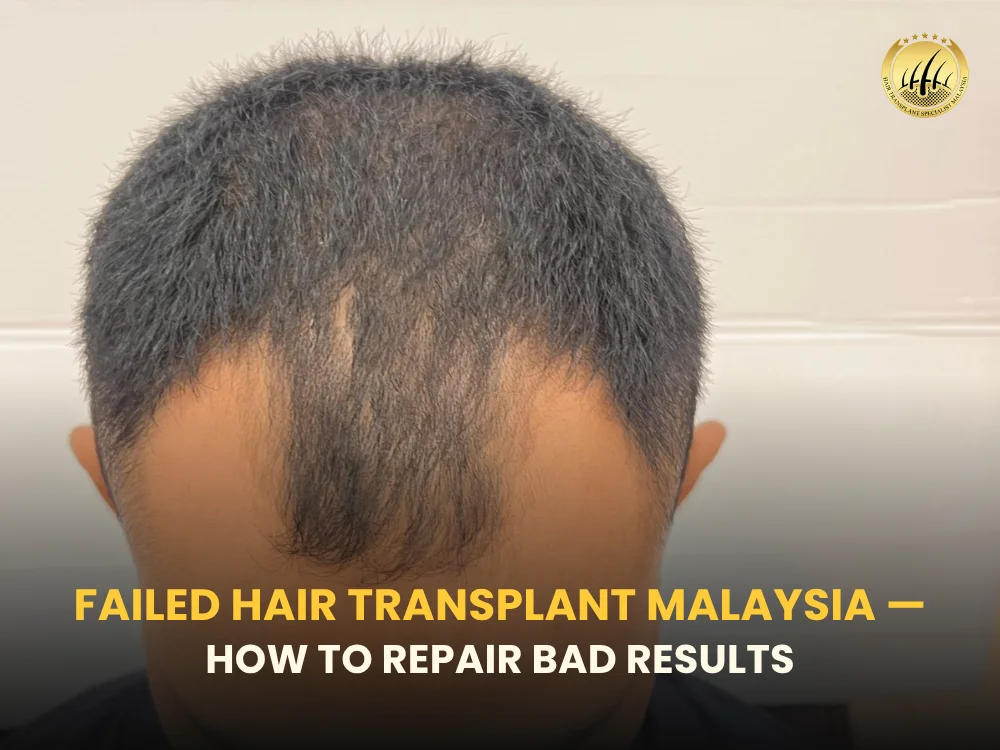
A failed hair transplant occurs when the procedure does not achieve natural-looking growth, adequate density, or proper hairline design. In some cases, the transplanted grafts may not survive, or the results may look artificial.
Hair restoration procedures such as Hair Transplantation aim to move healthy hair follicles from a donor area to thinning or bald regions. When performed properly, the results typically look natural and permanent.
However, poor technique, incorrect planning, or unrealistic expectations may lead to unsatisfactory outcomes.
Common Signs of a Failed Hair Transplant
Several signs may indicate that a hair transplant did not achieve optimal results.
Unnatural Hairline
One of the most noticeable problems is an unnatural hairline that looks too straight, too low, or poorly positioned.
A natural hairline usually has slight irregularities and varying hair density. When grafts are implanted incorrectly, the result can look artificial.
Poor Hair Density
Some patients experience thin or patchy coverage after surgery.
This may occur if:
- Too few grafts were implanted
- Grafts did not survive the procedure
- Poor surgical technique damaged follicles
Density problems can sometimes be corrected with additional graft placement.
Visible Scarring
Older surgical techniques such as Follicular Unit Transplantation may leave linear scars if not performed properly.
Scarring may also occur when grafts are extracted incorrectly during Follicular Unit Extraction procedures.
Visible scars can be distressing, particularly for patients who prefer short hairstyles.
Unnatural Hair Growth Direction
Hair grows in specific angles and directions depending on the area of the scalp.
If grafts are implanted incorrectly, hair may grow in awkward directions, creating an unnatural appearance.
Pluggy or “Doll Hair” Look
Older transplant methods sometimes created a plug-like appearance, where thick clusters of hair were placed in unnatural patterns.
Modern techniques aim to replicate natural follicular groupings to avoid this issue.
Why Do Hair Transplants Fail?
Hair transplant failures can occur for several reasons.
Inexperienced Surgeon
Hair transplantation requires advanced surgical skill and aesthetic planning.
Poorly trained practitioners may miscalculate graft placement, density, or hairline design.
Poor Donor Area Management
The donor area is the source of healthy hair follicles.
Overharvesting grafts can cause visible thinning or scarring in the donor region.
Low Graft Survival
Hair grafts are delicate and must be handled carefully.
Improper handling during Hair Transplantation may reduce survival rates.
Factors affecting graft survival include:
- Poor storage conditions
- Prolonged surgery time
- Trauma to follicles
Progressive Hair Loss
Hair loss conditions such as Androgenetic Alopecia continue progressing over time.
If surrounding hair continues to thin after surgery, transplanted areas may appear unnatural or isolated.
Unrealistic Expectations
Some patients expect extremely dense coverage in a single session. However, hair transplantation has biological limitations.
Experienced surgeons typically design treatments that consider future hair loss patterns.
How Failed Hair Transplants Can Be Repaired
Fortunately, several techniques can help improve unsuccessful results.
Corrective Hair Transplant Surgery
The most common solution is a repair hair transplant, where new grafts are strategically placed to improve density and hairline shape.
Surgeons often use Follicular Unit Extraction for repair procedures because it allows precise graft placement.
Hairline Redesign
Corrective procedures may involve creating a more natural hairline.
Doctors remove or reposition poorly placed grafts and implant new follicles in a natural pattern.
Scar Camouflage
Visible scars may be treated with:
- Additional hair grafts
- Scar revision procedures
- Scalp Micropigmentation
Scalp micropigmentation creates the illusion of hair density by depositing pigment into the scalp.
Laser or Skin Treatments
In some cases, skin treatments may improve the appearance of scars or uneven scalp texture.
Examples include:
- Laser resurfacing
- Microneedling
- PRP therapy
These treatments may complement surgical correction.
When Should You Consider Repair Surgery?
Patients may consider repair procedures if they experience:
- Unnatural hairline design
- Poor density
- Visible scarring
- Patchy or uneven growth
Doctors typically recommend waiting 9 to 12 months after the initial transplant before corrective surgery. This allows enough time to evaluate the final results.
Choosing the Right Clinic in Malaysia
Selecting an experienced surgeon is critical when repairing a failed transplant.
Important factors include:
- Surgeon experience in corrective cases
- Proven results in hair restoration
- Detailed consultation and planning
- Transparent discussion of realistic expectations
A skilled specialist can evaluate the scalp and donor area to design a customized repair strategy.
Preventing Failed Hair Transplant
While modern hair transplant techniques are highly advanced, achieving optimal results still depends on careful planning, proper technique, and good aftercare. Although not all complications can be completely avoided, several key steps can significantly reduce the risk of poor graft survival or unsatisfactory outcomes.
Choose an Experienced Surgeon
Hair transplantation is both a surgical procedure and an artistic process. The skill of the surgeon plays a major role in determining how natural and dense the final result will look.
Patients are encouraged to:
- Review the surgeon’s qualifications and experience
- Examine before-and-after photos of real patients
- Look for consistent, natural-looking hairlines
- Ensure the procedure is performed by a licensed medical professional
An experienced surgeon understands graft handling, hairline design, and proper implantation angles—all critical factors for graft survival and aesthetic success.
Follow Post-Surgery Instructions
After the procedure, newly transplanted grafts are delicate and require proper care to heal and grow successfully.
Typical aftercare recommendations include:
- Avoid touching, scratching, or rubbing the scalp
- Follow specific washing instructions provided by the clinic
- Sleep with your head elevated during the first few days
- Avoid strenuous exercise or activities that cause sweating
- Protect the scalp from direct sun exposure
Adhering to these guidelines helps reduce the risk of infection, graft dislodgement, and poor healing.
Treat Underlying Hair Loss
A hair transplant does not stop ongoing hair loss. Without proper management, existing non-transplanted hair may continue to thin over time, affecting overall density.
Medications commonly used include:
- Minoxidil – helps stimulate hair growth and improve blood flow to hair follicles
- Finasteride – reduces levels of DHT, a hormone linked to hair loss
These treatments may help preserve existing hair and support long-term results after transplantation.
Maintain Overall Scalp and Health Conditions
General health and scalp condition also influence healing and hair growth.
Patients may benefit from:
- Managing stress levels
- Maintaining a balanced diet rich in protein and vitamins
- Controlling medical conditions such as diabetes or hormonal imbalances
- Avoiding smoking, which can impair blood flow and healing
Set Realistic Expectations
Understanding what a hair transplant can and cannot achieve is essential. Results depend on factors such as donor hair availability, hair texture, and the extent of hair loss.
A thorough consultation allows the doctor to:
- Estimate graft requirements
- Design an appropriate hairline
- Discuss achievable density and coverage
Realistic expectations help improve satisfaction and reduce the likelihood of perceived “failure.”
Consider Long-Term Planning
Hair loss is often progressive. A single procedure may not be sufficient for lifetime coverage, especially in younger patients.
Long-term planning may involve:
- Combining medical therapy with surgery
- Scheduling future touch-up procedures if needed
- Monitoring hair loss progression over time
Frequently Asked Questions (FAQs)
1. What causes a failed hair transplant?
Common causes include poor surgical technique, low graft survival, unrealistic expectations, or progressive hair loss conditions.
2. Can a failed hair transplant be fixed?
Yes. Many failed procedures can be improved through corrective hair transplant surgery or additional treatments.
3. How long should I wait before repairing a hair transplant?
Most doctors recommend waiting 9 to 12 months to allow full healing and hair growth before repair surgery.
4. Can hairline mistakes be corrected?
Yes. Surgeons can redesign the hairline by removing poorly placed grafts and adding new ones.
5. Is repair surgery more complicated?
Corrective procedures may be more complex because surgeons must work around existing grafts and scar tissue.
6. Can scars from failed hair transplant surgery be hidden?
Yes. Options include additional grafts or Scalp Micropigmentation.
7. Will the repaired transplant from failed hair transplant look natural?
When performed by an experienced specialist, repair procedures can significantly improve the natural appearance of hair.
8. How many grafts are needed for repair?
The number varies depending on the severity of the original transplant problem.
9. Can hair transplant failure happen with modern techniques?
Although modern procedures such as Follicular Unit Extraction have improved success rates, poor technique can still lead to unsatisfactory outcomes.
10. Is a consultation necessary before repair?
Yes. A detailed consultation helps doctors evaluate scalp condition, donor availability, and the best corrective strategy.
Conclusion
A failed hair transplant can be disappointing, but it does not necessarily mean permanent damage. Advances in hair restoration techniques allow many patients to repair unnatural hairlines, improve density, and conceal scars.
Modern procedures such as Follicular Unit Extraction have made corrective surgery more precise and effective. In Malaysia, experienced hair transplant specialists frequently perform repair procedures to restore natural-looking results.
If you are unhappy with a previous hair transplant, consulting a qualified hair restoration expert can help determine the best solution for achieving a more natural and satisfying outcome.