
The best age hair transplant question is one of the most common concerns for people experiencing hair loss. Many individuals in Malaysia begin researching hair restoration once they notice thinning hair, a receding hairline, or bald patches. While modern techniques such as Follicular Unit Extraction and Follicular Unit Transplantation offer reliable results, specialists often emphasize that timing matters as much as the procedure itself. Choosing the right age can improve long-term results, preserve donor hair, and reduce the likelihood of needing multiple procedures later.
Understanding Hair Loss Before Considering Surgery
Hair transplantation works by relocating healthy hair follicles from the donor area (usually the back of the scalp) to areas affected by hair loss.
The most common cause of hair loss treated with transplantation is Androgenetic Alopecia, often called male pattern baldness or female pattern hair loss.
This condition is influenced by genetics and hormones, particularly the hormone Dihydrotestosterone (DHT), which gradually shrinks hair follicles.
Common signs include:
- Receding hairline
- Thinning crown
- Widening part line
- Overall hair density reduction
Because this condition progresses over time, doctors carefully evaluate whether a patient’s hair loss pattern has stabilized before recommending surgery.
Why Age Hair Transplant Matters in Planning
Hair transplantation is a long-term solution, but hair loss often continues as people age.
If surgery is performed too early, surrounding hair may continue to thin, creating an unnatural pattern or requiring additional procedures.
Hair specialists consider several factors when evaluating the ideal timing:
- Age and stage of hair loss
- Stability of hair loss pattern
- Donor hair availability
- Family history of baldness
- Long-term hair restoration goals
For these reasons, doctors usually recommend careful assessment before performing surgery on younger patients.
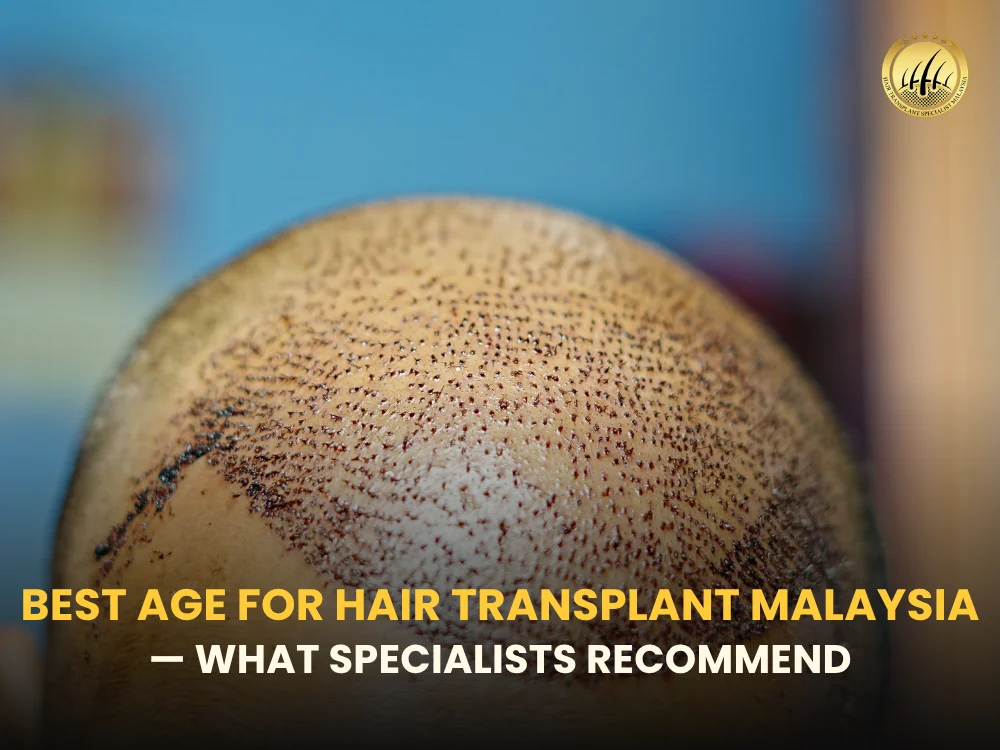
Recommended Age Hair Transplant Range
Although there is no universal rule, many hair restoration specialists consider the late 20s to early 40s to be an ideal period for hair transplantation.
This age range often allows:
- More predictable hair loss patterns
- Better long-term planning
- Sufficient donor hair availability
Techniques like Follicular Unit Extraction have made procedures less invasive, but the principle of strategic timing still remains critical.
Age Hair Transplant in Your Early 20s
Some individuals begin experiencing noticeable hair loss in their early twenties.
While it may be tempting to seek immediate surgical correction, many doctors recommend caution.
Potential concerns at this age
- Hair loss may still be progressing rapidly
- The final baldness pattern may not be clear
- Excessive use of donor hair early on may limit future procedures
Instead of immediate surgery, doctors often suggest medical treatments such as Finasteride or Minoxidil to slow hair loss and stabilize the condition.
These treatments may help preserve existing hair while delaying surgery until a more predictable stage.
Age Hair Transplant in Your Late 20s to 30s
For many individuals, the late twenties and thirties represent the most common age for hair transplant procedures.
By this stage:
- Hair loss patterns are usually clearer
- Patients can plan long-term hairline design
- Donor hair supply is typically strong
Surgeons can create a hairline that will continue to look natural as aging progresses.
Patients in this age group also tend to have realistic expectations about the results of surgery.
Age Hair Transplant in Your 40s and Beyond
Hair transplantation can still be very successful for patients in their forties or older.
In fact, older patients sometimes have more stable hair loss patterns, making surgical planning easier.
Benefits for older patients may include:
- Clear understanding of baldness progression
- More realistic expectations
- Stable donor areas
However, the overall health of the scalp and hair follicles must still be evaluated carefully before proceeding.
Factors That Influence the Best Age Hair Transplant Decision
Age Hair Transplant does not determine whether someone is a good candidate for surgery.
Specialists evaluate several important factors.
Hair Loss Stability
Doctors assess whether hair loss has slowed or stabilized.
If hair loss is still progressing rapidly, surgery may be postponed.
Donor Hair Quality
Successful transplantation depends on healthy donor follicles from the back or sides of the scalp.
Thicker donor hair usually produces better cosmetic results.
Hair Density Goals
Patients seeking very dense coverage may require more grafts, which affects long-term planning.
Overall Health
Medical history and scalp health also play important roles in determining candidacy for hair restoration.
Modern Hair Transplant Techniques
Advances in technology have significantly improved hair transplant procedures.
Two widely used techniques include:
Follicular Unit Extraction (FUE)
Follicular Unit Extraction involves extracting individual hair follicles from the donor area and implanting them into thinning areas.
Benefits include:
- Minimal scarring
- Faster recovery
- Natural-looking results
Follicular Unit Transplantation (FUT)
Follicular Unit Transplantation involves removing a strip of scalp from the donor area and dividing it into follicular grafts.
Although it leaves a linear scar, FUT can sometimes provide a larger number of grafts in a single session.
How Specialists Design a Natural Hairline
Hairline design is one of the most critical elements of a successful transplant.
Doctors consider several aesthetic factors:
- Facial proportions
- Age progression
- Ethnic hair characteristics
- Hair density distribution
A hairline that looks natural at age 30 should still appear appropriate at age 50.
This is why experienced surgeons avoid creating hairlines that are unrealistically low or dense.
Can Hair Transplants Prevent Future Hair Loss?
Hair transplantation restores hair to areas that are already thinning or bald.
However, it does not stop ongoing hair loss caused by Androgenetic Alopecia.
Doctors often recommend ongoing treatments such as:
- Finasteride
- Minoxidil
- Platelet-Rich Plasma Therapy
These treatments help maintain existing hair and support long-term results.
Choosing the Right Hair Transplant Clinic in Malaysia
When considering a age hair transplant in Malaysia, selecting the right clinic plays a major role in achieving safe, natural-looking, and long-lasting results. With many providers offering hair restoration services, patients should take time to evaluate several key factors before making a decision.
Qualified and Experienced Surgeons
The expertise of the surgeon is one of the most important considerations. Look for doctors who specialize specifically in hair restoration rather than general cosmetic procedures. An experienced surgeon understands hairline design, graft placement, and density planning—details that significantly affect the final outcome. Reviewing credentials, certifications, and years of experience can help ensure you are in capable hands.
Advanced Techniques and Technology
Modern hair transplant methods, such as Follicular Unit Extraction (FUE), offer minimally invasive solutions with faster recovery and less visible scarring. Clinics that invest in up-to-date equipment and refined techniques are more likely to deliver precise graft extraction and implantation, leading to better survival rates and natural growth patterns.
Transparent Consultation and Graft Planning
A reputable clinic will provide a thorough consultation before any procedure. This includes assessing your hair loss pattern, donor area quality, and long-term expectations. Transparent clinics clearly explain:
- The estimated number of grafts required
- Realistic density outcomes
- Total cost and number of sessions
- Potential risks and recovery timeline
Avoid clinics that promise overly dense results or provide fixed packages without proper assessment, as hair restoration should always be personalized.
Before-and-After Results and Patient Reviews
Reviewing real patient results helps you gauge the clinic’s consistency and quality. Look for clear, high-resolution before-and-after photos taken under similar lighting and angles. Patient testimonials and reviews can also provide insight into the overall experience, including consultation quality, aftercare, and satisfaction.
Importance of Timing and Hair Loss Stage
A proper consultation ensures the procedure is performed at the right stage of hair loss. Performing a transplant too early may lead to unnatural results as surrounding hair continues to thin over time. A skilled practitioner will consider long-term hair loss progression and may recommend medical treatments or delaying the procedure if necessary.
Aftercare and Long-Term Support
Hair transplantation is not just about the procedure itself—post-treatment care is equally important. Choose a clinic that offers structured aftercare, follow-up appointments, and guidance on maintaining results. Ongoing support can improve graft survival and overall satisfaction.
Frequently Asked Questions (FAQs)
1. What is the best age hair transplant?
Many specialists recommend undergoing hair transplantation between the late 20s and early 40s when hair loss patterns become more stable.
2. Can I get a age hair transplant at 21?
Some clinics may perform surgery at this age, but many doctors recommend waiting until hair loss patterns are more predictable.
3. Is 40 too late for a age hair transplant?
No. Many patients achieve excellent results in their 40s or even later if donor hair remains healthy.
4. Does age affect hair transplant results?
Age can influence hair loss stability and donor hair quality, both of which affect surgical planning.
5. How long do hair transplant results last?
Transplanted hair follicles are usually permanent because they are resistant to Dihydrotestosterone.
6. Will I need multiple hair transplant procedures?
Some patients may require additional sessions if hair loss continues in untreated areas.
7. Can women get hair transplants?
Yes. Women with certain types of hair thinning, including Female Pattern Hair Loss, may benefit from hair transplantation.
8. Is hair transplant painful?
Modern procedures are typically performed under local anesthesia, minimizing discomfort during surgery.
9. How many grafts are usually required?
The number of grafts depends on the size of the bald area, hair density goals, and donor hair availability.
10. When will transplanted hair start growing?
New hair growth usually begins around 3 to 4 months after surgery, with full results appearing within 12 months.
Conclusion
Determining the best age hair transplant requires careful evaluation of hair loss patterns, donor hair availability, and long-term restoration goals. While many individuals seek treatment as soon as hair thinning appears, specialists often recommend waiting until hair loss stabilizes to achieve more predictable and natural results.
With modern techniques such as Follicular Unit Extraction and proper planning, hair transplantation can provide lasting improvement for individuals experiencing Androgenetic Alopecia. Consulting an experienced hair restoration specialist ensures that the procedure is performed at the most appropriate stage for optimal outcomes.