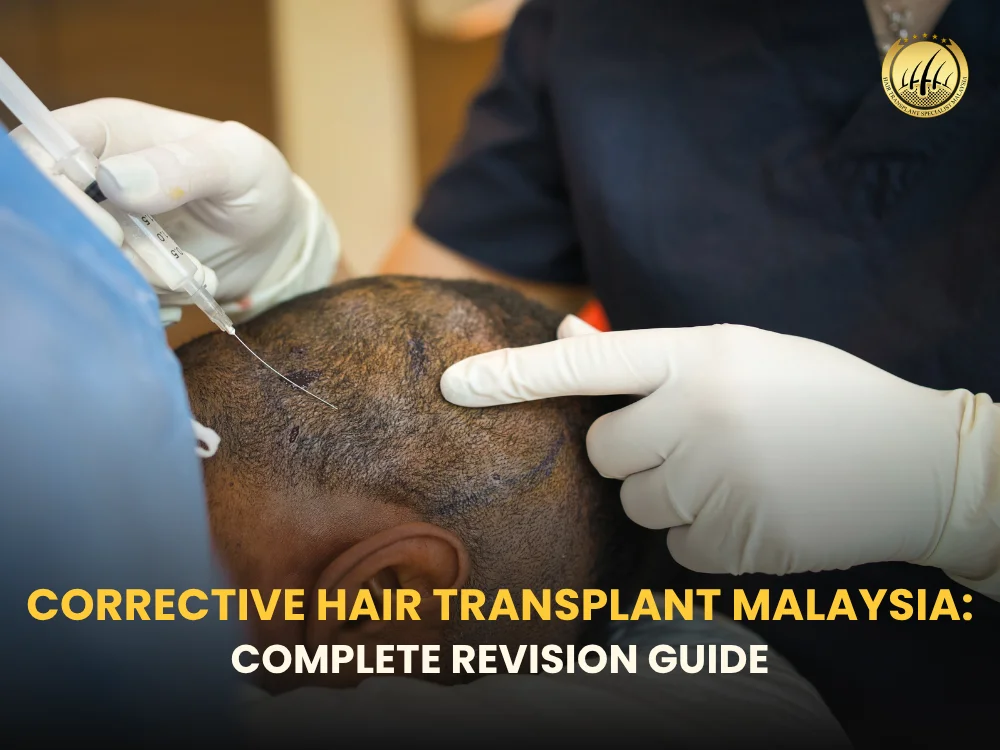
A corrective hair transplant is a specialized revision surgery designed to fix, improve, or camouflage the unnatural or unsuccessful results of a previous hair restoration procedure. It repairs issues like pluggy hairlines, scarring, or poor graft angles to restore a natural, aesthetically pleasing appearance.
Understanding Corrective Hair Transplant
What Is a Corrective Hair Transplant?
A corrective hair transplant is a microsurgical intervention focused on reversing aesthetic or structural flaws from prior Follicular Unit Extraction (FUE) or Follicular Unit Transplantation (FUT) surgeries. Unlike initial operations that focus strictly on filling bald spots, revision procedures require deep artistic precision to correct unnatural angles, fix low or aggressive hairlines, and resolve donor-site depletion.
Why Previous Hair Transplants Fail
Many failed hair transplants stem from inexperienced technicians, poor surgical planning, or disregard for future hair miniaturization. Common root causes include improper graft selection, ignoring natural hair growth direction, and over-harvesting the donor region. When clinics fail to respect individual physiological traits, patients are left with cosmetic deformities that demand specialized revision.
Common Signs You Need Revision Surgery
“Pluggy” or Doll-like Appearance: Multi-hair grafts placed rigidly along the front hairline instead of fine single hairs.
Unnatural Growth Angles: Hair follicles pointing straight out or downward incorrectly, clashing with natural growth dynamics.
Widened Linear Scars: Noticeable stretching or hypertrophic scarring from past strip surgeries.
Patchy Density: Uneven distribution leaving stark gaps between native and transplanted hair.
Advanced Techniques for Hair Transplant Repair
Follicular Unit Extraction (FUE) for Revision
FUE is frequently chosen for revision cases because individual follicular units can be precisely harvested without leaving a linear scar. Surgeons can safely extract misplaced grafts from the hairline one by one and relocate them to more appropriate areas, such as the crown or mid-scalp.
Camouflage Techniques and Strategic Placement
When misaligned grafts cannot be safely extracted, expert surgeons use camouflage. By placing soft, single-hair grafts strategically in front of poorly placed plugs, practitioners break up harsh lines and recreate a natural framing effect for the face.
The Corrective Procedure Process
Initial Consultation and Repair Strategy
A comprehensive medical evaluation maps out your scalp’s remaining donor supply and evaluates tissue health. Surgeons design a bespoke blueprint that addresses past mistakes while conserving finite follicular reserves for long-term aging.
Managing Scar Tissue and Graft Placement
Prior surgeries often leave underlying fibrosis or scar tissue, which restricts blood supply. Surgeons utilize specialized micro-punches and refined implantation protocols to ensure newly placed grafts successfully anchor and receive adequate vascularization.
Recovery and Post-Post-Operative Care
What to Expect Immediately After Surgery
Mild swelling, redness, and tiny scabs around the newly placed grafts are standard during the first week. Patients receive explicit post-operative guidelines detailing gentle washing techniques, sleeping positions, and prescribed medications to eliminate infection risks.
Healing Timeline and Milestone Weeks
Weeks 1 to 2: Grafts anchor securely; scabs gently shed off.
Weeks 3 to 8: Temporary shock loss may occur as native and transplanted hairs rest.
Months 3 to 6: New, healthy hair growth begins to emerge visibly.
Months 12 to 18: Final maturation, density, and natural texture settle completely.
Choosing the Right Clinic in Malaysia
Qualifications of Specialist Surgeons
Revision surgery is significantly more complex than a standard first-time procedure. Patients should verify that their treating doctor holds verified credentials, specialized board certifications, and extensive portfolios dedicated exclusively to corrective hair surgery.
Evaluating Before and After Repair Portfolios
Reviewing documented case studies allows you to assess a clinic’s technical capability. Look for verifiable close-up photographs of hairline redesigns, scar repair, and dense packing transformations that showcase seamless, undetectable outcomes.
Costs and Financial Planning in Malaysia
Cost Factors for Revision Surgeries
Revision procedures typically command higher per-graft investments than standard procedures due to the technical delicacy required to navigate scarred tissue and extract deeply embedded follicles. The total fee depends heavily on graft count, extraction complexity, and surgical hours.
Estimated Price Range in Malaysia
Malaysia remains a leading medical tourism hub because it offers world-class clinical infrastructure at competitive global rates. Corrective procedures generally range from RM8,000 to RM30,000+ (approximately $2,000 to $7,000+ USD), varying by case complexity and the chosen medical facility.
Clinical Insight: Revision hair surgery demands meticulous tissue handling. Because blood supply is often compromised by prior scarring, spacing out graft placement or utilizing regenerative therapies like PRP can significantly boost graft survival and integration rates.
Frequently Asked Questions
What causes a hair transplant to look unnatural?
Unnatural results usually stem from placing multi-hair follicular units along the frontal hairline, ignoring the natural micro-irregularities of growth, or implanting grafts at incorrect angles that defy the patient’s native hair flow.
Can old hair transplant scars be fixed?
Yes. Linear strip scars can often be revised through surgical excision, trichophytic closure techniques, or by camouflaging the area using FUE graft placement directly into the scar tissue.
Is a corrective hair transplant more painful than the first one?
The procedure utilizes local anesthesia, ensuring you remain comfortable throughout. However, because surgeons work through existing scar tissue, post-operative tightness or minor discomfort can occasionally be slightly more pronounced.
How many grafts are needed for a repair procedure?
The graft count varies widely based on the extent of the correction. Minor hairline softening may require only 500 to 1,000 grafts, whereas extensive reconstruction involving plug removal and density rebuilding can require 2,500+ grafts.
When is the right time to undergo corrective surgery?
Most ethical specialists recommend waiting at least 12 months after your initial surgery. This ensures that the scalp has fully healed, local blood circulation has normalized, and the previous grafts have reached their final growth maturity.
Ready to restore your confidence with a seamless, natural-looking hairline? Schedule your comprehensive evaluation and personalized treatment plan today by contacting a specialist at Hair Transplant Malaysia Clinic.