
Hair transplant failure risks refer to factors that can cause a hair transplant procedure to produce poor, unnatural, or unsatisfactory results. These risks include low graft survival, infection, poor surgical technique, excessive scarring, and inadequate aftercare. Understanding these risks helps patients choose qualified providers and improve the chances of successful hair restoration.
What Is Hair Transplant Failure?
Hair transplant failure occurs when transplanted hair follicles do not survive, grow poorly, or produce results that look unnatural. Failure can affect the recipient area, donor area, or both.
A successful hair transplant should provide natural-looking hair growth, adequate density, and minimal visible scarring. When these goals are not achieved, corrective treatment may be required.
Failed Hair Transplant vs Poor Hair Transplant Results
A failed hair transplant and poor hair transplant results are not always the same.
Poor results may involve lower density, slower growth, or a hairline that does not meet patient expectations. However, the grafts are still alive and growing.
A failed hair transplant usually involves significant graft loss, severe scarring, infection, or an unnatural appearance that requires revision surgery.
How Often Does Hair Transplant Failure Occur?
Modern hair transplant procedures generally achieve high graft survival rates when performed by experienced medical professionals.
Studies often report graft survival rates exceeding 90% under optimal conditions. However, outcomes vary depending on surgical skill, patient health, donor hair quality, and post-operative care.
According to the International Society of Hair Restoration Surgery (ISHRS), advancements in hair restoration techniques have significantly improved outcomes over the last decade.
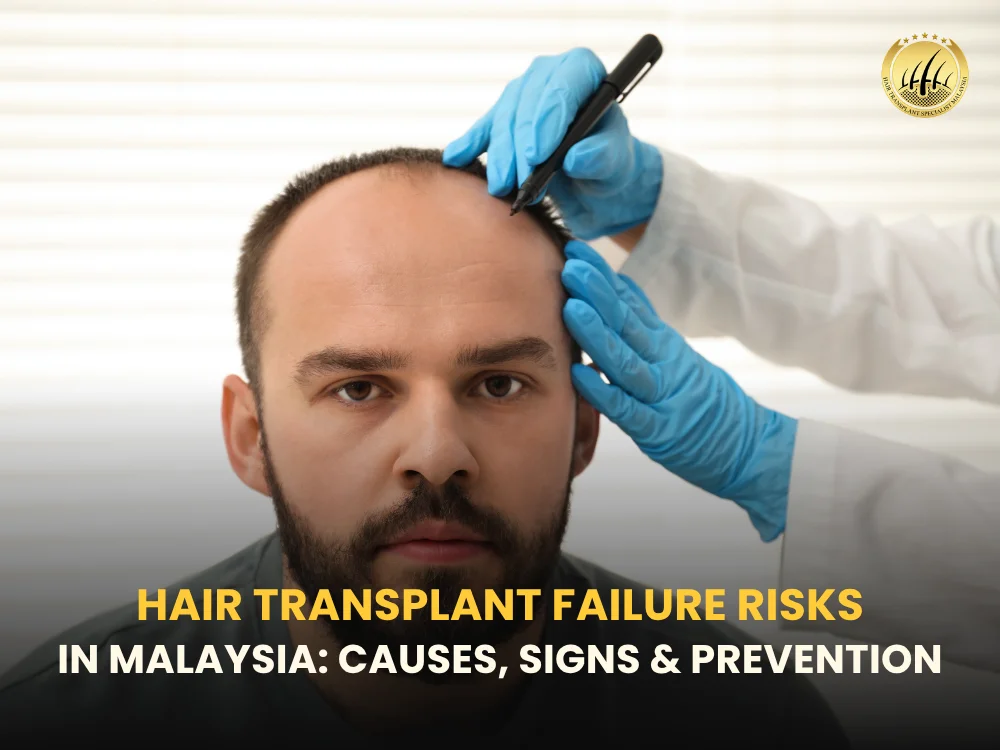
Hair Transplant Failure Risks
Several factors can increase the risk of hair transplant failure.
Inexperienced Surgeon
One of the most common causes of hair transplant failure is poor surgical technique.
An inexperienced surgeon may:
- Damage follicles during extraction
- Place grafts at incorrect angles
- Create unnatural hairlines
- Overharvest the donor area
Even advanced technologies cannot compensate for poor surgical planning.
Poor Graft Handling
Hair follicles are delicate biological structures.
Improper handling outside the body can reduce graft viability. Excessive exposure to air, dehydration, or rough manipulation may permanently damage follicles before implantation.
Low Graft Survival Rate
Not every transplanted graft survives.
Factors that may reduce graft survival include:
- Poor blood supply
- Excessive trauma during implantation
- Infection
- Smoking
- Medical conditions affecting healing
Lower survival rates often result in patchy hair growth.
Incorrect Hairline Design
Hairline design requires both technical and artistic expertise.
A poorly designed hairline can appear:
- Too low
- Too straight
- Asymmetrical
- Age-inappropriate
Even when grafts survive, an unnatural hairline may make the procedure appear unsuccessful.
Overharvesting of Donor Hair
The donor area contains a limited supply of permanent hair follicles.
Removing too many grafts can lead to:
- Visible thinning
- Patchy donor regions
- Reduced options for future procedures
Overharvesting is especially concerning in patients with extensive hair loss.
Infection After Hair Transplant
Although infections are uncommon, they can threaten graft survival.
Symptoms may include:
- Redness
- Swelling
- Pus formation
- Pain
- Delayed healing
Patients should follow hygiene instructions carefully and seek medical advice if symptoms worsen.
The American Academy of Dermatology recommends prompt medical evaluation for signs of infection following any skin-related procedure.
Poor Post-Operative Care
Aftercare plays a major role in transplant success.
Common mistakes include:
- Scratching the scalp
- Intense exercise too soon
- Ignoring washing instructions
- Excessive sun exposure
Failure to follow recovery guidelines can negatively affect graft survival.
Smoking and Lifestyle Factors
Smoking reduces blood circulation and oxygen delivery to healing tissues.
Research consistently links smoking with delayed wound healing and increased complication rates after surgical procedures.
Alcohol misuse, poor nutrition, and chronic stress may also affect recovery.
Underlying Medical Conditions
Certain health conditions can impact healing and hair growth.
Examples include:
- Diabetes
- Autoimmune disorders
- Scalp diseases
- Thyroid disorders
- Nutritional deficiencies
A thorough medical assessment helps identify potential risk factors before surgery.
Signs of Hair Transplant Failure
Recognising warning signs early may improve treatment options.
Uneven Hair Growth
Some variation is normal during recovery.
However, large areas with inconsistent growth after 12 months may indicate poor graft survival.
Patchy or Sparse Results
Low density is a common complaint among patients with unsuccessful outcomes.
Patchiness often occurs when a significant number of grafts fail to establish blood supply.
Unnatural Hairline Appearance
A successful transplant should blend naturally with facial features.
Warning signs include:
- Sharp straight lines
- Plug-like appearance
- Visible gaps
- Incorrect hair direction
Excessive Scarring
Scarring varies depending on technique and healing response.
Visible or widened scars may indicate surgical complications or abnormal healing.
Persistent Redness or Inflammation
Temporary redness is expected.
Persistent inflammation lasting several months may suggest infection, irritation, or underlying scalp problems.
Poor Graft Growth
Most transplanted hairs begin growing between three and four months after surgery.
If significant growth is absent after nine to twelve months, further evaluation may be necessary.
Clinical Experience
Hair transplant assessments often reveal that many perceived failures are actually part of the normal growth cycle.
Shock loss, temporary shedding, and delayed growth can occur during the first few months. Final results are typically assessed at 12 to 18 months, depending on the procedure and individual healing response.
Hair Transplant Failure Risks by Procedure Type
Different techniques carry different risk profiles.
FUE Hair Transplant Failure Risks
Follicular Unit Extraction (FUE) is widely performed in Malaysia.
Potential risks include:
- Graft damage during extraction
- Overharvesting
- Lower density if graft planning is poor
When performed correctly, FUE generally produces minimal visible scarring.
FUT Hair Transplant Failure Risks
Follicular Unit Transplantation (FUT) involves removing a strip of scalp from the donor area.
Potential risks include:
- Linear scarring
- Wound healing complications
- Tension-related scar widening
FUT may still be appropriate for selected patients requiring larger graft numbers.
DHI Hair Transplant Failure Risks
Direct Hair Implantation (DHI) uses specialised implantation devices.
Potential risks include:
- Follicle damage from improper handling
- Poor placement angles
- Inconsistent density
Success remains highly dependent on practitioner skill.
Who Is at Higher Risk of Hair Transplant Failure?
Certain patients face greater challenges.
Patients With Extensive Hair Loss
Advanced hair loss limits available donor hair and increases planning complexity.
Patients With Poor Donor Hair Quality
Thin, weak, or low-density donor hair may reduce achievable coverage.
Patients With Certain Medical Conditions
Conditions affecting blood circulation, immunity, or wound healing can influence outcomes.
Information from the National Institute of Arthritis and Musculoskeletal and Skin Diseases</a> highlights the importance of addressing underlying scalp and skin disorders before treatment.
Patients Who Do Not Follow Aftercare Instructions
Ignoring post-operative instructions significantly increases complication risks.
Recovery compliance remains one of the most controllable factors affecting success.
How to Reduce Hair Transplant Failure Risks
Prevention begins before surgery.
Choose a Qualified Hair Transplant Surgeon
Look for:
- Relevant medical qualifications
- Hair restoration experience
- Consistent patient outcomes
- Detailed consultation process
Select a Licensed Hair Transplant Clinic in Malaysia
Patients should verify that treatment is performed in a licensed healthcare facility regulated by the Ministry of Health Malaysia.
A properly regulated environment supports patient safety and quality standards.
Follow Pre-Procedure Instructions
Patients may be advised to:
- Stop smoking
- Avoid certain medications
- Improve nutrition
- Complete medical screening
Follow Post-Procedure Care Guidelines
Careful aftercare supports graft survival and healing.
Follow all washing, medication, and activity instructions provided by the medical team.
Attend Follow-Up Appointments
Regular reviews allow early identification of complications and monitoring of hair growth progress.
What to Do If a Hair Transplant Fails
Not every unsuccessful outcome requires starting over.
When to Consult Your Surgeon
Seek assessment if you experience:
- Persistent inflammation
- Significant graft loss
- Unnatural appearance
- Poor growth after one year
Early intervention may improve correction options.
Hair Transplant Revision Surgery
Revision procedures can address:
- Low density
- Scar concealment
- Hairline correction
- Donor area repair
Treatment plans depend on available donor hair and individual goals.
Alternative Hair Restoration Treatments
Alternative options may include:
- Medical hair loss treatments
- Platelet-rich plasma (PRP)
- Scalp micropigmentation
- Hair systems
The best solution depends on the cause of the original failure.
Consult Hair Transplant Malaysia Clinic
If you are concerned about hair transplant failure risks or want a professional assessment before undergoing treatment, consult Hair Transplant Malaysia Clinic.
A personalised evaluation can help determine your suitability for treatment, identify risk factors, and develop a hair restoration plan designed to achieve natural-looking and long-lasting results.
FAQs About Hair Transplant Failure Risks
What Causes Hair Transplant Failure?
Hair transplant failure is most commonly caused by poor surgical technique, graft damage, infection, inadequate aftercare, or underlying medical conditions that affect healing.
Can Hair Transplant Grafts Fail to Grow?
Yes. Some grafts may fail due to trauma, poor blood supply, infection, smoking, or improper handling during the procedure.
How Do I Know If My Hair Transplant Has Failed?
Signs include patchy growth, poor density, excessive scarring, unnatural hairline appearance, and minimal growth after 12 months.
Can a Failed Hair Transplant Be Corrected?
In many cases, yes. Revision hair transplant surgery, scar correction, and alternative hair restoration treatments may improve results.
How Can I Prevent Hair Transplant Failure?
Choose an experienced surgeon, attend a licensed clinic, follow all pre- and post-operative instructions, maintain good health, and attend follow-up appointments