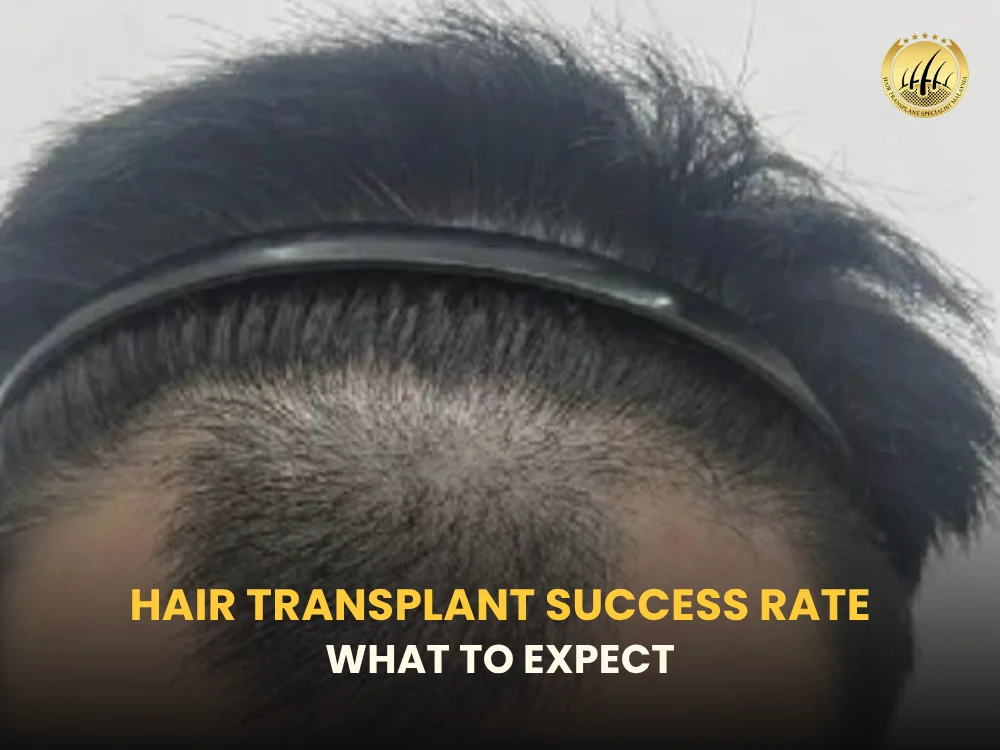
Hair transplant success rate in Malaysia now commonly range between 90% and 95% for properly selected patients treated by experienced surgeons. Premium clinics using advanced FUE or DHI systems sometimes report graft survival rates approaching 99% under ideal conditions.
Malaysia has also become a leading Southeast Asian destination for hair restoration because procedures are regulated under the Malaysia Ministry of Health invasive aesthetic procedure framework. That regulatory oversight improves patient safety and clinic accountability.
Understanding the Realistic Hair Transplant Success Rate
A realistic hair transplant success rate means long-term graft survival, natural density, stable hairline design, and minimal donor damage. Success is not just about hair growth after six months. It also includes how the transplanted follicles perform after five to ten years.
What Defines a “Successful” Hair Transplant?
A successful transplant usually achieves three outcomes: at least 90% graft survival, natural-looking direction and density, and preserved donor reserves for future procedures. Most specialists also evaluate patient satisfaction, scalp healing, and scar visibility.
Clinically, surgeons measure success through follicular survival and cosmetic density. According to the International Society of Hair Restoration Surgery (ISHRS), recipient-site planning and donor management directly influence final aesthetic results.
Average Graft Survival Rates: FUE vs. DHI vs. FUT
| Technique | Typical Survival Rate | Main Advantage | Main Limitation |
|---|---|---|---|
| FUE | 90–95% | Minimal scarring | Longer extraction time |
| DHI | 92–98% | Precise implantation | Higher cost |
| FUT | 90–95% | High graft yield | Linear scar |
Modern Malaysian clinics increasingly favor Sapphire FUE and DHI because they reduce trauma during implantation. Studies comparing FUT and FUE show both methods can produce excellent graft survival when performed correctly.
How Modern Technology Has Improved Outcomes
High-magnification microscopes, chilled graft storage solutions, sapphire blades, and AI-assisted planning have significantly improved outcomes since 2020. Reduced “out-of-body” graft time is especially important because follicle dehydration lowers survival rates.
Many advanced clinics now use implanter pens and digital density mapping to improve angle consistency. Research published through ISHRS also highlights better graft preservation protocols and PRP-supported healing.
Key Factors Influencing Hair Transplant Outcomes in Malaysia
Several variables affect success rates more than the technique itself. Surgeon experience, donor quality, genetics, climate management, and post-operative care all play major roles in determining final density.
Clinical Expertise and Surgeon Specialization
The surgeon remains the single biggest predictor of transplant success. Experienced hair restoration doctors usually produce lower graft transection rates and more natural hairline patterns.
During consultations, ask whether the surgeon personally performs extraction and implantation. In Malaysia, some lower-cost clinics delegate major steps to technicians, which can reduce consistency and graft survival.
Donor Area Quality and Scalp Health Assessment
Strong donor density equals better long-term results. Patients with thick, DHT-resistant donor follicles typically achieve fuller coverage with fewer grafts.
Scalp inflammation, seborrheic dermatitis, smoking, uncontrolled diabetes, and nutritional deficiencies can lower graft survival. A proper trichoscopy assessment helps identify these risks before surgery.
The Role of AI and Robotic-Assisted Graft Placement
AI-assisted systems now help surgeons calculate follicular angles, density spacing, and donor extraction patterns. Robotic extraction also reduces human fatigue during large sessions exceeding 3,000 grafts.
However, AI remains a support tool. Natural-looking artistry still depends on surgeon judgment, especially for Asian hairlines and crown swirl reconstruction.
Patient Age and Genetic Hair Loss Stability
Patients under 25 often face unstable hair loss patterns. Surgeons may delay transplantation until androgenetic alopecia stabilizes.
Older patients with mature hair loss patterns generally experience more predictable outcomes because future recession can be better anticipated. Long-term planning matters more than aggressive density.
Maximizing Results: Post-Operative Care in the Malaysian Climate
Malaysia’s humid tropical climate creates unique healing challenges after transplantation. Sweat, bacteria, and excessive sun exposure can disrupt newly implanted grafts during the first two weeks.
Managing Humidity and Sweat During the Healing Phase
Avoid intense outdoor activity for at least 10 to 14 days after surgery. Excessive sweating may increase infection risk and loosen fragile grafts before anchoring occurs.
Patients in Kuala Lumpur and Penang often rely on air-conditioned environments during the initial recovery period. Light walking is acceptable, but gym workouts should wait until medical clearance.
Essential Aftercare Protocols for High Graft Survival
High-survival protocols usually include:
- Saline spraying every 30–60 minutes initially
- Elevated sleeping position for 5–7 days
- Gentle medical shampoo use
- No helmets or caps during early healing
- Strict avoidance of scratching or rubbing
Many clinics also recommend thermal spring water sprays to reduce scalp irritation.
The Importance of Post-Surgery Medication Compliance
Medications like finasteride and topical minoxidil help preserve native hair surrounding transplanted grafts.
Antibiotics, anti-inflammatory medication, and medicated shampoos also reduce complications. Skipping medication can negatively affect overall density and healing quality.
Hair Transplant Success Rates Across Different Profiles
Not all patients experience identical outcomes. Gender, age, ethnicity, hormonal stability, and scalp characteristics influence survival rates and cosmetic appearance.
Success Rates in Female Hair Restoration
Female hair transplant patients generally achieve strong survival rates when diffuse thinning is properly diagnosed. However, women with active hormonal shedding may require medical stabilization before surgery.
Female hairline restoration often focuses on density refinement rather than large graft counts. DHI is commonly preferred for precision placement.
Outcomes for Young Patients vs. Mature Patients
Young patients usually want aggressive hairline lowering. Unfortunately, unstable hair loss can create unnatural results later if recession continues behind the transplanted zone.
Mature patients often achieve more balanced, sustainable outcomes because donor usage can be strategically planned over decades.
Enhancing Success with PRP and Supportive Therapies
Platelet-rich plasma, low-level laser therapy, and regenerative scalp treatments may improve healing and follicle support. ISHRS literature notes PRP may enhance graft viability and tissue repair during recovery.
Supportive therapies work best as adjuncts, not replacements for surgical expertise.
Choosing a High-Success Clinic in Malaysia
Malaysia now hosts many aesthetic clinics, but outcomes vary significantly between doctor-led practices and high-volume commercial centers.
Evaluating Case Studies and Verified Before-and-After Galleries
Look for high-resolution results photographed under consistent lighting. Reliable galleries should include:
- Wet hair comparisons
- Crown restoration examples
- One-year outcomes
- Multiple ethnic hair types
- Video testimonials
Avoid clinics using filtered or heavily styled images.
Questions to Ask Your Specialist During a Consultation
Ask these questions before committing:
- Who performs extraction and implantation?
- What is the estimated graft survival rate?
- How many procedures are done daily?
- What happens if density is insufficient?
- Is donor overharvesting prevented?
Clear answers usually indicate better transparency and professionalism.
Top-Rated Destinations: Kuala Lumpur, Selangor, and Penang
Kuala Lumpur remains Malaysia’s largest hair restoration hub because it hosts internationally trained surgeons and modern medical facilities.
Selangor attracts patients seeking lower procedural costs outside central KL, while George Town continues growing as a medical tourism destination.
Commercial Considerations: Cost vs. Success Probability
Lower pricing can sometimes reflect shortcuts in staffing, graft handling, or surgical planning. Hair transplantation should be evaluated like a medical procedure, not a retail promotion.
Understanding the Risks of Budget Procedures
Ultra-cheap procedures often prioritize graft quantity over survival quality. Excessively large sessions may increase graft dehydration and donor damage.
Poorly planned surgeries can create patchy density, unnatural hairlines, and irreversible donor depletion.
Price Per Graft in Malaysia and Success Guarantees
In 2026, Malaysia’s average price per graft ranges between RM6 and RM12 depending on technique and clinic reputation.
Be cautious with “guaranteed success” marketing. Ethical clinics discuss probabilities, not unrealistic promises.
Regional Comparison: Malaysia vs. Neighboring Medical Hubs
| Country | Average Cost | Strength |
|---|---|---|
| Malaysia | Moderate | Regulation + affordability |
| Thailand | Higher | Luxury medical tourism |
| Turkey | Lower | High-volume mega sessions |
| Singapore | Highest | Premium medical standards |
Malaysia remains attractive because it balances medical oversight, English-speaking specialists, and competitive pricing.
FAQs: Common Concerns About Hair Transplant Longevity
Does the Success Rate Decline After 10 Years?
Transplanted follicles are usually permanent because they originate from DHT-resistant donor zones. However, native non-transplanted hair may continue thinning over time.
Long-term maintenance with finasteride or minoxidil often improves overall density preservation.
Timeline: When Will I See the Final Result?
Most patients notice shedding within the first month. New growth usually appears between months three and four.
Visible cosmetic improvement commonly occurs around month six, while final density develops between 12 and 15 months.
What Are the Options if a Procedure Underperforms?
Corrective options include:
- Secondary transplant sessions
- PRP enhancement
- Scalp micropigmentation
- Hairline redesign
- Medical stabilization therapy
Revision procedures should only be performed after complete maturation of the original transplant, typically after 12 months.